Cheap Vegetarian Dinners for Four on a Budget
Cheap vegetarian dinners can start with lentils, canned beans, eggs or potatoes rather than a specialty meat substitute. Pick one base, add a vegetable that needs using, then make enough for dinner and a planned leftover lunch. Four workable options below each feed four; the per-serving figures are illustrative estimates, not store prices.
Start with four dinners you can actually cook
I would rather make one pot of lentils that tastes good than buy six different ingredients for a recipe that uses a spoonful of each. These dinners share onions or tomatoes, so the grocery list stays short. All you need is a pot and a skillet. That’s it.
| Dinner | What goes in for four servings | Cook it like this | Illustrative estimate per serving |
|---|---|---|---|
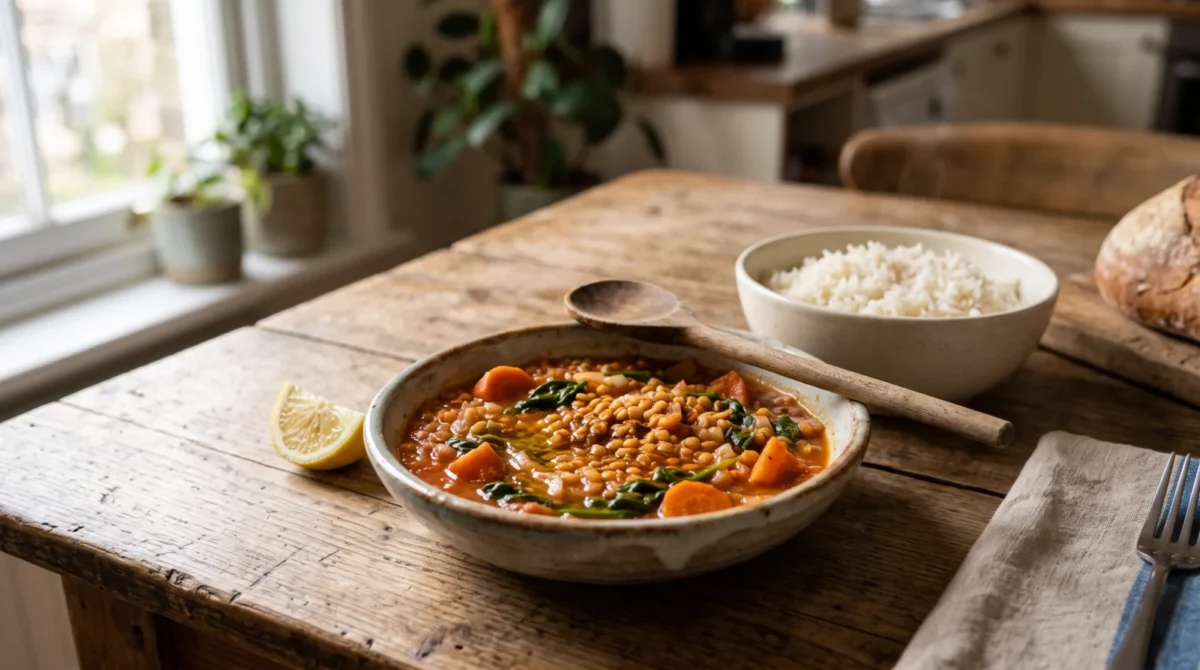
| Tomato lentils over rice | 1 lb dry red lentils, 1 large can crushed tomatoes, 1 onion, 1 lb carrots, 1 lb dry rice | Simmer lentils with diced carrots and tomatoes until soft; cook rice separately | About $1.53 |
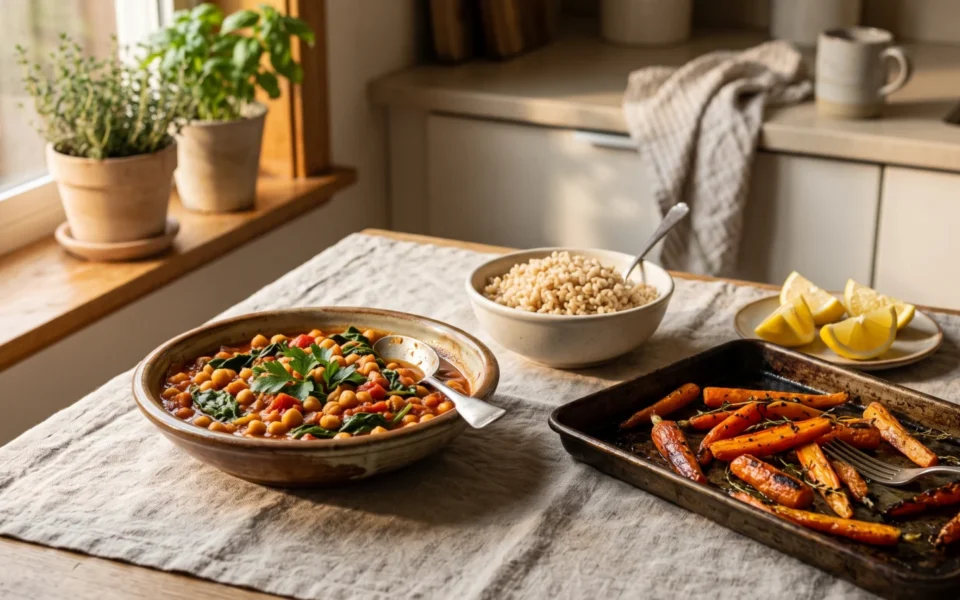
| Chickpea tomato pasta | 2 cans chickpeas, 1 lb pasta, 1 large can crushed tomatoes, 1 onion, 10 oz frozen spinach | Simmer sauce and chickpeas; fold in cooked pasta and thawed spinach | About $1.63 |
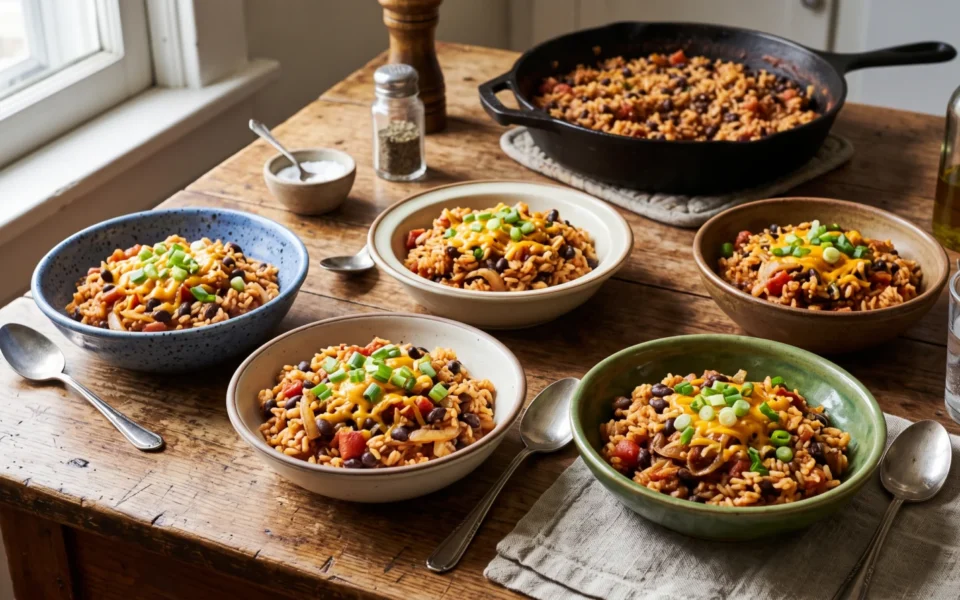
| Bean and cheese quesadillas | 2 cans black beans, 8 medium tortillas, 8 oz cheese, 1 onion | Mash beans with cooked onion; fill tortillas, add cheese and brown in a dry skillet | About $1.80 |
| Potato and egg skillet | 2 lb potatoes, 6 eggs, 1 onion, 12 oz frozen peas | Cook small potato cubes until tender, add onion and peas, then scramble eggs through | About $1.60 |
Those are dinner portions, not a promise that everyone at your table eats the same amount. Hungry after a serving? Add another scoop of rice or a slice of toast. If you’re cooking for two, make the lentils or pasta as written and put two portions away immediately; a second dinner is a lot nicer than finding a forgotten container on Saturday.
The lentils take about 20 minutes once the pan simmers, depending on the bag; add water as they thicken and stir so the bottom doesn’t catch. For the potato skillet, a lid helps the diced potatoes soften before the eggs go in. Dice them small. Really small. Big chunks stay hard while the onion burns.
The cost math, without pretending these are shelf tags
For a worked example in the US in October 2026, suppose your shopping basket costs the illustrative amounts below. These aren’t observed prices, national averages or a claim about your store. The USDA Economic Research Service Food Price Outlook was updated September 25, 2026; it tracks price changes and forecasts, not a universal price for this particular basket. Write down your own package prices to replace these assumptions.
| Dinner | Illustrative ingredient-cost arithmetic | Four-serving estimate |
|---|---|---|
| Lentils and rice | Lentils $1.80 + tomatoes $1.10 + onion $0.60 + carrots $1.50 + rice $1.10 | About $6.10 total, or $6.10 ÷ 4 = about $1.53 each |
| Chickpea pasta | Chickpeas $2.00 + pasta $1.30 + tomatoes $1.10 + onion $0.60 + spinach $1.50 | About $6.50 total, or $6.50 ÷ 4 = about $1.63 each |
| Bean quesadillas | Beans $2.00 + tortillas $2.20 + cheese $2.40 + onion $0.60 | About $7.20 total, or $7.20 ÷ 4 = about $1.80 each |
| Potato skillet | Potatoes $2.50 + eggs $2.10 + onion $0.60 + peas $1.20 | About $6.40 total, or $6.40 ÷ 4 = about $1.60 each |
The totals assume you use the stated quantities, even if a package you buy is larger. That estimate leaves out cooking oil and seasonings. Check the cupboard. An empty bottle changes the bill. If you must buy a full bottle of oil tonight, count that checkout cost in this week’s grocery budget, then allocate what you actually use across later meals. These numbers aren’t a substitute for the receipt.
A 15-ounce can of beans is easier on a Tuesday than dried beans that haven’t been soaked, even if a dry bag might cost less per portion at your shop. Compare unit prices on the shelf rather than assuming the larger pack wins. The guide to comparing grocery unit prices walks through awkward package sizes without mental gymnastics at the cart.
Make the ingredients do two jobs
The tomato can is often the annoying part of budget cooking: buy one for pasta, then find half a can sitting behind the milk. Use a full can in each pot here. If yours is a different size, add a splash of water and simmer until the sauce coats the spoon instead of buying another can for an exact measurement.
Fresh spinach wilting in the drawer? Put it in the chickpea pasta near the end. Frozen spinach is handy when your cooking day changes, but squeeze excess water from a thawed block before it goes into the sauce. For more ideas built around the odds and ends you already own, use the fridge-first dinner guide before shopping.
A bag of onions gives all four dinners a starting point. If you only have one onion, use it in the lentils and season the others with garlic powder or whatever you have. Skip the special trip. Dinner can wait on fancy spices. The pantry staples list is useful when you’re replacing basics, but don’t buy everything on a list in one week.
The only place I’d spend extra time is browning the quesadilla. A properly crisp tortilla makes mashed beans feel like dinner; a pale floppy one feels like an unfinished snack. Cook over medium heat until each side has brown patches and the cheese melts, then slice it at the table. If someone avoids dairy or eggs, pick one of the other meals or use a suitable substitute and check every ingredient label for allergens. No recipe can promise allergy safety.
If you have half a pepper, chop it into the skillet before adding peas. Leftover cooked rice belongs beside the lentils, not under a fresh pot of rice for no reason. WattaEat can take photos of your fridge, cupboard or freezer, then plan a week around what you already have and make a shopping list that skips those items. Check the list yourself; a real pantry is never as tidy as a recipe card.
Keep the leftovers useful and safe
Don’t leave a pot of beans on the stove all evening because you expect to eat it tomorrow. The FoodSafety.gov cold storage chart lists cooked leftovers for 3 to 4 days in the refrigerator at 40°F or below; freeze portions you won’t eat in that window. Put a date on every container. Guessing when a pot was cooked is a bad plan.
FoodSafety.gov’s four food-safety steps also say to refrigerate perishables within two hours, or within one hour when the air temperature is above 90°F. Divide a big batch into shallow containers so it cools promptly. Hot all the way through. The official temperature chart gives 165°F for leftovers and casseroles.
For a two-person household, put two portions of lentils in separate containers before sitting down to eat. Chill one for lunch and freeze the other if your week is uncertain. Write “lentils + rice” and the date on the lids; future you shouldn’t have to thaw a mystery brick to discover what’s for dinner.