Pantry Staples List: What to Keep for Cheap Meals
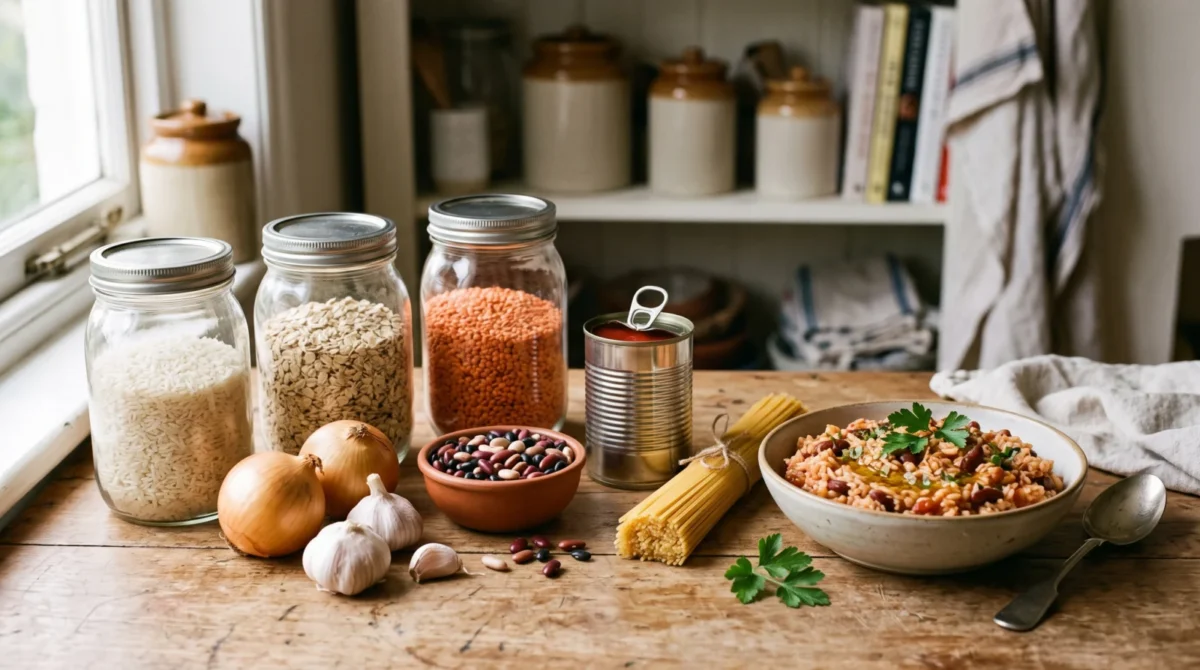
A useful pantry staples list starts with rice, oats and pasta, plus beans and canned tomatoes. Add onions plus a little cooking oil. Keep amounts you’ll actually finish, then add one or two flavorings you like. With those basics, you can make a pot of beans and rice, tomato pasta or savory oats without buying a whole new dinner.
The small pantry staples list
This is a starting list for a household that cooks a few dinners at home each week, not a command to fill every shelf. Check the cupboards before you shop. If there’s already a half bag of rice behind the cereal, use it before bringing another one home.
| Keep on hand | Small starting amount | What it earns its shelf space for |
|---|---|---|
| Rice | 1 to 2 pounds | A base for beans, skillet leftovers or a quick soup bowl |
| Rolled oats | 1 container | Breakfast, savory oats or a binder for patties |
| Pasta | 1 pound | Dinner with tomatoes, beans or whatever vegetables need using |
| Dry lentils or canned beans | 1 pound dry or 2 cans | Soup, rice bowls and pasta; choose the version you’ll cook |
| Canned tomatoes | 2 cans | Sauce, soup or a pot of lentils |
| Onion and garlic | 2 onions and 1 bulb | Starts most of the dinners above |
| Cooking oil | 1 small bottle | Sautéing onions and finishing a pan meal |
| Salt and one spice you use | Small containers | Flavor without a drawer full of jars |
You don’t need both dry beans and canned beans. Dry lentils cook without an overnight soak; canned beans are ready when dinner has to happen now. A can opener belongs next to this plan if your cans aren’t pull-tab. It sounds obvious until Tuesday night.
If your family doesn’t like oats, leave them out. If rice sits untouched but tortillas disappear, buy tortillas for the week instead of treating a pantry checklist like a rulebook. The cheapest staple is the one that gets eaten.
Build dinners from one base and one thing to use up
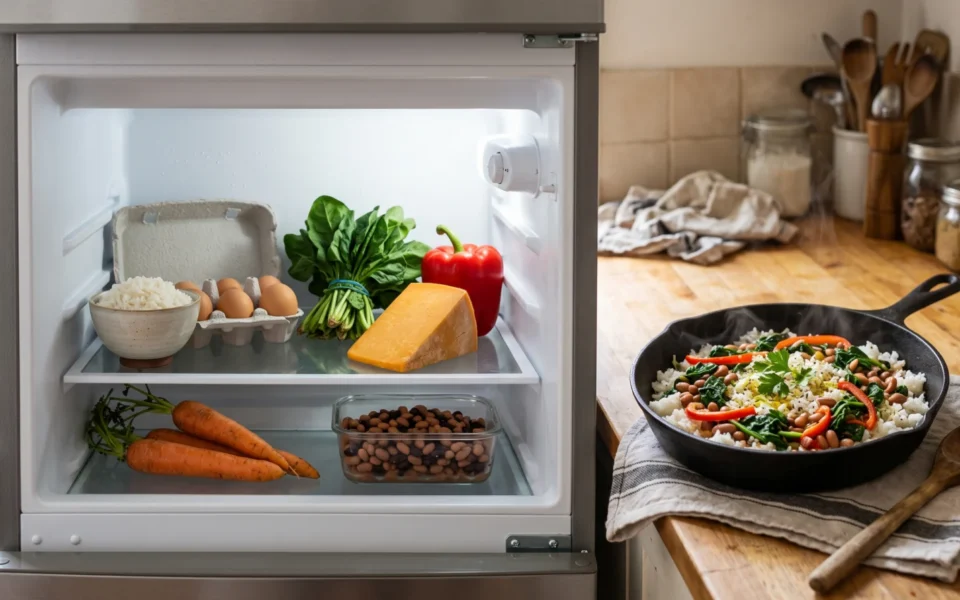
Start with the item most likely to go bad: a handful of spinach, one bell pepper, a little cooked chicken. Then choose a pantry base. That’s the part of cooking from what’s in your fridge that makes the shelf useful rather than merely full.
| Pantry base | Add from the fridge or freezer | Dinner to make |
|---|---|---|
| Rice + canned beans | Wilted-looking but sound peppers, chopped onion | Pepper and bean rice skillet |
| Pasta + canned tomatoes | A handful of spinach or frozen peas | Tomato pasta with greens |
| Lentils + canned tomatoes | Carrot ends, onion or frozen vegetables | Thick tomato lentil soup |
| Oats + canned beans | Chopped onion and a little grated cheese | Pan-fried bean-and-oat patties |
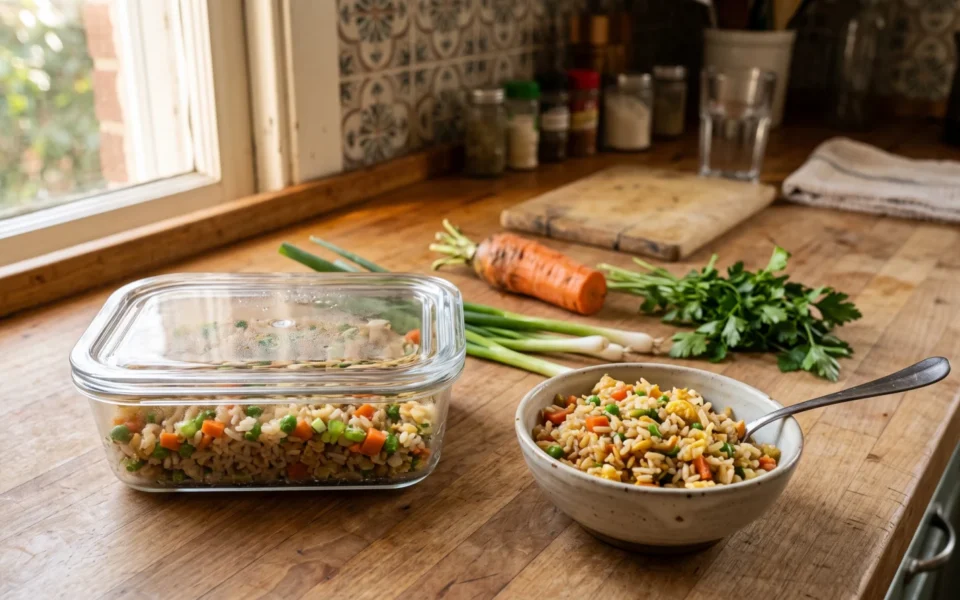
| Rice + leftover cooked vegetables | Egg, if you have one | Vegetable rice with egg cooked through |
For the skillet, cook a chopped onion and pepper in a little oil, stir in a drained can of beans and a cup of cooked rice, then heat until steaming hot. Add the spice you actually enjoy. Keep the beans and rice separate until cooking if one person wants theirs plain.
Pasta is even easier: simmer a can of tomatoes with onion while the pasta boils. Tip in the spinach for the last couple of minutes. If you have no fresh greens, the sauce still works. That is why I favor canned tomatoes over a shelf of sauces that only go with one meal.
If you want more choices built around the same shelf, the family dinner ideas give you other ways to use the beans and pasta on this list, plus rice. You needn’t buy every ingredient for every recipe; pick the ones that overlap.
Price the shelf before you fill it
A pantry list isn’t a shopping order. Buy the smallest useful size first, especially for cooking oil. That goes for spices too, or dry beans you haven’t cooked before. Giant bags can be a good deal per pound and still be a bad deal if they crowd out groceries you need this week.
Here’s an illustrative U.S. cost estimate, not a current store quote or a promise about what your shop will charge. Suppose the shelf tags you see on a particular shopping trip are $2.40 for a two-pound bag of rice and $1.60 for a one-pound bag of lentils. Your estimated checkout for those two packages is $2.40 + $1.60 = $4.00 before tax, where applicable. If you cook half the rice bag and half the lentil bag across four portions, the estimated staple cost per portion is ($2.40 ÷ 2 + $1.60 ÷ 2) ÷ 4 = $0.50. The estimate leaves out onion and oil; vegetables are extra, as are cooking energy and any applicable tax. Write down your own shelf tags instead of using these hypothetical figures as prices.
Prices move, even between trips. The USDA Economic Research Service’s September 2026 Food Price Outlook reports that U.S. food-at-home prices in August 2026 were 2.2% higher than in August 2025, while the change from July to August 2026 was zero. Those are national category averages, not prices for a bag of rice at your store. Check package size and unit price before you trade a familiar staple for a bulk pack.
For a whole-week shop, use the budget grocery list as a way to add produce and other perishable food to these shelf items. You don’t need to buy the entire pantry again every Sunday. Replenish what you used.
Keep dry food dry, and treat cooked food differently
Keep unopened shelf-stable food somewhere cool and dry. Follow the dates and storage directions on the package. After opening rice or oats, close the bag well or move it to a clean container with a lid. Keep the package or write down its date and cooking instructions; anonymous jars make it too easy to forget what’s inside.
Dry beans are not the same thing as cooked beans. For cooked rice, beans, pasta or soup, follow the FoodSafety.gov cold food storage chart: refrigerate cooked leftovers promptly at 40°F or below. Use them within three to four days, or freeze them. Don’t leave a pot cooling on the stove overnight. When you’re planning ahead, freeze extra portions promptly in shallow containers rather than assuming they’ll last until next weekend.
Before you buy the big bag, check how much shelf room you actually have. A narrow cupboard can hold a bag of rice and two cans of tomatoes, with room for lentils without stacking things so deep that you lose track of them. Put the opened bag in front. Take a quick look before making the next list; reducing food waste at home often starts with noticing what’s already open.
Make the pantry work with the weekly budget
Pick two or three meals from the table, then buy only the fresh parts you’re missing. If you’ve got carrots and half a bag of spinach, plan soup early in the week and tomato pasta next. Keep one pantry-only dinner as a backup for a night when plans change. A plain bowl of lentils and rice is more useful than ingredients for a grand meal you never make.
You can do this on paper: mark the rice as already owned, circle the two cans you need, then total the shelf tags before you get to checkout. WattaEat is another way to plan around what’s there: on iPhone, you can photograph your fridge or cupboard (the freezer works too), check the items it finds, then set a weekly budget. It plans meals that use your food first, with an aisle-sorted list that skips what you already have. Its meal prices are estimates, so compare the list against the actual tags in your store.
If someone in your household avoids an ingredient because of an allergy, check the label on each can and bag yourself. Read spice mix labels too. A pantry list can’t tell you what was packed on the same line as a particular brand. Keep the ingredient list on the original package until you’ve finished it.
For the next shop, check the open containers before writing "rice" on the list. If a quarter bag is enough for Thursday’s skillet, cross it off and buy the onion instead.