How Much Turkey Per Person? Buy Just Enough
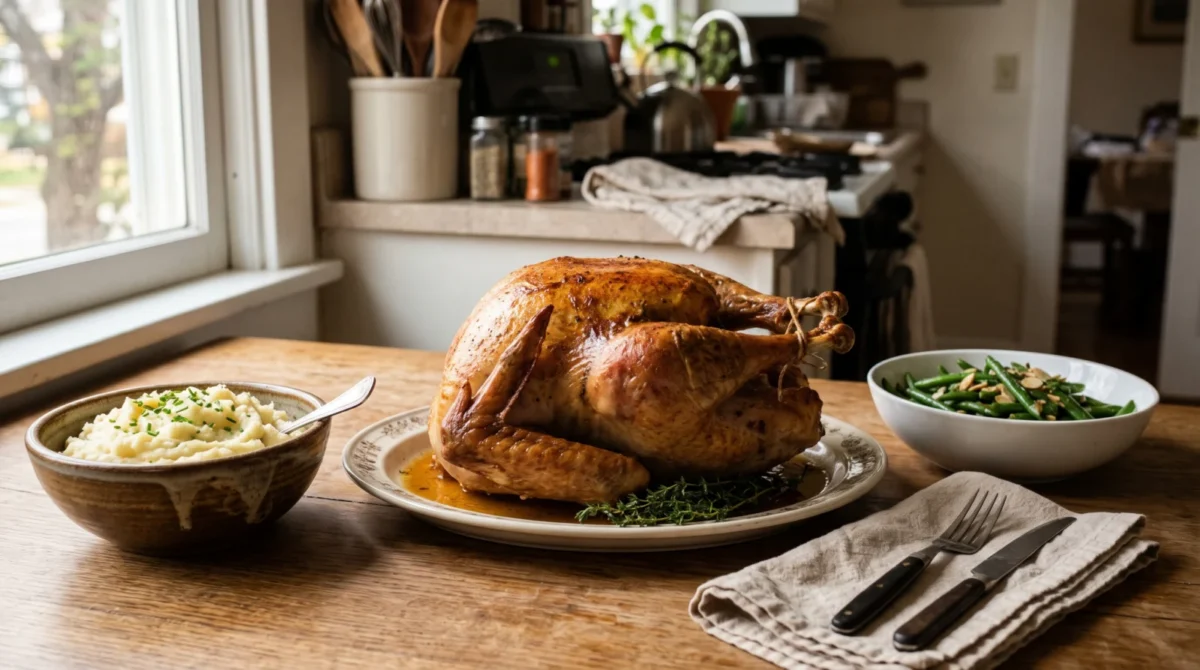
A whole turkey for Thanksgiving usually needs about 1 to 1½ pounds of raw, bone-in bird per person. Use the low end if you have lots of sides and don’t want much left over; use the high end if you want turkey sandwiches afterward. For eight people, that puts you around 8 to 12 pounds, not an automatic 20-pound bird.
Size the bird for the meal you actually want
That 1 to 1½ pounds is a shopping rule of thumb, not a promise of a particular amount of sliced meat. A whole bird includes bones and skin. Some guests take another helping; some fill their plates with potatoes. Count the people who will actually eat turkey, then decide if Friday’s lunch is part of the purchase. That changes the number.
| Turkey eaters | Little or no planned leftovers | Turkey for another meal | What to look for |
|---|---|---|---|
| 4 | About 4 pounds | About 6 pounds | A small breast or another main may be easier to find |
| 6 | About 6 pounds | About 9 pounds | Check whether a small whole bird is available |
| 8 | About 8 pounds | About 12 pounds | One moderate-size whole bird |
| 10 | About 10 pounds | About 15 pounds | Check the freezer and oven space first |
These are raw purchase weights, not cooked portions or guarantees about yield. For a four-person table, don’t feel obliged to buy a huge bird because that’s all the holiday display offers. A turkey breast, or one of the Thanksgiving turkey alternatives, can fit a smaller table without turning the rest of the week into turkey duty.
If two guests are bringing a ham and most people want a slice of each, count fewer full turkey portions. If three guests have asked to take turkey home, use the higher end and set out clean containers. Guests taking food home still count as planned leftovers.
Compare the total price, not the sale sign
Start with the full package price: weight × price per pound. A cheaper pound can still leave you paying more for a bird you can’t use. The USDA Economic Research Service Food Price Outlook was updated October 23, 2026; it tracks food-price changes, not the price of your store’s Thanksgiving turkey. Check today’s package label or store listing locally. That tag counts.
Here’s illustrative U.S. budget math for November 2026, not observed prices, a USDA quote or a current store offer. Suppose two birds both cost about $2 per raw pound at your store. A 12-pound bird would be about $24 estimated (12 × $2); a 16-pound bird would be about $32 estimated (16 × $2). That’s about $8 estimated for four extra pounds of raw bird. If those pounds won’t become meals, the bigger package is no deal.
Now suppose the 16-pound bird has a lower promotional price, about $1.50 per raw pound. Its estimated package cost would be 16 × $1.50 = about $24, the same as the 12-pound example. Still check the promotion rules. Some discounts require a minimum grocery spend you weren’t planning to make. I wouldn’t buy a cart of extras to qualify for a cheap turkey.
Compare what you’ll use as well as what you’ll pay. A whole bird brings bones for stock if you genuinely want to make it, while a boneless breast gives you less waste from trimming but can have a higher tag per pound. These aren’t equal pounds of edible meat. Our unit-price guide explains the shelf math; for this particular decision, the total at checkout and the space in your fridge matter more.
Check the freezer before shopping
A turkey already in the freezer isn’t a reason to buy another one. Check its weight and packaging, and make sure it’s been stored correctly. Clear a shelf before moving it into the fridge to thaw, with the wrapped bird in a tray to catch drips. Don’t set a frozen bird on the counter overnight.
The FoodSafety.gov Thanksgiving guidance says to allow roughly 24 hours of refrigerator thawing for every 4 to 5 pounds of turkey. That means an approximately 12-pound frozen bird needs roughly three days, while an approximately 16-pound one needs roughly four. Check the guidance for the weight you actually have. If you’re shopping only a day or two before dinner, a large frozen bird is a timing problem, not merely a bargain.
For a tight deadline, the same official guidance gives a cold-water method: keep the turkey in leakproof wrapping, submerge it in cold tap water, change the water every 30 minutes, allow about 30 minutes per pound and cook immediately once thawed. That’s hands-on work. No shortcuts. Buy a fresh bird only if you have refrigerator space and can follow the storage directions on its label; don’t use “fresh” as an excuse to leave poultry sitting out.
Put your ordinary holiday ingredients on paper before you go: potatoes already in the pantry, frozen green beans, bread for stuffing, whatever is actually missing. The Thanksgiving dinner on a budget menu gives a fuller shopping list if the rest of dinner isn’t settled yet. For your regular week’s meals around the holiday, WattaEat can check photos of your fridge, cupboard or freezer, then plan around what you have first under the weekly budget you set. Its meal costs are estimates, so use the store’s package price for this turkey decision.
Leave space for the cooked turkey
Don’t buy a bird sized for four days of lunches unless you have containers and cold space for them. On Thanksgiving, carve what you need for dinner; put the rest into shallow containers rather than parking the entire carcass in the fridge. Pull the usable meat from the bones while clearing up. It takes less space and Friday’s sandwich is easier to make.
The FoodSafety.gov cold-food storage chart gives 3 to 4 days at 40°F or below for cooked poultry leftovers. Its four food-safety steps say to refrigerate perishable food within two hours. Freeze what you won’t eat within that refrigerated window. A Monday-night pile of turkey left from Thursday shouldn’t be assumed to last all week in the fridge.
Cooking the bird safely matters more than hitting a roast time printed on a flyer. The USDA’s turkey roasting guidance calls for 165°F in the thickest part of the breast and the innermost parts of the thigh and wing. Check with a food thermometer, avoiding bone. Brown skin isn’t a thermometer. Check twice.
Give extra turkey one job, not five
For eight turkey eaters, a 12-pound bird at the high end of the table might leave meat for Friday sandwiches or Saturday soup, depending on appetite and actual cooked yield. Put the sandwich meat in one container and the soup portion in another. Freeze the soup portion promptly if it won’t get cooked within the refrigerated storage window. If you’re using bought stock, bread or condiments for a guest with an allergy, check every label; this meal can’t promise allergy safety.
You can fold a few torn pieces of turkey into a pot of noodles with leftover carrots and stock, but don’t buy celery and special herbs just to justify the oversized bird. Use what’s there. The food-waste planning guide is handy when the fridge has three half-used side dishes competing for space.
If the only whole turkey at a late shopping trip is too large for your oven or your fridge, leave it there. A smaller breast with potatoes and green beans still gives you a roast dinner, and the meal doesn’t end with a week of leftovers nobody asked for.