How to Reduce Food Waste at Home, Week by Week
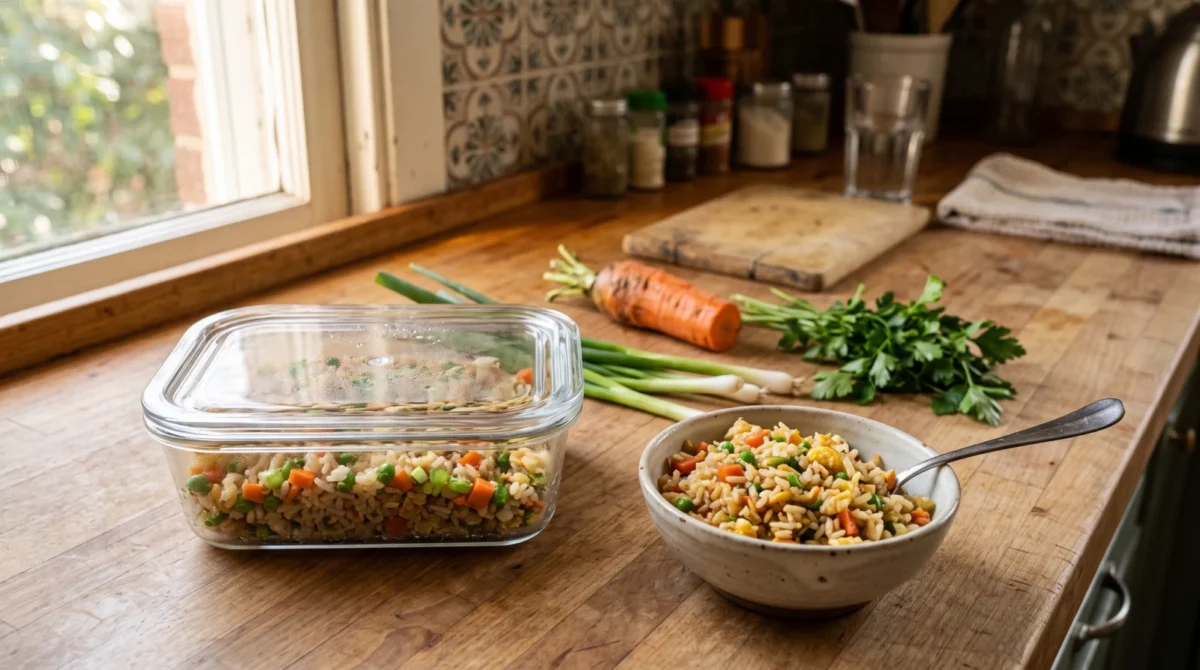
Half a bag of spinach plus two carrots can become dinner with cooked rice instead of the next trash-bag surprise. To reduce food waste at home, check what needs using before you shop, build a few meals around it, store food where it keeps best and freeze anything you can’t eat soon. Do that again next week.
Start with a five-minute food check
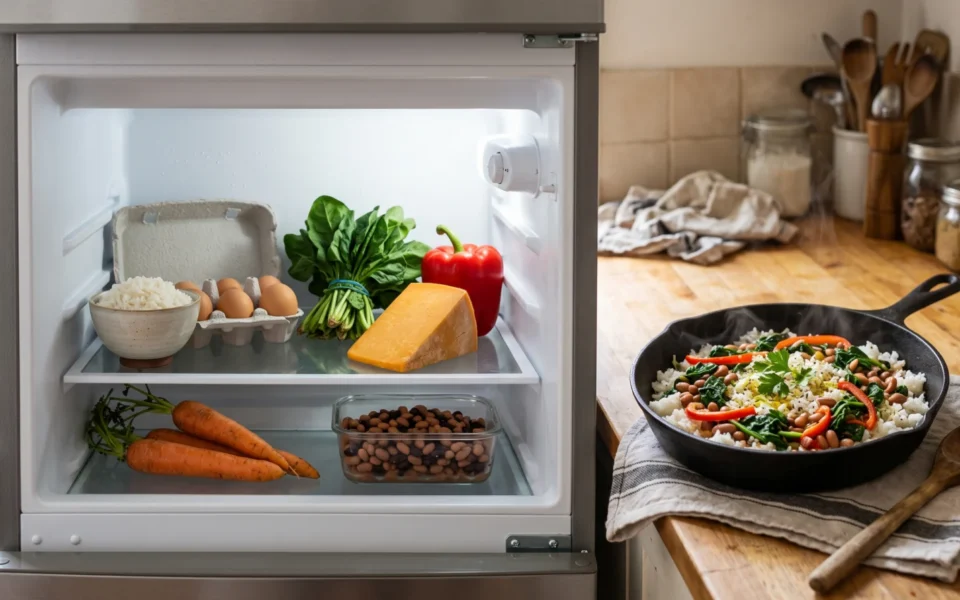
Before writing a grocery list, open the fridge. Pull out the containers hiding behind the milk, then look through the freezer and the cupboard. You’re looking for usable food with an actual job to do, not conducting an inventory worthy of a warehouse.
The EPA advises checking the fridge and freezer before shopping, plus the pantry, then planning meals around what needs using. It also notes that one-third of food in the United States goes uneaten. That national figure isn’t a prediction about your kitchen, but it is a decent reason to stop buying another bag of spinach while last week’s bag is still there. Look behind the yogurt.
Write a short use-first list on a note or the fridge door, and give every open or fast-wilting ingredient a place in one of the next few meals rather than just writing its name down. Include amounts: half a bag of spinach, two cooked chicken thighs, one opened carton of broth. A jar of mustard doesn’t belong on this list. A cut bell pepper does. Easy call. If you’d rather start with dinner ideas than an inventory, work from what is already in your fridge.
Check the calendar too. If Thursday is a late work night, don’t assign it a recipe that needs forty minutes and three pans. Put the fast, perishable-food dinner there instead, or plan to eat a properly stored leftover. Plans fail when they ignore Tuesday as it really is.
Give the fragile food the first few meals
Start with the ingredient most likely to be wasted and add a simple base. A handful of spinach can go into eggs; a soft tomato can cook down in beans; a few carrots can go into fried rice. I think buying another "versatile" ingredient before assigning a meal to the ones already open is how grocery bills quietly creep up.
Here is a sample week for a kitchen with some leftover rice and carrots, plus spinach, beans and a small amount of cooked chicken. It’s a template, not a claim about what is in your house. Buy only the missing pieces and adjust the order according to when each food was cooked or opened. If the chicken is already near its safe storage limit, eat it sooner or freeze it; don’t follow the row order blindly.
| When | Use first | Dinner idea | What to check before buying |
|---|---|---|---|
| Monday | Spinach and cooked chicken | Chicken, spinach and egg skillet with toast | Eggs and bread already on hand? |
| Tuesday | Cooked rice and carrots | Vegetable fried rice with an egg | Enough rice for everyone? |
| Wednesday | Soft tomatoes and beans | Tomato-bean pasta | Pasta in the cupboard? |
| Thursday | Remaining greens | Beans on toast with wilted greens | Another can of beans needed? |
| Friday | Small vegetable odds and ends | Vegetable soup with toast | Broth or a way to make it? |
| Weekend | Unused bread or frozen portions | Toasted sandwiches or a defrosted meal | Nothing unless a real gap remains |
This isn’t a command to keep cooked rice until Tuesday regardless of when you made it. Date cooked food, refrigerate it promptly and consult the FoodSafety.gov cold storage chart before deciding when to eat or freeze it. A plan should bend around safe storage, not the other way around.
For a fuller way to set a weekly budget and turn these meals into a list, see how to meal plan on a budget. Keep one unplanned dinner slot if your schedule changes. A freezer portion, pasta with beans or eggs on toast is enough of a backup. No heroics.
Buy quantities for actual meals
A shopping list that says "vegetables" invites guesswork. Write "one pepper for pasta" or "two carrots if the ones at home aren’t enough for fried rice." You can see the gap, and you can leave the other produce on the shelf.
The EPA’s shopping advice says to note quantities and the number of meals you expect to eat at home. It also points out that a large-quantity deal only saves money if you’ll use the food before it spoils. A big tub of greens isn’t a bargain when the last third turns to sludge. Smaller is often the sensible choice.
The other trap is buying for seven elaborate dinners when you’ll actually cook four. Count the nights you expect to eat out. Count the nights you can finish leftovers. Take those off your shopping plan before adding a single new ingredient. If beans and rice are already in the cupboard, and you have carrots in the fridge, you might only need eggs plus a pepper. Perhaps bread. That’s an example of what to buy, not a price claim or a universal list.
If you use WattaEat on iPhone, you can photograph your fridge, cupboard or freezer, check what it identifies and set a weekly budget. Its plan uses what you already have first, with an aisle-sorted shopping list that skips those ingredients. Check its meal price estimates against your own store; the checkout total will differ.
Store things for the week you actually have
Put an eye-level container marked "use first" in the fridge, but don’t treat that label as a safety test. Put the open spinach or the half pepper there so you see it when you’re hungry. Keep raw meat contained on a lower shelf away from ready-to-eat food. The EPA recommends a refrigerator at 40°F or below, notes that the door is warmer and suggests the lower shelves for raw meat and fish, including poultry.
For produce, the EPA recommends the high-humidity drawer for vegetables likely to wilt, such as leafy greens and carrots. It advises waiting to wash berries until you’re ready to eat them to help prevent mold. Don’t pack the drawer so tightly that you forget what’s under the first layer. Move the oldest usable produce to the front when you unload the new groceries, while you can still remember exactly which carrots came home last week and which ones are fresh.
Freeze bread before it goes stale. Freeze a portion of cooked beans or soup if your plans change. Use a container or freezer bag, write what’s inside and add the date. That label is more useful than a mystery brick of red sauce in January. Check the FoodSafety.gov storage chart for food-specific refrigerator and freezer guidance rather than using a single rule for everything.
The EPA says to refrigerate or freeze perishable leftovers within two hours. Divide a large pot into shallower containers so it cools faster. Don’t leave the cooked rice out while you finish dishes and watch a show; get it into the fridge promptly. If food is moldy, smells off or has been stored unsafely, don’t make a rescue recipe from it. Appearance alone can’t tell you whether a leftover is safe either. When in doubt, toss it.
Make a small leftover night, not a guilt night
A half-cup of beans and a few tablespoons of sauce aren’t a full dinner by themselves. They’re a start. Put them beside an egg, potato or piece of toast, then add whatever safe, usable vegetable is left. The point is to give scraps a destination before they become scraps.
Try four flexible meals rather than one giant "everything soup": fried rice for small amounts of cooked vegetables, a frittata for greens, bean-topped potatoes for leftover beans, or toast with roasted vegetables and cheese. Use only leftovers that were stored safely; reheating isn’t a fix for food that sat out too long. Check ingredient labels if someone in your household has an allergy, even when you’re using familiar staples.
Once a week, note what you threw away. Was it half a bag of salad every Friday? Next time, buy less salad or put it in two specific lunches. Was it bread? Freeze half the loaf when you get home. A small correction to the next grocery plan is more useful than a perfect-looking meal plan you’ll never cook.
Keep a pencil beside that use-first note. When you freeze the last serving of soup, cross it off the fridge list and write "soup, freezer" instead. Friday-you deserves to know it’s there.