A Weekly Meal Plan for About $50 (With Shopping List)
A weekly meal plan for about $50 works best for one adult when you repeat a few ingredients, not seven different dinners. Build breakfast around oats and yogurt; use lentils, eggs and rice for the main meals. The $47 U.S. shopping estimate leaves $3 for local price differences. Check your shelf first.
The $47 shopping list and its limits
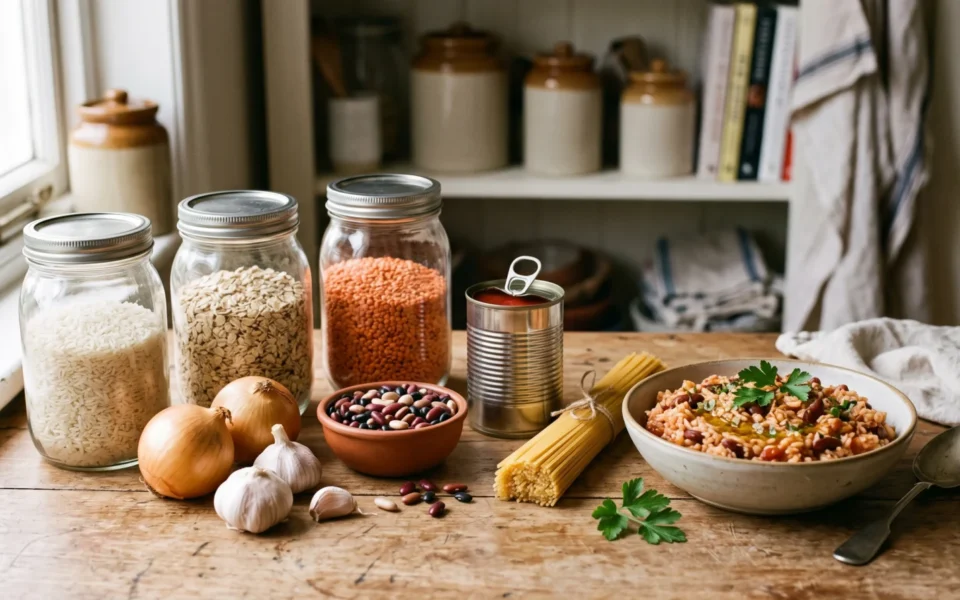
This is a planning estimate for one adult in the United States, October 2026, not a quote from any store or a promise that every checkout will land under $50. Each row is an estimated allowance for the package shown. A full package may have leftovers after the week, so $47 divided by 21 meals is a basket average, not an exact cost of each serving. The plan assumes tap water and salt are on hand. You’ll need a little cooking oil too. No oil? Put it on your list and drop another item to keep the ceiling intact.
| Buy | Amount | Estimated allowance |
|---|---|---|
| Rice | 2 lb bag | $4 |
| Old-fashioned oats | 18 oz canister | $4 |
| Dry pasta | 1 lb | $2 |
| Dry lentils | 1 lb | $3 |
| Canned black beans | 2 cans, about 15 oz each | $3 |
| Eggs | 1 dozen | $5 |
| Peanut butter | 16 oz jar | $3 |
| Plain yogurt | about 32 oz tub | $4 |
| Frozen spinach | 12 oz bag | $3 |
| Carrots | about 2 lb | $2 |
| Onions | about 2 lb | $2 |
| Cabbage | 1 small head | $3 |
| Bananas | about 2 lb | $3 |
| Canned tomatoes | 2 cans, about 14 oz each | $3 |
| Bread | 1 loaf | $3 |
| Estimated basket | 15 items | $47 |
The math is $4 + $4 + $2 + $3 + $3 + $5 + $3 + $4 + $3 + $2 + $2 + $3 + $3 + $3 + $3 = $47 estimated, with $3 unassigned. For comparison, $47 ÷ 21 planned meals is about $2.24 per meal on a basket-spend basis. That’s not a nutritional target or a precise plate price. Portions aren’t fixed. You’ll probably have some peanut butter left on Sunday.
These allowances are deliberately round rather than made-up shelf tags. The USDA Economic Research Service’s September 2026 Food Price Outlook reports that the August 2026 U.S. food-at-home index was 2.2% above August 2025. That’s a measure of grocery price change, not a price list for your cart. Check the shelf tags. Keep the $3 gap for surprises. If your eggs cost more, buy fewer bananas or use another portion of lentils instead. Don’t cut a whole dinner to rescue a pretend price.
Seven days from the same basket
Make a pot of rice. Simmer lentils separately, then give cabbage and carrots different jobs throughout the week. The table names 21 meals for one adult; add portions when your appetite calls for them, but remember extra portions can use up this basket sooner. Water is the assumed drink.
| Day | Breakfast | Lunch | Dinner |
|---|---|---|---|
| Monday | Oatmeal with sliced banana and peanut butter | Egg and cabbage toast | Lentil-tomato pot over rice with carrots |
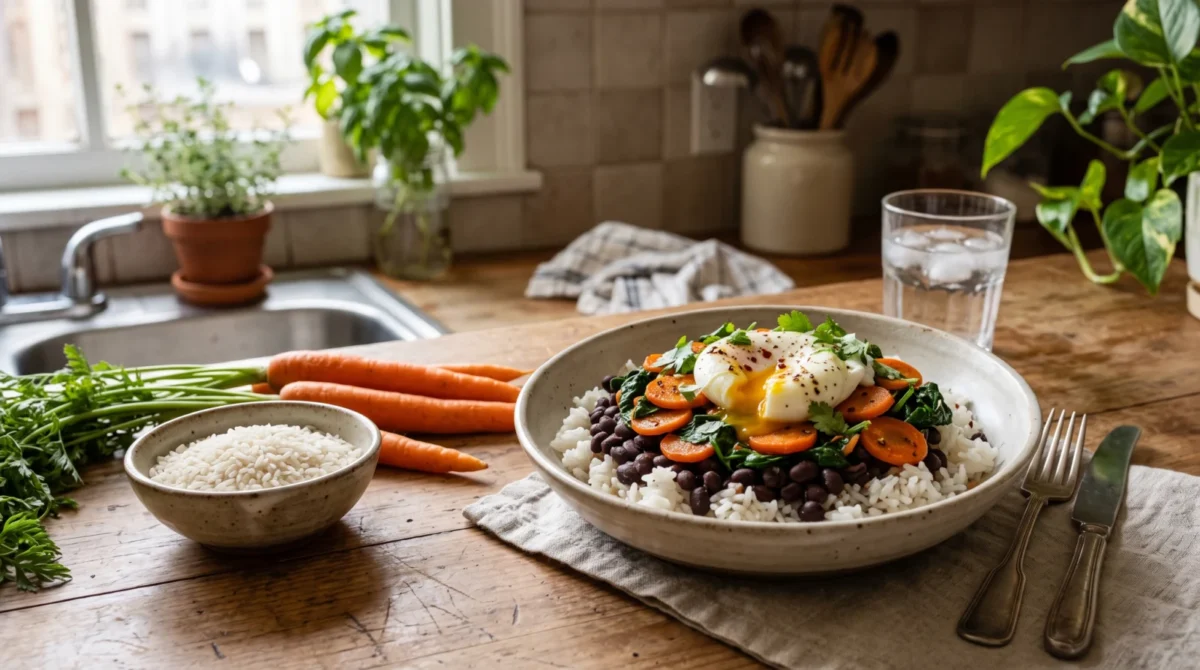
| Tuesday | Yogurt with oats and banana | Leftover lentils and rice | Black bean, spinach and carrot rice bowl with an egg |
| Wednesday | Oatmeal with peanut butter | Cabbage and egg sandwich | Pasta with lentil-tomato sauce and sautéed onion |
| Thursday | Yogurt with oats and banana | Leftover pasta and sauce | Cabbage and black bean rice skillet |
| Friday | Oatmeal with banana | Egg toast with carrots on the side | Tomato-spinach lentils over rice |
| Saturday | Yogurt with oats | Leftover lentil rice bowl | Onion-and-spinach egg scramble with toast |
| Sunday | Oatmeal with peanut butter and banana | Peanut butter toast and yogurt | Pasta with tomato, cabbage and black beans |
The bowl on Tuesday is simple: warm half a can of drained beans with sliced carrot and a handful of frozen spinach, spoon it over cooked rice, then add one cooked egg. For Wednesday’s sauce, cook chopped onion until soft, stir in cooked lentils and canned tomatoes, and simmer until it coats the pasta. Skip the sauce jar. If dinner needs to be bigger, have some yogurt on the side and eat oatmeal that morning instead.
Use the first can of tomatoes across Monday through Friday, and open the second on Sunday if you can. Shred only what you need from the cabbage. Chill the rest. I would rather eat the same cabbage four ways than buy a plastic tub of salad greens that wilts halfway through the week.
Cook once without gambling on leftovers
- On shopping day, rinse the lentils and cook them in water until tender, following the package directions. Start rice in a separate pot. While both simmer, slice an onion and a few carrots; chop some cabbage for the first two days. Keep raw vegetables separate from cooked food.
- Portion Monday’s dinner and Tuesday’s lunch. Cool cooked food promptly in shallow containers, then refrigerate it. FoodSafety.gov’s cold storage chart gives 3 to 4 days in the refrigerator for cooked leftovers at 40°F or below. Freeze later-week portions promptly rather than letting a Sunday pot sit in the fridge until Saturday.
- Set aside lentils for Wednesday’s pasta and freeze a labeled portion for Friday. Make a fresh pot of rice midweek if the first pot is gone, rather than holding all of it in the fridge for seven days. Reheat leftovers to 165°F, the FoodSafety.gov leftovers guidance temperature for leftovers and casseroles. Thaw frozen portions in the fridge, not on the counter.
Leave the eggs in their carton. Scramble or fry them as needed; a fresh egg does more for a bean-and-rice bowl than another sauce jar. If you’re packing lunch, carry chilled leftovers with a cold pack and refrigerate them when you get there. If you manage a food allergy, read the labels on every packaged food, including the bread and peanut butter. Check substitutions too; this plan cannot certify any meal safe for an allergy.
Make the $50 ceiling fit your kitchen
Before you leave, count your eggs, look at the rice bag and check the freezer. If you already have the two-pound rice bag, cross out its estimated $4 allowance: $47 minus $4 is about $43 planned spending for the other items, not $4 of guaranteed savings. You could put that room toward a missing staple or more vegetables. The pantry-first meal planning method is useful here because the shopping list starts with what isn’t in your kitchen.
Your store might charge more than these October 2026 U.S. estimates. Check the oat and rice unit labels. Swap the priciest vegetable for one you like and can afford. Grocery savings without coupons walks through comparing shelf labels without assuming the largest pack is always cheapest. For a dinner built around a half bag of spinach or the last carrots, see what to make with what’s in your fridge.
You can also enter your own ingredients and weekly budget in WattaEat on iPhone; it plans meals using what you already have first and makes an aisle-sorted shopping list. Its meal prices are estimates too, so compare them with your store’s shelf tags. On Sunday, if you have half a cabbage and a little cooked pasta left, sauté the cabbage with onion and toss the pasta through it for lunch instead of opening another can.