How to Meal Plan on a Budget: A Simple Weekly System
Four potatoes and the spinach that needs using are already the start of a week’s dinners. To meal plan on a budget, check the kitchen first, set a spending limit, repeat ingredients across meals and buy only what is missing. Keep one night loose for when the week changes.
Start with the food that’s already paid for
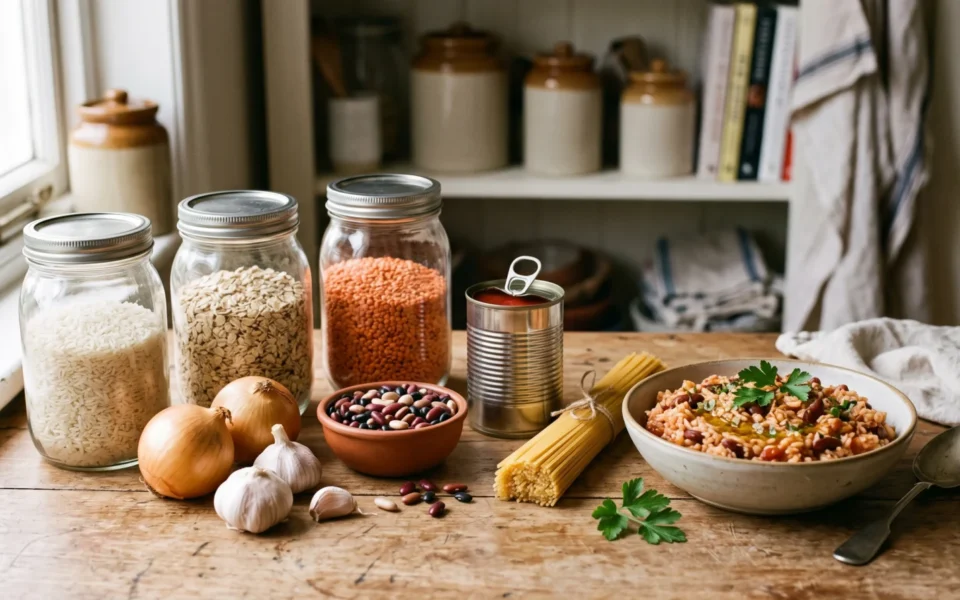
Open the fridge before opening a recipe tab. Write down the half onion, the last few tortillas and the container of cooked rice. Check the freezer too; a forgotten bag of peas can save you from buying another vegetable. Don’t count a jar of sauce you only think is behind the milk.
Split the inventory into use soon, can wait and needs buying. A wilt-prone green belongs in the first group. Dry rice stays in the second. If a pack is opened or leftovers are already cooked, note the day they went into the fridge rather than guessing later.
Food safety matters more than squeezing out one extra meal. FoodSafety.gov’s cold-storage chart says cooked meat or poultry leftovers generally keep 3 to 4 days refrigerated at 40°F or below. Freeze a later portion promptly if it won’t be eaten in that window; don’t plan Thursday around meat cooked the previous Saturday. If you’re cooking for someone with an allergy, check every ingredient label yourself.
Put a ceiling on the shopping trip
Pick one number for the groceries you still need this week, not a made-up cost for seven finished dinners. For illustration, say a U.S. household has $75 available for seven days of additional groceries after checking its pantry. That’s a planning example, not a current store-price claim or a promise that $75 will feed a particular household. Household size, location, what you already own and breakfast needs change the math.
| Budget envelope (illustrative) | Amount | What it’s for |
|---|---|---|
| Dinner ingredients | $45 | Foods missing from the dinner plan |
| Breakfast and lunch gaps | $20 | Only what isn’t already in the kitchen |
| Flexible cushion | $10 | Higher shelf prices or a needed swap |
| Total | $75 | $45 + $20 + $10 |
Keep the cushion unassigned. Shelf tags get the final say. USDA’s September 2026 Food Price Outlook reported U.S. grocery prices in August 2026 were 2.2% above August 2025. It also found different food categories changed at different rates. A national price trend can’t tell you what the cart costs at your store, so check unit labels and your running total there.
The simplest rule is to choose meals that share purchases. If one dish uses half a cabbage, choose another that uses the rest. Buying six one-off sauces for six "cheap" recipes is a rotten way to plan a cheap week.
Build seven dinners around a few repeat ingredients
Here’s a flexible template for a household with oil and rice in the cupboard. Salt is on hand too. The quantities are starting points, not a claim that they cover every portion: use the number of servings your household actually needs. No staples at home? Put them on the list and adjust the budget before committing.
| Night | Dinner | What carries into another night |
|---|---|---|
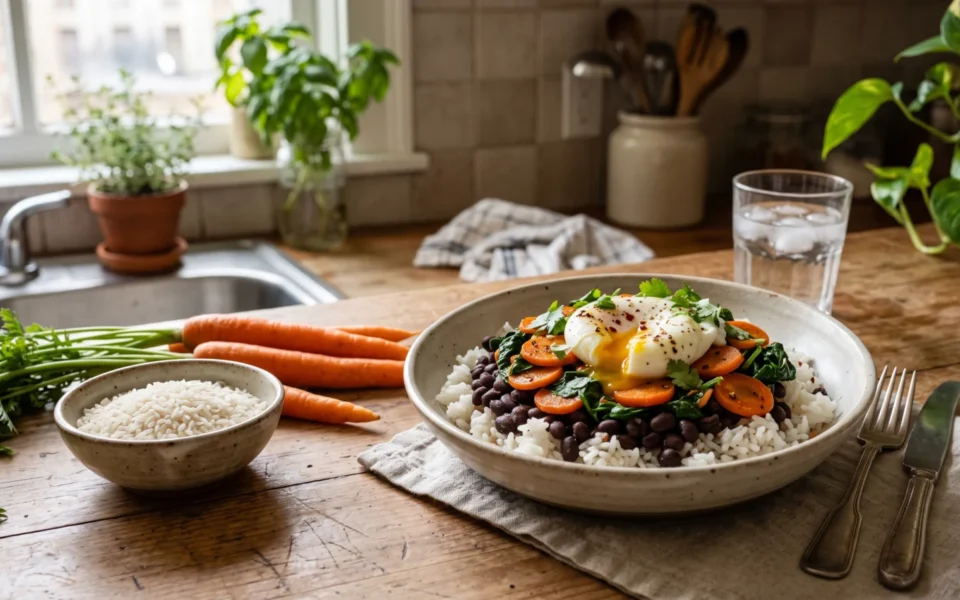
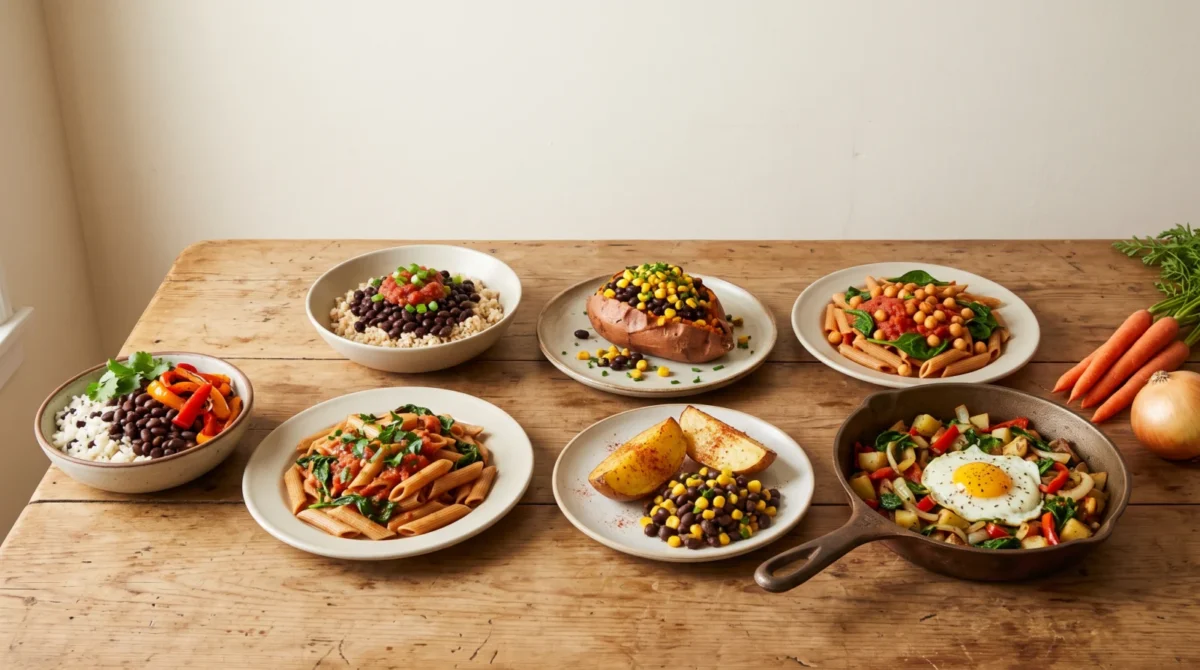
| Monday | Rice bowls with black beans, sautéed peppers and the spinach that needs using | Cook extra rice; reserve some beans |
| Tuesday | Potato-and-egg skillet with onion and any leftover peppers | Reserve half the onion |
| Wednesday | Pasta with tomato sauce, spinach and a spoon of beans | Use the remaining opened sauce on Friday |
| Thursday | Baked potatoes topped with beans and chopped onion | Bake extra potatoes for Saturday |
| Friday | Tomato-rice soup with frozen vegetables and an egg stirred in | Use extra rice and the remaining sauce |
| Saturday | Crisped leftover potatoes with vegetables and eggs | Clear small vegetable portions |
| Sunday | Pantry rice and beans, or a freezer meal if plans changed | No new special purchase |
This isn’t seven unrelated recipes. Same foods, different plates. Put spinach near the start and shelf-stable beans near the end. If you don’t eat eggs, choose another ingredient you use often and check its labels if allergies are involved; don’t assume any swap is safe for everyone.
Batch-cooking can help, but don’t leave a whole week’s cooked rice or potatoes in the fridge expecting them to last until Sunday. FoodSafety.gov’s storage guidance gives most cooked leftovers a 3-to-4-day refrigerator window. Refrigerate promptly in shallow containers and freeze portions intended for later in the week. Freshly cooking another pot of rice midweek is a perfectly good plan.
For breakfast, pick food you’ll actually eat. Oats with fruit work if there’s fruit to use; toast with an egg works if eggs fit the budget. Lunch can use deliberately portioned dinner leftovers within that storage window. Nobody eats reheated pasta at your house? Then don’t pencil it in as lunch just to make the numbers behave.
Turn the menu into a short shopping list
Count what the meals require, then subtract what’s actually there. For the example above, a possible list is four medium potatoes, one onion, two peppers, a small bag of spinach, eggs, one pound of pasta, a can of tomatoes or sauce, two cans of beans and a bag of frozen vegetables. Add rice only if the cupboard is empty. Those are planning quantities, not a priced basket or guaranteed seven-day supply.
| Check before buying | Possible buy | Where it goes |
|---|---|---|
| Rice in cupboard? | Only enough for planned bowls and soup | Monday, Friday and Sunday |
| Beans in cupboard? | Two cans if none are there | Bowls, potatoes and pasta |
| Spinach already open? | Buy none if enough remains | Monday and Wednesday |
| Eggs in fridge? | Enough for two skillets and soup | Tuesday, Friday and Saturday |
| Pasta and tomatoes on shelf? | Fill only the missing item | Wednesday and Friday |
Check package sizes against your household. A half-used bag of pasta is useful; a new three-pound box isn’t automatically the better buy because its unit price is lower. The cheaper unit can still cost more at checkout and leave food you won’t finish. If you want to plan from a fridge photo instead of a handwritten inventory, WattaEat lets you check what it sees, set a weekly grocery budget and build meals around what you already have. Its meal prices are estimates, so compare the list with your actual store total.
Planning for a holiday table? The same pantry-first method works with a larger guest list; the Thanksgiving dinner budget menu and shopping list shows how to keep the sides from multiplying into separate shopping trips.
Adjust after the real receipt
Tuesday will test the plan. Let it bend. Keep a pencil line beside the meals you actually cooked. If a friend invites you over, move the most perishable planned dinner earlier or freeze the ingredient while it’s still usable. Leave Sunday open enough to absorb the change.
You can also do a quick estimate before shopping, but don’t confuse it with a quoted per-serving price. Suppose your own budget sets aside $18 for a batch that makes 8 portions: the planning estimate is $18 ÷ 8 = $2.25 per portion. That $18 is a hypothetical allocation, not a verified ingredient cost or a current U.S. store price. Use shelf-tag totals for the actual batch, then divide by the portions you really serve. If the eggs or peppers are too expensive locally, change the meal instead of pretending the estimate is still right.
USDA’s September 2026 forecast put the predicted 2026 rise in U.S. food-at-home prices at 2.4%, with a forecast interval of 1.8% to 3.0%. That’s another reason to revise your own list rather than copy someone else’s exact grocery total. A holiday week can shift the numbers further; if that week’s meals include guests, look at the Thanksgiving shopping plan and count guests before buying extra potatoes.
Before the next trip, write the actual cost beside the dinner you repeated and circle the ingredients left untouched. If six eggs are still in the carton, next week’s first dinner can be the skillet. No new recipe hunt needed.