What to Make With Leftover Pumpkin Puree
A half cup of plain pumpkin puree can turn into a savory pasta sauce, a pot of chili or tomorrow’s oatmeal. Opened a can for pie? Portion the rest before it disappears behind the milk, then cook it soon or freeze measured scoops. Check that it’s plain puree, not sweetened pumpkin pie filling.
Pick a meal by how much puree is left
Pumpkin is mild. In a savory dish, it thickens the sauce without announcing itself as dessert. In breakfast, it works best with cinnamon and something to loosen it, such as milk or water. Don’t buy a whole new set of spices to use three spoonfuls of leftovers.
| Puree left | Make this | What else you need | Where it goes |
|---|---|---|---|
| 2 tablespoons | Pumpkin oatmeal | 1/2 cup oats, milk or water, cinnamon | Stir into the hot oats at the end |
| 1/4 cup | Pumpkin scrambled eggs | 2 eggs, toast, pinch of salt | Whisk into eggs before cooking gently |
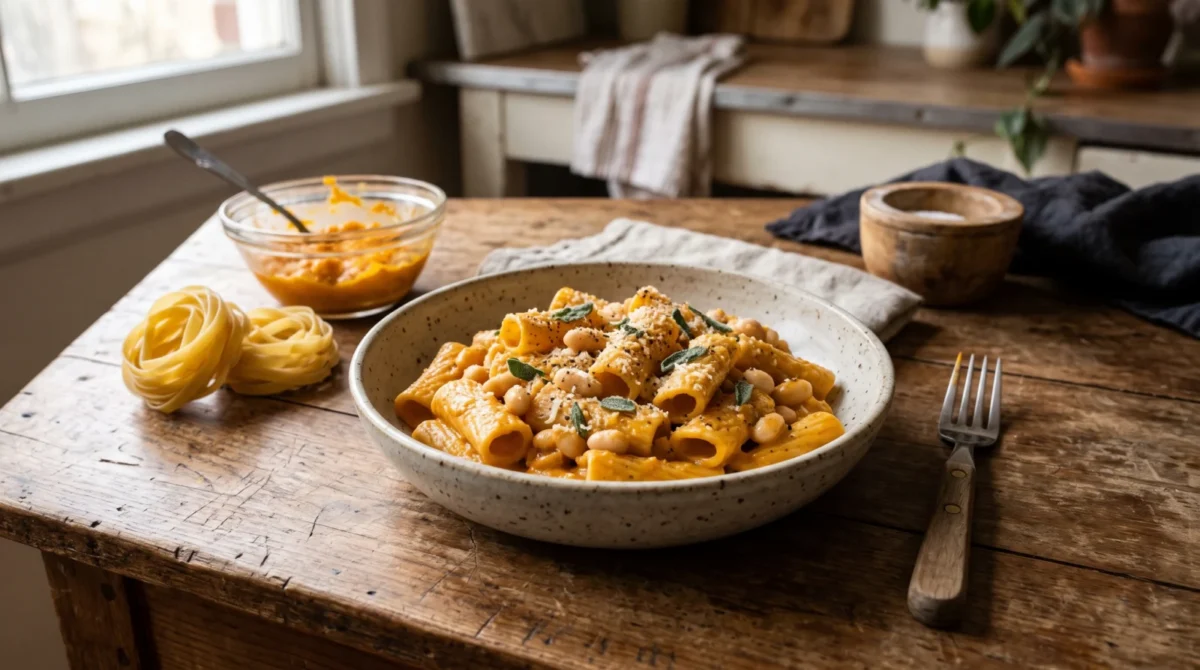
| 1/2 cup | Pumpkin and white bean pasta | 8 oz dry pasta, 1 can white beans, garlic | Whisk into a quick sauce with pasta water |
| 3/4 cup | Pumpkin quesadillas | 4 tortillas, 1 can black beans, a little cheese | Spread thinly under the beans |
| 1 cup | Pumpkin tomato chili | 1 can tomatoes, 1 can beans, onion | Simmer in the pot until hot |
| 1 cup or more | Pumpkin pancakes | Your usual pancake batter | Replace part of the batter’s liquid, then adjust texture |
These aren’t six purchases. They’re six exits for the same open can. If you’ve only got a spoonful or two, the oatmeal is less fussy than trying to make a batch of muffins. If you have a full cup, chili is a better use of your evening than baking a dozen things you don’t need.
Use plain canned pumpkin or cooked, mashed pumpkin. Pie filling has sugar and spices already mixed in, so it won’t work in the chili or pasta. If yours is pie filling, try a small spoonful in oatmeal instead and taste before adding any sweetener.
Make pumpkin and white bean pasta tonight
For two generous portions, boil 8 ounces of dry pasta in salted water. Before draining, scoop out about 1 cup of the cloudy cooking water. In the empty pot, warm a little oil with 1 minced garlic clove, then stir in 1/2 cup plain pumpkin puree and 1/2 cup pasta water. Stir until smooth. Add 1 drained can of white beans and the pasta; loosen with more reserved water until the sauce coats each piece. Black pepper and a little dried sage are good here, but skip the sage if it isn’t in the cupboard.
Taste before adding cheese. The beans and garlic make it dinner; a handful of grated cheese is optional. A squeeze of lemon, if you have one, cuts through the sweetness of the pumpkin. No cream needed. I wouldn’t buy cream just to rescue half a can of pumpkin.
For a smaller portion, halve the pasta and beans and refrigerate the unused beans promptly in a covered container. Or cook the full pot, pack the extra portion in a shallow container and refrigerate it promptly. FoodSafety.gov’s cold storage chart lists cooked leftovers at 3 to 4 days in a refrigerator kept at 40°F or below. That’s a window for food you handled and chilled properly, not a way to make a forgotten pot safe again.
If you don’t have white beans, chickpeas will do. If you don’t have pasta, thin the pumpkin with broth or water and add beans to make soup; stir until hot. The same ingredients, fewer dishes.
Keep the extra grocery cost honest
The pumpkin already in your kitchen isn’t a new checkout charge. Neither are the pasta or beans if you own them. If you need to buy both, compare the total amount you’ll actually pay, not an imaginary price per bowl. A whole package matters when the recipe calls for only half of it.
Here’s illustrative cost math, not a current store quote: suppose your own shelf tags show about $1.60 for an 8-ounce portion of pasta and about $1.40 for a can of beans. Assume the puree and seasonings are already on hand. The estimated new spend is about $1.60 + $1.40 = $3.00 for the two-portion pot, or about $3.00 ÷ 2 = $1.50 per portion. If the store only sells you a larger pasta package, pay for that whole package today and carry the unused pasta into another meal; don’t pretend the checkout total was $3.00.
Those numbers are a planning example for a U.S. shopper in November 2026, not observed prices. Replace them with your local shelf tags. The USDA Economic Research Service Food Price Outlook, updated November 24, 2026, tracks U.S. food price indexes and forecasts, not the price of the can in your hand. A unit-price check matters more for this dinner than a national average: read the ounces on the pasta and the drained weight on the beans before deciding which pack gives you usable leftovers. For a broader shopping routine, see how to compare unit prices.
Store the open can before it becomes another leftover
Spoon the remaining puree into a clean container. Cover it and refrigerate promptly; leaving the open can on the counter while you eat is asking for trouble. Mark the opening date. For a conservative plan, use refrigerated puree within 3 to 4 days or freeze it sooner; the USDA FoodKeeper storage guidance is the place to check a specific opened product, while FoodSafety.gov’s cold storage chart gives the 3-to-4-day range for prepared leftovers. Don’t taste questionable puree to decide if it’s all right.
Freeze 1/4-cup portions in a freezer-safe container or a covered ice-cube tray, then transfer the frozen portions to a freezer bag and label the date and amount. Thaw what you need in the refrigerator, not on the counter. A frozen portion can go straight into a hot saucepan for sauce, provided you heat the whole dish thoroughly. This is also a good way to make the next pumpkin dinner start with a measured ingredient rather than another open can.
Plan the rest of the week around what’s already open. Put pumpkin pasta on one night and use the extra beans in quesadillas the next; if your tomatoes are getting soft, the chili gets the earlier slot. That’s the same use-it-first habit behind cooking from what’s in your fridge and reducing food waste week by week. If you’d rather map the week from what you already own, WattaEat can build an iPhone meal plan from photos of your fridge, cupboard or freezer after you check the items it found and set your grocery budget.
Two small swaps that save the next can
If pumpkin is the only ingredient you need for a recipe, use the leftover puree before buying another can. For savory dishes, start with a few tablespoons and add more after tasting. Too much can make a tomato sauce flat; garlic, black pepper or a bit of acidity usually helps more than another spoonful of puree.
For breakfast, stir two tablespoons into hot oatmeal and loosen it with a splash of milk or water. Add cinnamon if you like it. Making pancakes? Pumpkin changes the thickness of batter, so add it a little at a time instead of replacing the full measure of milk. That leaves a small, workable batch rather than six dense pancakes nobody wants on Friday.
If you cook for someone with a food allergy, check each packaged ingredient label. That includes the broth and any spice blends, not only the pasta. A swap in this list isn’t an allergy-safety guarantee. And when the freezer container comes back out, write the measured amount on your meal note before you shop; it’s easy to buy a fresh can while the first half cup is sitting behind the ice trays.