What to Make With Leftover Mashed Potatoes
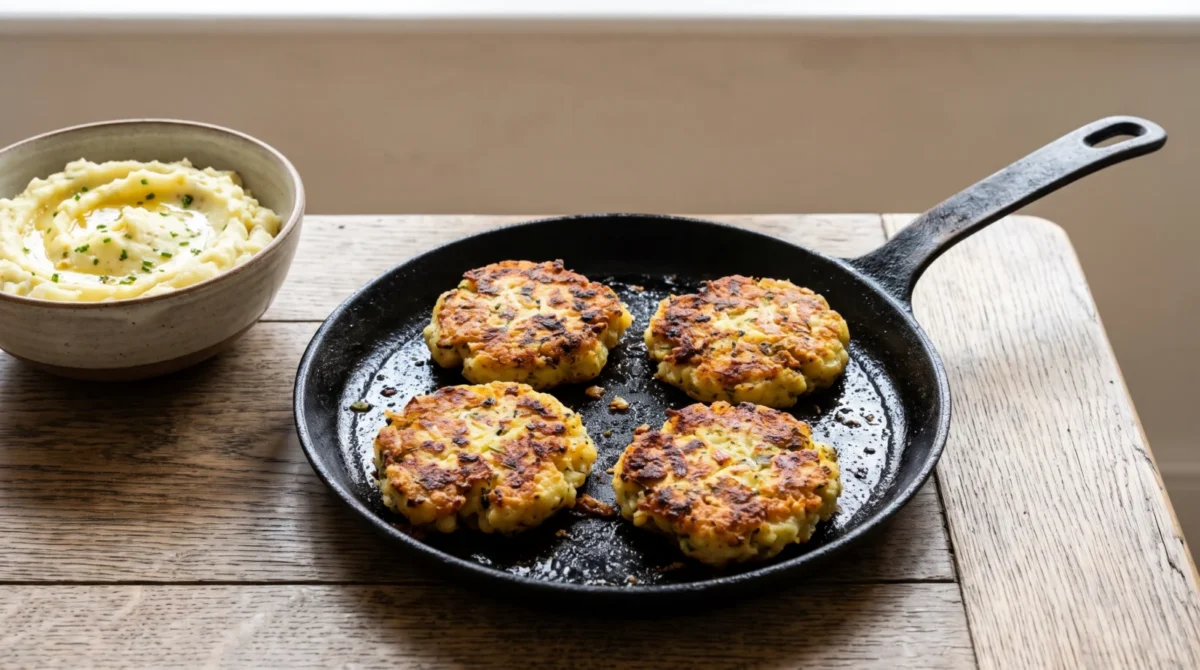
Two cups of leftover mashed potatoes can become crisp skillet cakes tonight, or top a small meat-and-vegetable bake tomorrow. For a smaller scoop, stir it into soup to thicken the pot. Start with mash that was cooled promptly and kept cold; changing its shape won’t make an old leftover safe again.
Pick a meal by how much mash you have
The first question isn’t what recipe sounds fanciest. It’s how much cold potato is in the container, and whether it’s firm enough to hold together. Rich holiday mash with a lot of milk can be softer than plain weekday mash, so give it a little extra binder when you want a crust.
| Leftover mash | Make this | Add from the cupboard or fridge | Best move |
|---|---|---|---|
| 1/2 to 1 cup | Creamy vegetable soup | Broth, onion, frozen peas | Whisk mash into hot soup near the end |
| 1 to 2 cups | Skillet potato cakes | Egg, a little flour, scallions | Chill, shape, then brown both sides |
| 2 cups | Small skillet-topped bake | Cooked lentils or meat, carrots, peas | Spread mash over hot filling and bake |
| 3 cups or more | Potato-topped casserole | Leftover vegetables, beans, cheese if you have it | Make one large dish or freeze portions |
If the mash already contains cheese or garlic, work with that. A cheese-heavy scoop makes a good cake; garlicky potatoes belong on top of lentils and onions. Don’t buy a bag of shredded cheese just to rescue a bowl of potatoes. Use the food that’s already open. No extra shopping.
If you’re planning a whole week around odds and ends, start with what’s in your fridge before writing a shopping list. That same habit helps with small leftover portions that aren’t enough to stand alone.
Crisp potato cakes from two cups
Cold mash is easier to shape than warm mash. Mix 2 cups of it with 1 egg and 2 tablespoons of flour. Fold in 2 tablespoons of sliced scallions if you have them. If the mixture slumps when you scoop it, add another tablespoon of flour and chill it for a bit. Make four patties of roughly equal size. Uneven edges are fine.
Heat a thin film of oil in a skillet over medium heat. Set the patties in without crowding them and leave them alone until the bottoms have browned and feel sturdy when nudged. Flip gently. Cook until the centers are hot throughout, not just crisp on the outside. If the mash has meat mixed into it, be especially careful to reheat it thoroughly.
For dinner, put two patties beside leftover roasted vegetables and a spoon of beans. Or top one with a cooked egg if eggs are already in the house. They’re also good with a little plain yogurt, but check the label if anyone needs to avoid a particular ingredient. Mash made with milk and cakes bound with egg or flour contain common allergens; substitutions and packaging need checking, not guesses.
Here’s a price check, not a store-price promise. The U.S. Bureau of Labor Statistics’ October 2026 U.S. average-price series for white potatoes reports about $0.99 per pound, while its October 2026 U.S. egg series reports about $2.32 per dozen. If your 2 cups of mash represent roughly a pound of potatoes and you use two eggs to bind a particularly soft batch, the estimated potato-and-egg ingredient value is $0.99 + (2 × $2.32 ÷ 12) = about $1.38 for four cakes, or about $0.35 each. The basic recipe above uses one egg, so that two-egg calculation is a conservative example, not a bill for the recipe. It excludes milk, butter, flour, oil and anything served alongside; a potato you already paid for doesn’t become a fresh cash expense just because you cook it twice. Your local checkout total will differ.
A potato-topped bake for the bigger bowl
For about 2 cups of mash, cook one diced onion in a little oil until soft. Add about 2 cups of cooked lentils or already-cooked ground meat, plus a cup of peas or diced carrots. Stir in a splash of broth or water until the filling is moist, not soupy. Spread it in a small baking dish, cover with the mash and rough up the top with a fork so it browns.
Bake at 400°F until the filling bubbles and the potato top is golden. Check the middle with a food thermometer: the USDA’s reheating guidance for leftovers calls for 165°F. A brown top doesn’t tell you the temperature of the filling beneath it. Check the middle.
This is where a small pan beats a huge one. If you’ve only got a cup of mash, make individual portions in oven-safe dishes instead of stretching the topping into a thin, dry sheet. Cooked beans work in place of lentils. A handful of yesterday’s roasted carrots can replace the peas; meal planning with leftovers is easier when one ingredient gets a second job without needing a whole new recipe.
The half-cup that barely covers the container
A little mash can thicken a pot of soup without cream. Soften half an onion in oil, add 3 cups of broth or water with a little seasoning, then simmer a cup of frozen vegetables until tender. Whisk in 1/2 cup of mashed potatoes, a spoonful at a time. Give it a minute to smooth out and taste before adding salt. Holiday mash may already be salty. Taste first.
If it turns too thick, add more water. If you want a chunkier bowl, put in leftover cooked beans or a small handful of cooked chicken. Keep the chicken within its own safe storage window, too; don’t let fresh soup become an excuse to extend the life of older meat. Our leftover vegetable ideas can help you choose what else goes into the pot.
A photograph of the fridge can help with that inventory. WattaEat lets you check what it recognized, add anything it missed and plan meals around what you have before building an aisle-sorted shopping list. You can type ingredients instead if you’d rather skip the photo.
Keep the original leftover clock
Put cooked mash in shallow containers and refrigerate it promptly. The FoodSafety.gov cold-storage chart gives cooked leftovers 3 to 4 days in a refrigerator at 40°F or below, and USDA’s leftovers guidance says to refrigerate leftovers within two hours. If the potatoes spent too long on the table, don’t try to fix that with a hotter skillet.
Label the container with the day the potatoes were first cooked. Turning day-three mash into cakes doesn’t reset the clock. Same potatoes, same date. Freeze a portion early if you won’t get to it within that window; flatten it in a freezer-safe container so it thaws more evenly. Reheat cooked leftovers to 165°F, and check the center of thick cakes or a deep bake with a thermometer. On a crowded holiday fridge shelf, that date on the lid is a lot more useful than trying to remember which dinner it came from.