Meal Planning With Leftovers: A Week That Works
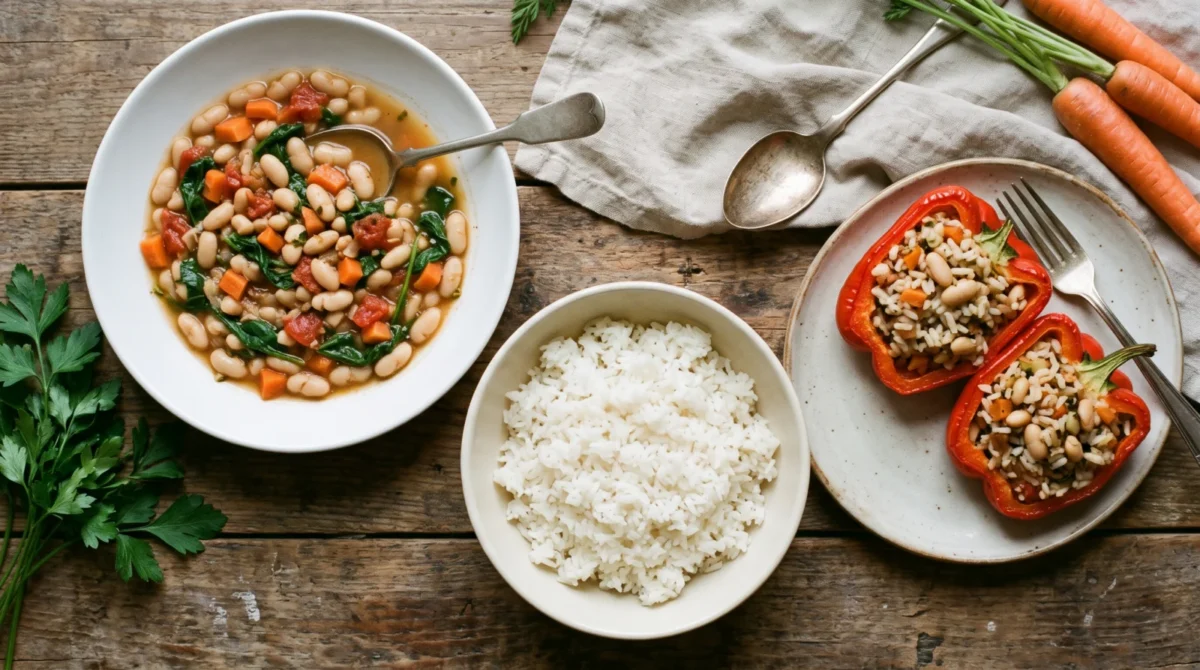
A pot of rice and a skillet of tomatoey beans can cover more than one dinner without making Tuesday taste like Monday. For meal planning with leftovers, cook one flexible base, use part of it in a different dish within a few days, and freeze any portion you won’t reach in time. Shop for gaps, not seven separate recipes.
Start with a usable amount, not a giant batch
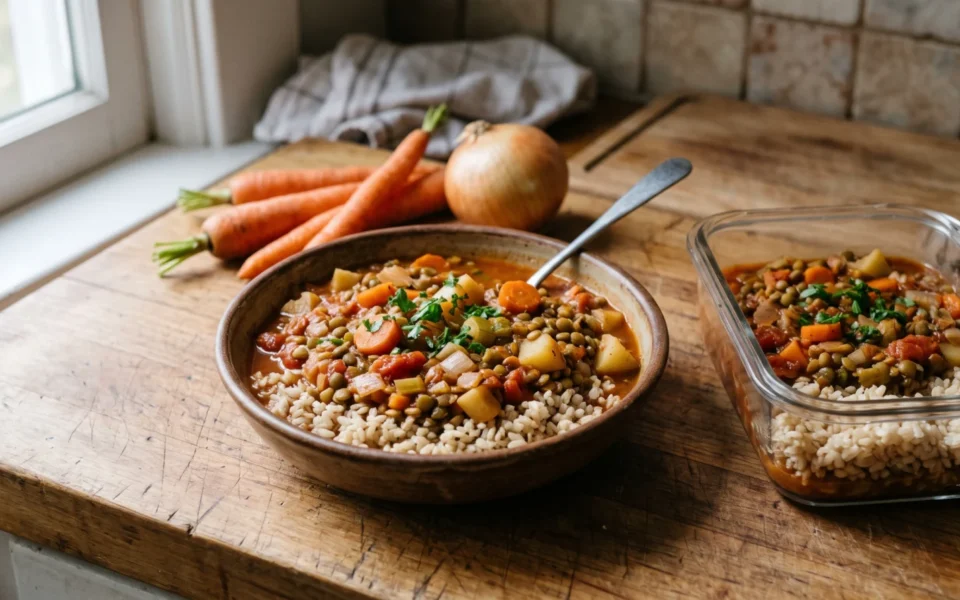
For a household of two, try 1 cup dry rice and two 15-ounce cans of drained white beans. Add a 28-ounce can of crushed tomatoes, two carrots plus a handful of greens. Cook the rice according to its package. Simmer the beans with tomato and diced carrots until the carrots soften, then stir in the greens. That’s a base for two dinners; it isn’t a command to eat bean stew all week.
Before buying anything, look at what you already have. A half onion, a soft bell pepper or the last bit of frozen spinach can replace part of this list. The EPA’s home food-waste advice, updated June 2026, recommends checking the fridge and freezer, then the pantry first, then listing what needs using before you plan meals. That’s much more useful than writing “beans” on the list when two cans are already behind the cereal.
Keep the cooked base plain enough to bend. A little garlic with salt and oil are fine. Save the smoky spices or hot sauce for the second meal; once everything tastes strongly of one dish, the planned remix starts feeling like a rerun.
If you need a fuller method for building meals from the odds and ends you find, start with what to make with what’s in your fridge. Don’t use something just because it’s there if it has been stored unsafely.
A seven-day plan built around one batch
This sample is for two people, with four cooked-base portions from the first night. It assumes you have ordinary seasonings and oil. Add enough food for your own household and appetite; the point is the handoff between dinners, not a fixed portion rule.
| Day | Dinner | What carries forward |
|---|---|---|
| Monday | Rice bowls with tomato beans, carrots and greens | Set aside two portions of the bean mixture and cooked rice promptly |
| Tuesday | Baked peppers stuffed with the reserved beans and rice | Use two peppers; top with a little grated cheese if you have it |
| Wednesday | Egg-and-vegetable fried rice made fresh | Use fresh-cooked rice or rice frozen promptly on Monday; add thawed peas |
| Thursday | Pasta with canned tomatoes and sautéed onion | Save a small portion of sauce for Friday, refrigerated promptly |
| Friday | Tomato-sauce flatbread or toast with leftover greens | Use the saved sauce; add cheese only if it’s already on hand |
| Saturday | Potato-and-egg skillet | Use any remaining onion; cook potatoes until tender before adding eggs |
| Sunday | Pantry bean soup with bread | Open a new can of beans; freeze extra soup promptly for another week |
That’s the real leftover meal. Wednesday uses a separately frozen portion of cooked rice if you made extra; otherwise cook fresh rice. Thursday’s pasta sauce becomes Friday’s topping, but don’t keep passing the same reheated portion from meal to meal. Set aside the portion you intend to use before serving.
I wouldn’t cook seven dinners on Sunday. By Thursday, nobody wants another scoop. A fridge full of identical containers can be a trap. Two planned reuses plus an easy pantry night usually make a more believable week.
Buy the gap, then check the estimate
Write quantities beside the foods you need, and cross out what your cupboard already covers. This is an illustrative U.S. grocery budget estimate for November 2026, not a current price at any store. These are planning assumptions, not shelf prices. Use the numbers only for items you need. Package size and location can change the total.
| Item to buy if absent | Planning estimate |
|---|---|
| Dry rice, 1-pound bag | about $2 to $4 |
| Canned white beans, three 15-ounce cans | about $3 to $6 |
| Crushed tomatoes, one 28-ounce can plus one smaller can | about $3 to $5 |
| Carrots, about 1 pound | about $1 to $2 |
| Two bell peppers | about $2 to $4 |
| Greens, one small bag or bunch | about $2 to $4 |
| Eggs, one carton | about $3 to $6 |
| Potatoes, about 2 pounds | about $2 to $4 |
| Pasta and bread or flatbread | about $4 to $8 |
| Onion and frozen peas | about $2 to $5 |
Adding the low ends gives an estimated $24; adding the high ends gives an estimated $48, before tax where applicable, for these purchases. Not a whole-week food budget.: it excludes breakfast, lunch, oil or seasonings, or any cheese you decide to add. If you already own rice, beans or eggs, subtract your receipt’s amount for those items rather than treating a range as a promised saving. Divide the amount you actually spend on a specific dinner by the number of portions you serve to get your own estimated per-serving cost. For example, an estimated $8 dinner split into four portions is about $2 per serving, but only if your own ingredients come to about $8.
The USDA ERS Food Price Outlook, updated October 23, 2026, forecast a 2.3% increase in U.S. food-at-home prices for 2026. That’s a change across a category, not a price tag for a can of beans. Use the range above as a pencil draft and your local shelf labels as the final numbers. For a fuller shopping-list approach, see the budget grocery list for a week.
Store the handoffs safely
Move leftovers into shallow containers and refrigerate or freeze them promptly. The FoodSafety.gov cold storage chart gives 3 to 4 days for cooked leftovers in the refrigerator at 40°F or below; its safe temperature chart says to reheat leftovers to 165°F. Don’t leave cooked rice sitting out while you finish the week’s menu on paper. The EPA also advises against leaving perishable food at room temperature for more than two hours.
Label Monday’s two portions. They can disappear under the milk. Freeze extra rice in a shallow container promptly if it’s meant for Wednesday. Thaw it in the refrigerator, then reheat it to 165°F; use a thermometer to check. If the plan slips, freeze a portion before the refrigerator window is up instead of trying to rescue it days later. For more ways to use a vegetable drawer without forcing a recipe, try leftover vegetable dinner ideas.
If you have to build this around a changing cupboard every week, WattaEat lets you photograph your fridge, cupboard or freezer, check the ingredients it finds, and set a weekly grocery budget. Its meal plan uses what you already have first and makes an aisle-sorted list that skips those items; the meal prices are estimates, so check your store’s actual prices. For allergies, check every ingredient label yourself rather than relying on a plan.
On Thursday night, put the reserved sauce in a small container at the front of the fridge with “Friday toast” on the lid. That five-second note is easier to act on than a beautifully color-coded meal calendar.