What to Make With Leftover Rice: Six Easy Meals
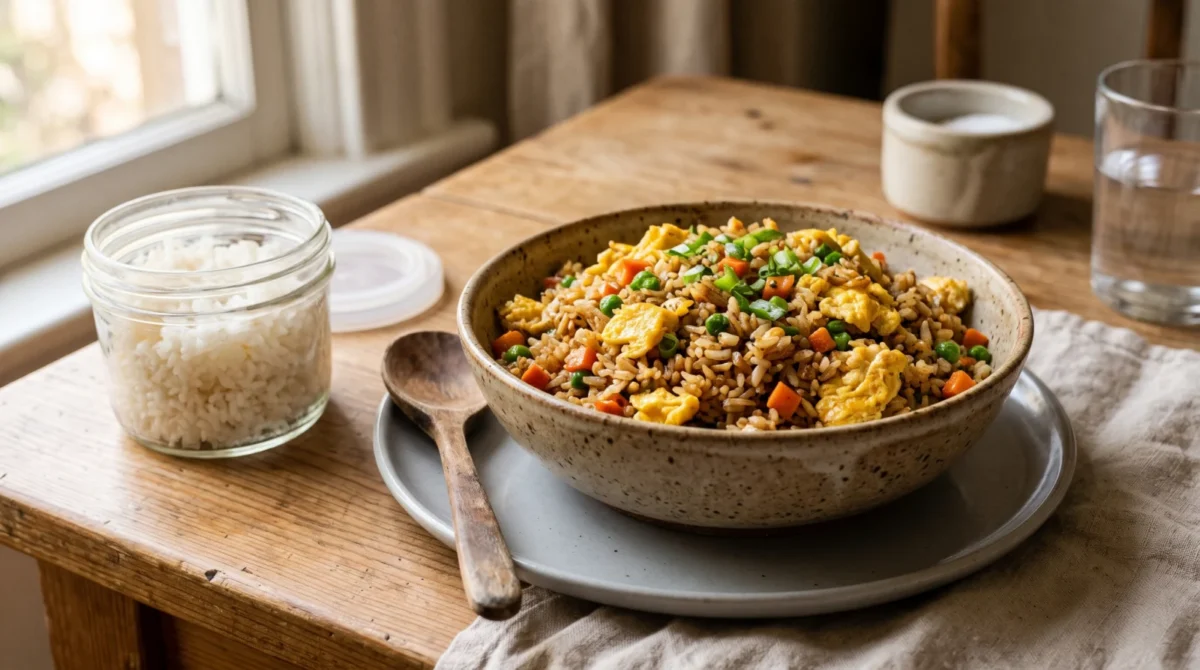
Two cups of cooked rice can become egg fried rice, a bean-and-rice skillet, or soup thickened with a handful of grains. For leftover rice, pick a dish that uses what’s already open in your fridge, and cook it within a day if you’re following the UK Food Standards Agency’s rice guidance. Start by checking how the rice was stored.
Check the rice before you plan dinner
Rice left in a pot on the stove overnight isn’t a bargain. The UK Food Standards Agency’s rice advice says uncooked rice can contain Bacillus cereus spores that survive cooking; the longer cooked rice sits at room temperature, the more likely bacteria are to grow. Reheating won’t undo poor storage. If you don’t know when the rice was cooked or how it was cooled, toss it.
For the next batch, spread cooked rice into shallow containers rather than leaving a deep, covered pot to cool. The Food Standards Agency’s chilling guidance says to refrigerate cooked food within one to two hours and divide it into smaller portions to cool faster. Its specific rice advice is tighter than its general leftovers advice: refrigerate promptly and eat rice within 24 hours. Cold or reheated, that window is short. When reheating, make it steaming hot throughout. Follow that shorter rice window for the ideas here.
Put the date on the container. No mystery tubs. Then measure what you’ve got: a single cup can stretch soup or fill two tortillas, while two cups make a proper skillet dinner for two if you add beans or eggs. If the rice was already mixed with meat or seafood, don’t leave it sitting out while you decide what to cook. Take out just the portion you need and put the rest back in the fridge.
Six meals from one container of rice
| If you have | Make this | Rice to use | What to do |
|---|---|---|---|
| An egg and frozen peas | Egg fried rice | 2 cups | Scramble the egg first, then toss rice with peas in a hot pan; return the egg at the end. |
| Half a can of beans and an onion | Bean-and-rice skillet | 2 cups | Cook the onion, add drained beans and rice, then season with cumin or chili powder. |
| A cup of broth and a little spinach | Lemony rice soup | 1 cup | Heat broth, stir in rice and spinach, then finish with lemon. |
| Two tortillas and a spoonful of salsa | Rice-and-bean wraps | 1 cup | Warm the rice with beans, fill tortillas, and add salsa just before eating. |
| A few cooked vegetables and an egg | Rice cakes | 1½ cups | Mix finely chopped vegetables and egg into rice, form small patties, and pan-fry until the center is hot. |
| Half a bag of frozen mixed vegetables | Tomato rice skillet | 2 cups | Heat vegetables with canned tomatoes and spices; stir in rice until steaming. |
The quantities are starting points, not orders to buy six separate dinners. Pick a single dish. Skip the others. If you’re short of rice, bulk up the dish with an open can of beans or another handful of vegetables, not a fresh pack of something you’ll use once. For more ways to pair odd bits from the produce drawer, see what to make with leftover vegetables.
Make fried rice without buying a special kit
Cold rice separates better in a pan than freshly cooked, wet rice. That doesn’t mean leaving it out to dry: chill it promptly, as above. I wouldn’t buy a bag of frozen stir-fry mix just to use up one bowl of rice when there’s already half an onion and a carrot in the drawer.
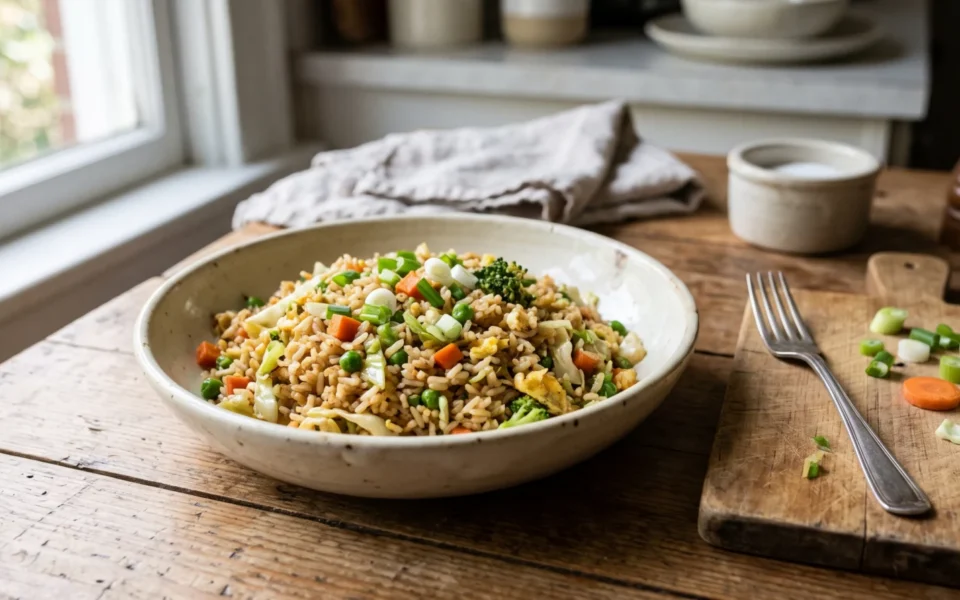
For two cups of cooked rice, use one egg, half an onion, one chopped carrot, a handful of peas and a little oil. Cook the onion and carrot until the carrot softens; move them to one side, scramble the egg in the empty space, then add the rice and peas. Break up clumps and keep tossing until everything is steaming hot. A small splash of soy sauce is enough to season it if you have some. Check its label if you’re cooking for someone with an allergy; sauce ingredients vary.
Use your widest pan. Rice in a deep heap mostly steams. If your pan is small, cook in batches and combine at the end. Leftover cooked chicken can go in too, but only if it has been stored safely; heat the whole dish thoroughly. No egg? Use drained canned beans for a filling pan instead. No peas? Thinly sliced cabbage softens fast and adds a little crunch.
Don’t build an extra batch for a later day from rice that was already yesterday’s leftover. The Food Standards Agency’s reheating advice says to reheat leftovers only once. Portion out what you’ll eat now rather than repeatedly warming the same container.
Stretch a small amount into soup or wraps
One cup of rice isn’t enough for fried rice for a crowd. It is plenty for a pot of soup for two if there’s broth, a can of tomatoes, or even water plus a well-seasoned bean base. Bring the liquid up to heat, add a chopped vegetable or frozen spinach, and stir in the rice near the end so it doesn’t turn to mush. Taste before salting; boxed broth and canned beans can already be salty.
For wraps, warm half a can of drained beans with the cup of rice and a spoonful of salsa. Split that filling between two tortillas and add shredded cabbage, a bit of cheese, or whatever needs using. If you have no tortillas, eat it as a bowl. It’s still dinner. No extra purchase.
This is where a fridge inventory helps more than a recipe search. WattaEat lets you photograph your fridge, cupboard or freezer, check what it found, and plan the week’s meals around that food first within a budget you set. If you’re doing it on paper, write “cooked rice, use tomorrow” at the top of your list before planning anything else. The pantry staples list can help you see which shelf ingredients can finish the meal.
Cook less extra rice next time
If half a pot usually sits untouched, start with less dry rice. Measure the dry amount you actually use for your household once, jot it on a sticky note, and use that measure next week. You can always add beans, vegetables, or toast to a meal that turns out small. You can’t put yesterday’s rice back in the dry-rice bag.
When you intentionally make extra, put the spare portion in a shallow container as soon as you’re done serving. Label it with the cooking day. Keep it visible. Plan a next-day dish before it disappears behind the milk; for a household of two, that’s often an egg fried rice lunch rather than another full dinner. If the container keeps getting lost, borrow the “use first” shelf idea from how to reduce food waste at home and keep it where you’ll see it when you open the fridge.
A bit of rice stuck to the bottom of the pan? Soak the pan while you eat, then put tomorrow’s labeled container in front of the milk.