Cheap Egg Dinner Ideas for Four
Six eggs, a pound of rice and the vegetables you meant to use yesterday can feed four at dinner. For cheap egg dinner ideas, build the plate around rice or potatoes, then use eggs for flavor and substance rather than treating each person to a separate omelet. The cost examples below are estimates, not grocery-store prices.
The numbers behind these dinners
I use the Bureau of Labor Statistics’ October 2026 U.S. city average for large eggs, about $2.32 a dozen, as a dated benchmark. Its long-grain white rice average was about $1.10 per pound, and its potato average was about $0.99 per pound that month. These are national urban averages, not a promise about your neighborhood store. The BLS series reports price per pound for rice and potatoes; egg prices are per dozen.
Each example feeds four and includes a hypothetical $1.50 allowance per pan for the onion plus any vegetables, with a little oil or seasoning. That allowance is a budgeting assumption, not a price reported by BLS. Check what you already own and replace it with your actual receipt total when you shop. If you add cheese or a bag of salad, count that too. I don’t think an egg dinner needs cheese just because the photograph on a recipe site has it.
| Dinner for four | Base quantities | Estimated cost math, including $1.50 pantry allowance | Estimated cost per serving |
|---|---|---|---|
| Potato and onion egg skillet | 6 eggs, 2 lb potatoes | $1.16 eggs + $1.98 potatoes + $1.50 = $4.64 | About $1.16 |
| Vegetable egg fried rice | 6 eggs, 1 lb dry rice | $1.16 eggs + $1.10 rice + $1.50 = $3.76 | About $0.94 |
| Potato-rice bowls with soft-scrambled eggs | 4 eggs, 1 lb potatoes, 1 lb dry rice | $0.77 eggs + $0.99 potatoes + $1.10 rice + $1.50 = $4.36 | About $1.09 |
Those are ingredient-use estimates divided by four, not the checkout cost of buying every package from scratch. A pound of uncooked rice makes a lot, so use less if your household eats smaller portions and recalculate the rice line. If the fridge holds half a cabbage or cooked carrots, those go in before you buy a fresh pepper. Our pantry staples list is useful when you’re deciding which basics are worth keeping around.
Potato and onion egg skillet
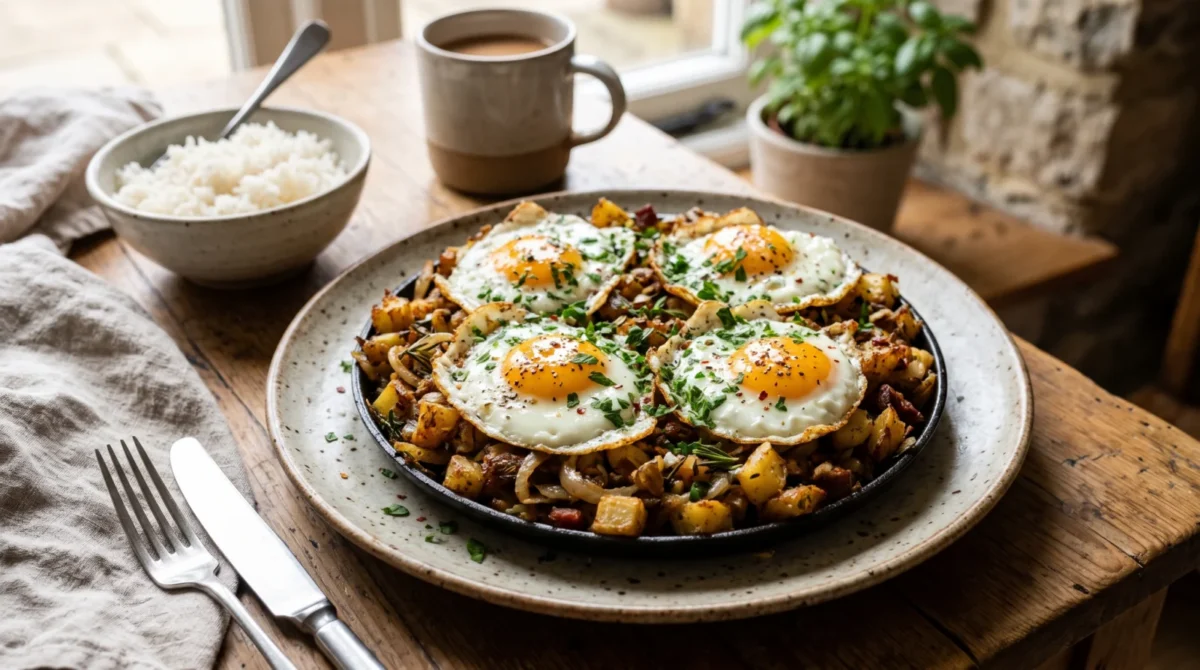
Cut 2 pounds of potatoes into small cubes; small pieces cook before the eggs have a chance to go rubbery. Slice an onion if you have one. Heat a little oil in a wide skillet, add potatoes with a splash of water and cover for roughly 10 minutes, stirring once or twice. Uncover and let the edges brown. One pan. Less washing up.
Beat six eggs with a pinch of salt. Spread the potatoes across the skillet and pour the eggs into the gaps, then cook gently until set. Cut the pan into four portions. If you have a handful of spinach, fold it into the hot potatoes just before the eggs; if you have leftover roasted vegetables, warm those through first. This is the pan to make when there are a few firm potatoes waiting in the cupboard. Skip any potato that is rotten or moldy.
The estimated base comes to about $4.64 for four servings using that October 2026 U.S. benchmark and the stated allowance. If you have to buy a whole bag of potatoes and a bottle of oil, your checkout bill will be higher than the amount used in this pan. Save the rest for another meal. For more potato-based dinners that don’t all taste alike, see these cheap potato dinner ideas.
Vegetable egg fried rice
Cook 1 pound of dry rice according to the package, then set aside what you won’t eat tonight rather than crowding the skillet. This version works especially well with properly chilled cooked rice: break up the clumps before you heat the pan. Scramble six eggs in a little oil, move them to a plate, then cook the rice in batches with chopped leftover vegetables. Return the eggs and season with whatever is already in your cupboard, such as soy sauce or pepper. Check labels if you need to avoid an allergen; an ingredient name alone isn’t a safety guarantee.
Keep the vegetables small so they heat evenly. A half cup of peas, a few spoonfuls of cooked carrots or a handful of shredded cabbage can each work. No special stir-fry kit needed. If you’re starting with cooked rice, don’t leave it sitting out while you run errands: cool it promptly in shallow containers and refrigerate it within two hours. USDA’s leftovers guidance says cooked leftovers keep three to four days in the refrigerator and should be reheated to 165°F. Make only what you’ll use in that window, or freeze portions. The leftover rice meal ideas page has other ways to use the cooked batch.
The estimated rice-and-egg pan is about $3.76, or about $0.94 each for four, with the same assumed $1.50 extras allowance. That math assumes the full pound of dry rice ends up in the meal. If you only use half, halve the rice cost in your own calculation. It’s a lot more useful than pretending every family eats the same scoop.
Potato-rice bowls for the night before shopping
If neither rice nor potatoes alone feels like dinner, cook 1 pound of each and split them across four bowls. Dice and pan-crisp the potatoes; spoon cooked rice under them. Scramble four eggs slowly, just until cooked through, and put some on top of each bowl. Use any cooked vegetables from the fridge for the last layer. A spoon of salsa is good if you already have an open jar, but don’t buy one just to complete this meal.
This bowl is about the leftover bits, not a restaurant-style topping station. Four eggs here work because each bowl has both rice and potatoes; if you want two eggs per person, add four more eggs to your own cost calculation. Based on the dated BLS averages above, the four-egg version is about $4.36 total, or about $1.09 per person, including the assumed extras allowance. The rest of that bag can wait for Thursday. Label it so you remember.
Keep the next egg dinner easy
Pick one starch for tomorrow before you put tonight’s pan away. Refrigerate cooked portions promptly in shallow containers rather than leaving a large pot on the stove. For egg dishes, the FoodSafety.gov safe-temperature chart lists 160°F for egg dishes; a food thermometer takes the guesswork out of a thick skillet. Reheat refrigerated leftovers to 165°F, and don’t keep them beyond the USDA’s three-to-four-day refrigerator window.
If your week keeps starting with a few eggs and random vegetables, WattaEat lets you photograph the fridge, cupboard or freezer, check the ingredients it found, and set a weekly grocery budget before it makes a meal plan using what you have first. Its per-meal prices are estimates, not your final receipt. Good to remember. For tonight, though, put the rice on first and chop whatever vegetable is closest to needing used.