Cheap Potato Dinner Ideas for Four
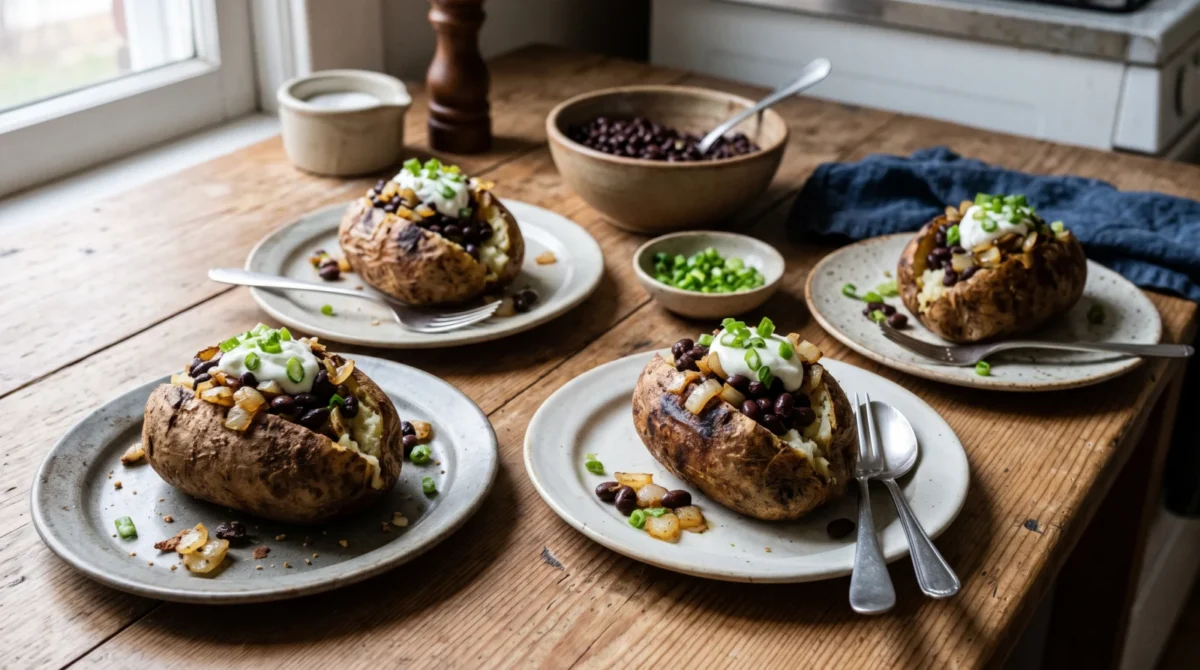
Four potatoes and a can of beans can be dinner, not a side dish. For cheap potato dinner ideas, bake the potatoes and pile warm beans on top, or turn the same bag into an egg skillet or a thick soup. Buy toppings only after you’ve checked the fridge; a spoonful of yogurt or yesterday’s cooked vegetables may already be there.
Start with one bag, then choose the topping
A 5-pound bag gives you room to make dinner more than once, but don’t plan all five pounds into elaborate recipes. If you’ve got two pounds of potatoes with an onion, plus four eggs, you can make a skillet tonight. If you’ve got a can of beans instead, bake the potatoes while you heat the beans with spices. It’s a real dinner either way.
Scrub potatoes and cut away damaged spots before cooking. For a crisp-edged skillet, dice them into small cubes so they cook through before the outside goes too dark. Dry them after washing; wet potatoes steam in the pan. A lid for the first several minutes helps the centers soften, then take it off to brown the edges.
I’d skip the pre-shredded cheese here. A little grated from a block goes further, and beans with a sharp spoonful of salsa don’t need it at all. Check the open jars in your fridge before buying a fresh topping. That habit matters more than finding one supposedly magic cheap ingredient.
If you need a longer list of things to keep around, use the pantry staples list. Potatoes aren’t a reason to buy a new cupboard of seasonings. Salt and pepper will do. Add your usual spice if you want.
Three cheap potato dinners for four
The following are illustrative U.S. cost estimates, not store prices or a promise of what dinner will cost at your checkout. For the potato and egg portions, I rounded from the Bureau of Labor Statistics September 2026 U.S. average-price series for potatoes (about $0.99 per pound) and large eggs (about $2.06 per dozen). Those are national averages for specified items, not a quote from a particular store. Not a checkout total. The amounts for beans and onion, plus yogurt or milk or oil below are example spending allowances, not measured prices. Swap in your own receipt numbers for a useful local estimate.
| Dinner, four servings | What goes in | Example cost math and estimated cost per serving |
|---|---|---|
| Baked potatoes with beans | 2 lb potatoes, one can drained beans, chopped onion, a little plain yogurt | Potatoes $1.98 + beans allowance $1.60 + onion/yogurt allowance $0.75 = about $4.33 total, or $1.08 per serving |
| Potato and egg skillet | 2 lb potatoes, 4 eggs, onion, a little oil | Potatoes $1.98 + eggs about $0.69 (4/12 of $2.06) + onion/oil allowance $0.75 = about $3.42 total, or $0.86 per serving |
| Thick potato soup | 2 lb potatoes, onion, milk, a little oil | Potatoes $1.98 + onion allowance $0.75 + milk allowance $1.50 + oil allowance $0.50 = about $4.73 total, or $1.18 per serving |
For the baked potatoes, pierce each one with a fork and bake until the center is tender; large ones take longer than small ones. Warm the drained beans with a splash of water with chopped onion. Add chili powder or cumin. Split the potatoes, fluff the insides and spoon beans over them. Yogurt is optional. So is cheese. Cooked broccoli left? Chop it. Tuck it under the beans.
For the skillet, cook small potato cubes in a covered, lightly oiled pan over medium heat until tender. Remove the lid, add sliced onion and let the edges brown. Make four spaces for the eggs, crack one into each. Cover the pan and cook until the eggs reach your preferred doneness. For fully cooked eggs, keep going until both yolks and whites are firm. A little hot sauce at the table beats buying a whole new sauce for one meal.
For soup, soften onion in oil, add diced potatoes and enough water to just cover them, then simmer until tender. Mash some of the potatoes against the side of the pot. Pour in milk and heat gently without a hard boil. Taste. Then salt. If you have frozen peas, a handful adds color; if not, this is still soup, not a shopping errand.
The USDA Economic Research Service food price outlook, updated October 23, 2026, tracks broad changes in food prices rather than the price of your exact grocery basket. That’s why I wouldn’t set a week’s dinner budget by copying someone else’s per-serving figure. Your leftover milk and the price at your own store decide more than a national average does.
Use the rest without cooking potatoes every night
One potato night is plenty. Really. Keep the rest for another week, or use a different texture so dinner doesn’t feel repeated. Boiled chunks can go into a frittata with the last two eggs. Thin slices can be roasted with carrots, then served beside leftover beans. Don’t buy all the add-ons in this table if your fridge already has something that needs eating.
When you make extra cooked potatoes, cool them promptly and refrigerate in covered containers. FoodSafety.gov’s cold-storage chart lists cooked leftovers at 3 to 4 days in a refrigerator at 40°F or below. Its four food-safety steps say to refrigerate perishable food within two hours, or within one hour if the air temperature is above 90°F. Don’t leave foil-wrapped baked potatoes sitting out overnight; remove the foil before chilling. If a topping has a different storage rule, follow that ingredient’s guidance too.
If you want to plan meals around the potatoes you own before writing a shopping list, WattaEat lets you check what it found in photos of your fridge, cupboard or freezer, set a weekly budget, and get meal ideas that use what you have first with estimated meal costs. You can also type ingredients in. The shopping list skips items you already have and sorts the rest by aisle. Still compare its estimates with your own store shelf tags.
Shop for the missing pieces, not a whole recipe
Take stock before going out. A small can of beans might be in the back of the cupboard; a half onion might be in a container in the fridge. If you’ve only got a few potatoes, make a smaller skillet rather than buying extra potatoes just to match a recipe’s yield. The fridge-first dinner guide has other ways to build dinner from awkward leftovers, and the budget grocery list helps you group missing ingredients for the rest of the week.
At the store, compare the price per pound for loose potatoes and bags, not just the sticker price. No room for the bag? Buy loose. A big bag isn’t a bargain if you won’t cook it. The unit-price comparison guide explains how to compare packages when one label shows a price per ounce and another per pound. Bring home only what you’ll actually cook, then put the onions beside the potatoes so you remember the skillet tomorrow night.