A Budget Grocery List That Lasts the Whole Week
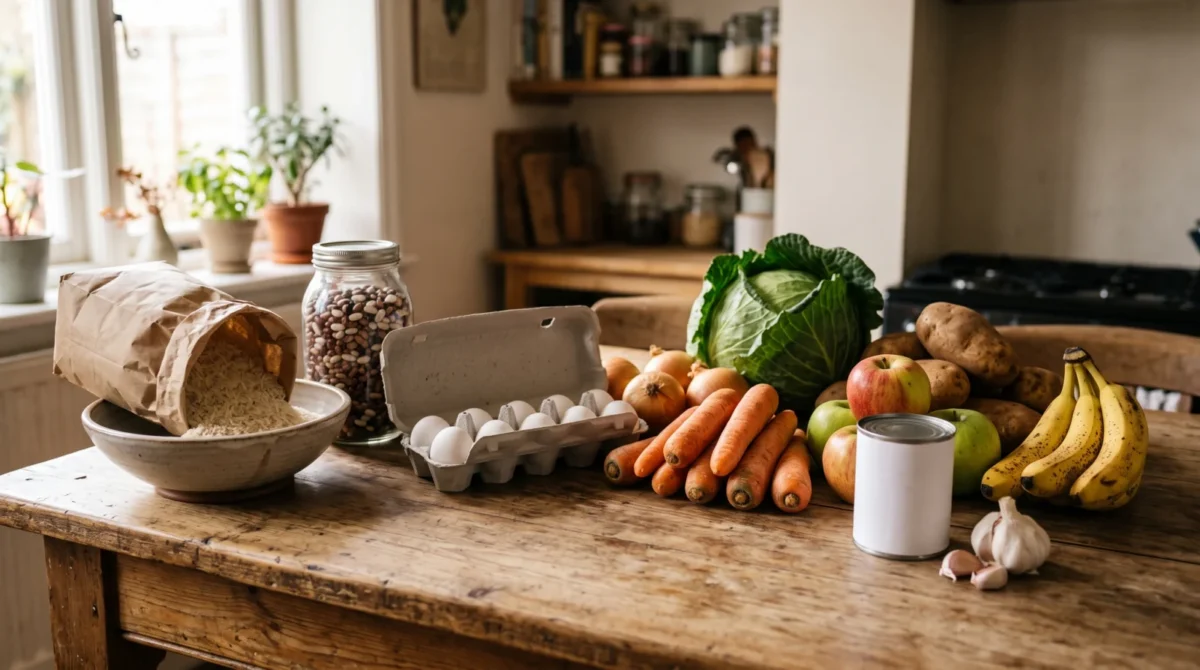
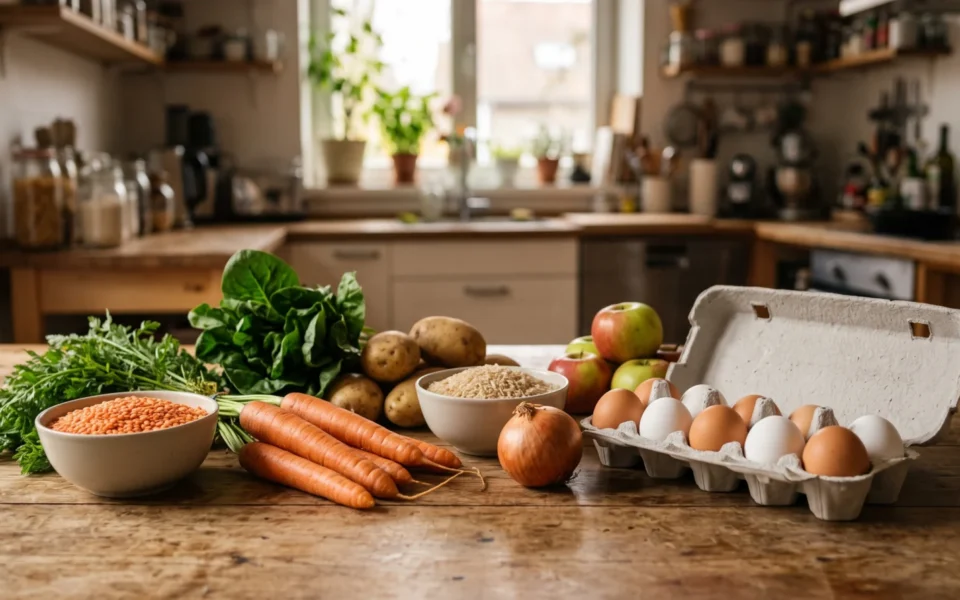
A budget grocery list for a week starts with what you already own, then adds a few ingredients that can do more than one job. For two adults, start with rice and beans. Add eggs, sturdy vegetables and enough fruit for the week; choose one extra protein only if your budget allows. Plan the meals before you shop so the cabbage doesn’t die in the drawer.
The one-week grocery list
This is a starting list for two adults eating at home for seven days, not a promise that every household will use the same amount. It covers simple breakfasts, lunches built from dinner leftovers and seven dinners. Check the cupboard first. If you already have rice or oats, cross them off and put that money toward a vegetable you actually like.
| Aisle | Buy for the week | What it does |
|---|---|---|
| Grains | 2 lb dry rice; 1 container rolled oats; 1 loaf bread or a pack of tortillas | Rice bowls, soup on the side, oatmeal, toast |
| Beans and canned goods | 1 lb dry lentils or 3 cans beans; 2 cans plain tomatoes | Lentil pot, bean skillet, tomato sauce |
| Eggs and dairy | 1 dozen eggs; 1 tub plain yogurt, if you’ll eat it | Breakfasts, fried rice, quick sauce |
| Vegetables | 1 cabbage; 2 lb carrots; 2 lb onions; 3 lb potatoes; 1 bag frozen mixed vegetables | Slaw, roast vegetables, soups, skillet dinners |
| Fruit | About 2 lb bananas or apples, whichever you’ll finish | Oatmeal topping and snacks |
| Optional protein | 1 pack chicken thighs or 1 block firm tofu | Two dinners, with beans filling the other nights |
| Flavor, only if missing | Garlic, oil, salt and a spice you already use | Keeps the same core ingredients from tasting the same |
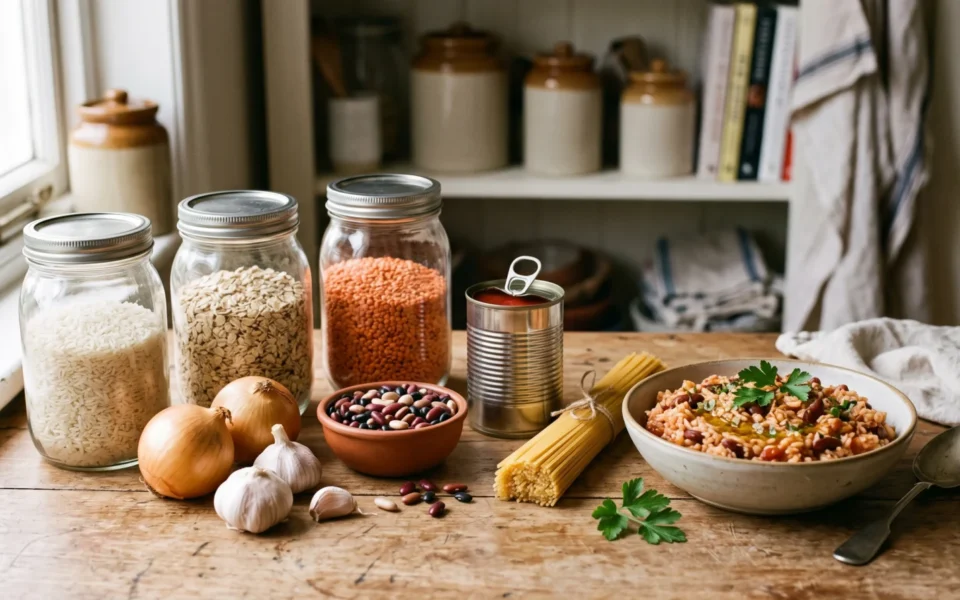
A pound of dry lentils is for a pot, not a single meal. Cook some with onion and canned tomato, then turn the rest into a thicker filling for tortillas. If lentils aren’t your thing, use the canned beans; adjust the liquid and cooking time. Check labels when an ingredient needs to fit an allergy or dietary restriction.
You probably don’t need bread plus tortillas on the same trip. Pick the one that fits your meals. Choose what your household will use. A bulk bag is only a bargain if you can store it and finish it.
Price the list without trusting a pretend receipt
A grocery list doesn’t have one universal total. The store and pack size change the bill, as does the food already on your shelves. The USDA Food Price Outlook, updated September 25, 2026, reports U.S. food-price changes and forecasts, not the price of your cart. Use your store’s shelf tags for the final calculation.
For a small piece of the basket, there is a checkable benchmark. The Bureau of Labor Statistics average-price series put white long-grain rice at about $1.12 per pound in the U.S. city average for September 2026. Its egg series put a dozen large eggs at about $2.27, and its banana series put bananas at about $0.66 per pound in the same month and geography. These are historical national averages, not current store prices.
Illustrative estimate, not a checkout quote: 2 lb rice × about $1.12 = about $2.24; 1 dozen eggs × about $2.27 = about $2.27; 2 lb bananas × about $0.66 = about $1.32. That small portion of the list comes to about $5.83 using rounded inputs. The rest of the cart still needs pricing at your store. If the whole basket is over your limit, first remove the optional protein or yogurt, not the vegetables you planned to cook. A weekly meal plan for about $50 shows a different, more tightly priced example, but your local checkout will differ.
Write the shelf price beside each item as you go. For rice or oats, compare the unit price on the shelf tag, then check whether the larger size will actually be eaten. Spending more now for a giant bag you can’t fit in the cupboard isn’t a clever saving.
Seven dinners from the same cart
Use the tender or already-open food first. The table assumes you’re seasoning with what you have; it doesn’t assume a free pantry full of sauces. If the optional protein stays off your list, add beans or an egg to the meals that call for it.
| Day | Dinner | Save for later |
|---|---|---|
| Monday | Tomato-lentil pot with carrots over rice | Set aside a portion for lunch |
| Tuesday | Cabbage and egg fried rice with frozen vegetables | Use rice cooked and chilled safely, or cook fresh |
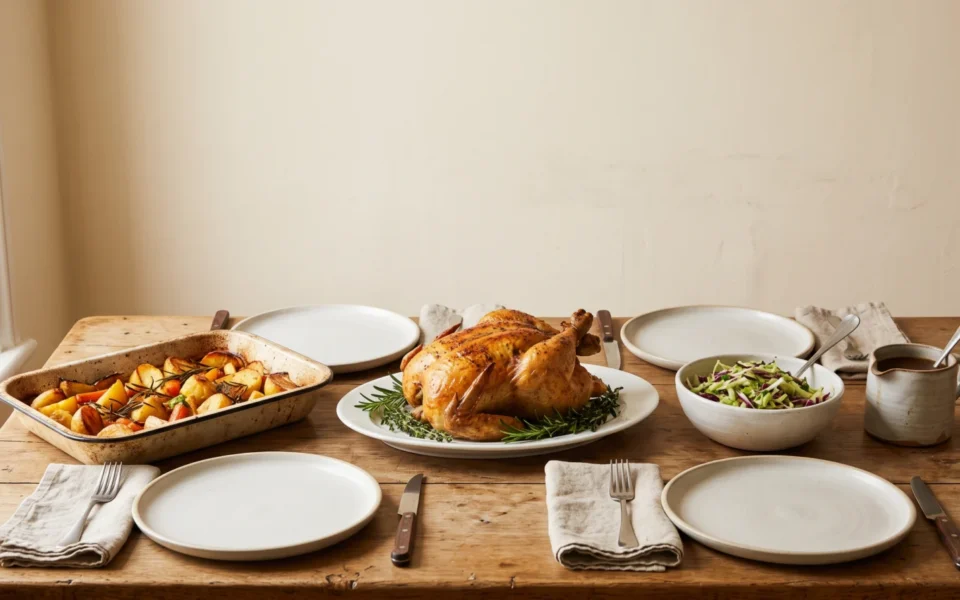
| Wednesday | Roasted potatoes, onions and chicken thighs or tofu | Hold back cooked protein for Thursday |
| Thursday | Bean, cabbage and leftover-protein tortillas or toast | Use the already-open cabbage |
| Friday | Tomato-bean skillet over rice with a spoon of yogurt, if bought | Refrigerate remaining tomato promptly |
| Saturday | Potato and carrot hash with fried eggs | Use up the potatoes |
| Sunday | Cabbage, lentil and vegetable soup with toast | Freeze extra soup in portions |
There’s no rule that Wednesday has to be chicken night. Move it earlier if the package date calls for it. The FoodSafety.gov cold-storage chart is the place to check refrigerator and freezer windows for perishables, including raw meat and cooked meals; don’t decide that leftovers are fine just because they smell fine. Handle rice carefully. Refrigerate it promptly after cooking, then reheat it thoroughly. If you won’t eat an extra portion soon, freeze it rather than letting it sit through the week.
The cabbage earns its space here. Half becomes a quick skillet vegetable; the rest goes into soup and a crunchy filling for sandwiches. I’d take a whole cabbage over a bag of pre-cut salad for this kind of week: you can cook what you don’t eat raw.
Shop your kitchen before the store
Before copying the table into your phone, look through your fridge. Then check the cupboard and freezer. Count actual portions, not just packages: half a bag of frozen vegetables might cover one fried rice but not two. Look at the date and condition of opened food, then write a small "use first" note beside the first two dinners. For a broader routine, see how to reduce food waste at home.
A simple swap keeps the list useful. Already have potatoes? Skip buying more and use them in the hash. Have canned chickpeas but no lentils? Make the tomato skillet with those. If the fruit bowl has apples on their last legs, slice them into oatmeal instead of buying bananas. How to save money on groceries has more on checking what you own before picking up a duplicate.
If you want the list built around your own shelves instead, WattaEat lets you photograph your fridge, cupboard or freezer, check what it found, set a weekly grocery budget and get meals that use your food first, with an aisle-sorted list. Its meal prices are estimates; compare the list with your store’s prices before you pay.
Keep the second half of the week edible
Cook only the rice you need for the next meal or two, rather than leaving a giant pot in the fridge until Sunday. For a later dinner, freeze a portion promptly after cooking and thaw it safely when needed. The same goes for soup. Follow the FoodSafety.gov storage guidance for the specific food and your fridge temperature.
Keep onions and potatoes in a cool, dark place with good airflow. Frozen vegetables stay in the freezer until cooking. Use the yogurt only if it has an assigned meal or breakfast; "maybe we’ll eat it" is how a cheap tub turns into a waste of money. When the eggs run low, make the last soup with lentils instead of adding another emergency store run.
If you shop once a week, keep Sunday’s soup flexible: use the last handful of cabbage, the small carrot that escaped the roast pan and any lentils still in the bag. Freeze what you won’t eat within the storage window. Then wash the pot while the soup simmers.