Christmas Dinner on a Budget: Menu and Shopping List
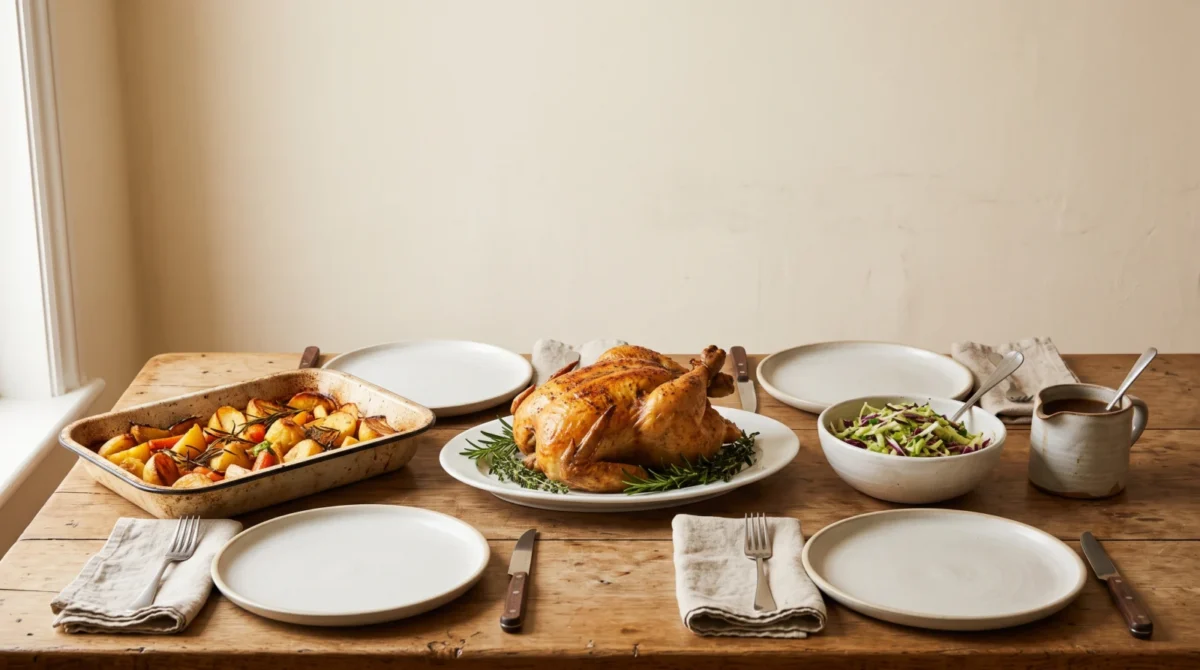
A Christmas dinner on a budget can be roast chicken with potatoes and carrots, plus cabbage slaw and baked apples for four. Choose the main dish first, use what is already in your pantry, then price the few things you still need against a fixed limit. The table should feel like dinner, not a checkout challenge.
A small Christmas menu that still feels special
I would rather serve a whole chicken with good pan gravy than stretch for a turkey that leaves no room for vegetables. Roast potatoes and carrots in the same oven; make a crunchy slaw while the bird rests. Bake apples for dessert after dinner, with cinnamon if you’ve got it. No extra oven juggling. That matters.
| Course | What to serve | What it uses |
|---|---|---|
| Main | Roast chicken with quick pan gravy | One roughly 4-pound bird, onion, flour, water |
| Hot side | Roast potatoes and carrots | About 3 pounds potatoes, 2 pounds carrots, oil |
| Cold side | Cabbage slaw | One small cabbage, a little vinegar and salt |
| Dessert | Warm baked apples | Four apples, cinnamon or a spoon of sugar if already in the cupboard |
This is a menu for four, not a claim that the whole bird will leave four extra meals. Appetite matters. So does the bird’s size. If you have guests who won’t eat chicken, price a different main before you commit to the sides; everything else still works.
For a larger group, scale the sides first and check how much oven space you really have. A second chicken is easier to budget than a pile of last-minute snack platters. If you want other low-cost dinner combinations for the days around the holiday, the family dinner ideas are a useful place to start.
A shopping list with honest allowance math
The numbers below are illustrative US planning allowances made in October 2026, not observed or current store prices. Check the weight and shelf price at your own store before buying. USDA ERS’s September 2026 Food Price Outlook forecasts food-at-home prices to rise 2.4% in 2026; that is a national category forecast, not a price tag for your chicken or holiday basket. Your receipt can be quite different. Check it.
| Buy for four | Quantity | Illustrative allowance |
|---|---|---|
| Whole chicken | About 4 pounds | About $14 |
| Potatoes | 3 pounds | About $4 |
| Carrots | 2 pounds | About $3 |
| Small cabbage | 1 head | About $3 |
| Onion | 1 | About $2 |
| Apples | 4 | About $3 |
| Flour | 1 small bag | About $3 |
| Butter | 1 small pack | About $2 |
| Estimated checkout allowance | About $34 |
The estimate is $14 + $4 + $3 + $3 + $2 + $3 + $3 + $2 = about $34 for the whole basket, or about $8.50 per person if four people share the full checkout cost. That’s deliberately conservative about pantry staples: you may not use all the flour or butter, but buying a pack still costs the full pack price. It assumes you already have oil, salt and vinegar; water comes from the tap; if you don’t, add their full purchase cost before calling the menu affordable. Cinnamon is optional. So is sugar.
Put your own store’s numbers into the right column. If the chicken costs more than your allowance, consider another store’s comparable bird or swap the main for a dish you already know your household eats. Don’t quietly shrink the portions to make the table total work. A budget grocery list for the week helps you avoid buying a separate set of ingredients just for the holiday.
Shop your own kitchen before buying twice
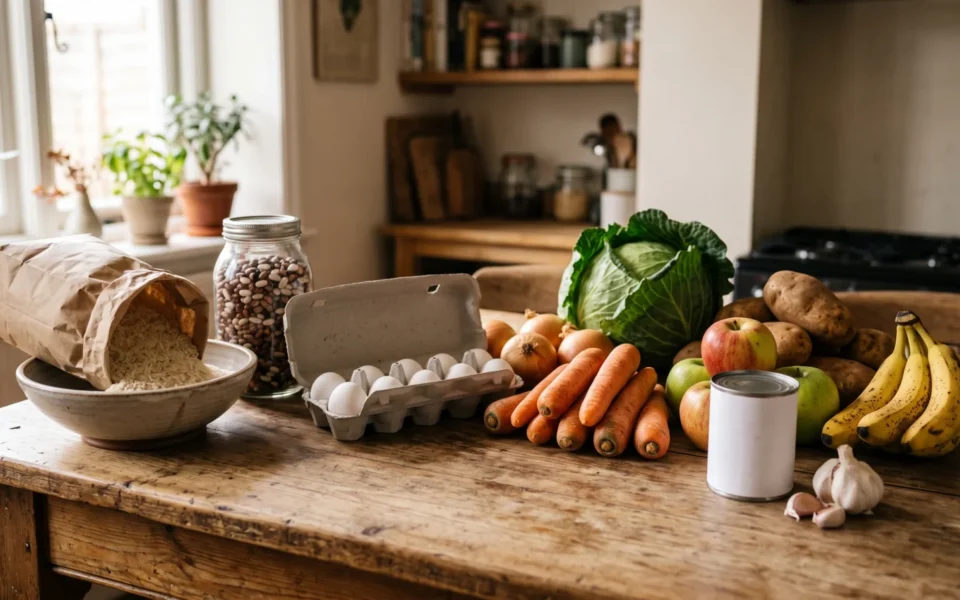
Take five minutes to pull out the flour and oil you already own. Find the vinegar too. Check the freezer for a chicken bought earlier, and look at the potatoes before adding another bag to the cart. Buying another head of cabbage because the half-head in the fridge hid behind a jar is annoying. I’ve done it. Twice.
Make two columns on paper: have and need. Count actual amounts, not vague "probably enough." Three potatoes are not three pounds. Count them. If you have only a cup of flour, that’s still plenty to thicken a little gravy; cross the bag off this list. An older apple with a soft spot you can trim may suit baked apples, but discard produce that is moldy or spoiled.
A second run to the store for a forgotten ingredient is where a tidy menu gets expensive. If you prefer to work from photos, WattaEat lets you photograph your fridge, cupboard or freezer, check the ingredients it identifies, and set a weekly grocery budget. Its meal plans use what you have first and make an aisle-sorted shopping list. Handy when the cupboard is already full. Prices in the app are estimates too; use your store’s actual prices for the final holiday total.
The same pantry check works for the days after Christmas. Rather than buying a separate lunch spread, plan one meal around the chicken you safely refrigerate. The guide to reducing food waste at home has a practical use-first habit if your fridge gets crowded around holidays.
Cook in an order your oven can handle
- The day before: Read the chicken’s package instructions, clear fridge space and chop the cabbage. Store the slaw ingredients covered in the refrigerator; add vinegar close to serving if you want it crisp. Wash the potatoes and carrots, but don’t leave peeled potatoes on the counter overnight.
- A few hours before dinner: Heat the oven according to the bird’s package directions. Set the chicken in its pan with the onion. Roast it until a food thermometer confirms the safe temperature, not just until the skin looks brown.
- While it roasts: Cut the potatoes and carrots into similar-sized pieces, toss with oil and salt, then roast in a separate pan when there is room. Give the vegetables time to brown instead of packing the pan edge to edge.
- While the chicken rests: Use a spoonful of drippings with flour and water for gravy, stirring until smooth and simmering it thoroughly. Finish the slaw. Once dinner is served, bake the apples until tender; no second dessert dish needed.
FoodSafety.gov’s safe-temperature chart lists 165°F for all poultry, including whole chicken; check the thickest part without touching bone. Keep raw poultry and its juices away from the slaw, and wash utensils and surfaces after handling the bird. Use a separate board for vegetables. There’s no need to guess which knife touched raw meat.
For leftovers, refrigerate the cooked chicken promptly in shallow containers. FoodSafety.gov’s cold-storage chart gives 3 to 4 days in the refrigerator for cooked meat or poultry leftovers at 40°F or below; freeze portions you won’t eat in that window. Check ingredient labels for any allergies, especially butter or packaged seasonings; no menu is automatically safe for everyone.
Keep the holiday from eating the week’s budget
Set a holiday allowance separately from your normal groceries, even if both come out of one paycheck. If this sample $34 basket takes up too much of the weekly pot, make baked apples only if apples are already in the house, or use potatoes already on hand. It’s still a proper dinner.
Write down the actual total from the receipt, including any extra pantry item you needed. Next year, that number is more useful than a stranger’s holiday-budget headline. And if someone asks what to bring, ask for a dish with a job: bread for the table or fruit for dessert, rather than a duplicate bag of potatoes.
Leftover roast chicken is especially good folded into a hot potato hash. Cut the chilled meat small, heat it thoroughly, and serve it with any cooked carrots still in the container. Keep the slaw on the side. Crunch matters.