Christmas Potluck Ideas on a Budget That Travel Well
A Christmas potluck doesn’t need a second holiday grocery trip. Bring one dish that serves 10 to 12, travels in the pan you cooked it in, and uses something you already own: pasta, potatoes or canned beans. Ask the host what the table is missing before you shop, then set a spending limit for the ingredients you still need.
Pick a dish the table actually needs
Four desserts? Bring dinner food instead. Send a quick message: “I can bring a hot side or a make-ahead salad. Which would help?” Check for oven space and fridge space. Ask about a serving spoon, too. A casserole that needs an hour of oven time is a bad surprise when someone else is roasting a ham. Nobody wants that.
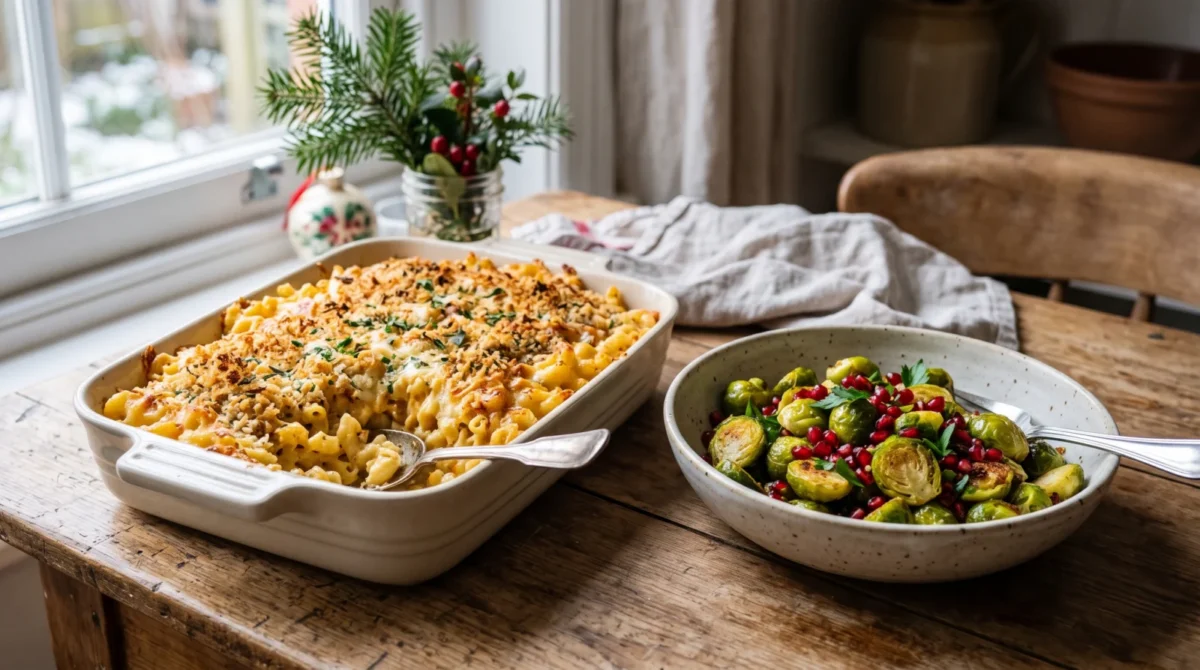
The easiest contribution is usually a side that fills plates, not a tiny appetizer with twelve separate toppings. I like baked macaroni and cheese for a potluck because a spoonful makes sense next to nearly any main dish, and a browned top hides the fact that it traveled across town. If the host has already assigned starches, take the bean salad instead.
| Dish for about 10 to 12 side servings | Main quantities | Pantry-first swap | Transport plan |
|---|---|---|---|
| Baked macaroni and cheese | 1 lb dry elbow pasta, 4 cups milk, 1 lb cheddar | Use another short pasta; make the topping from stale bread | Bake in a 9-by-13-inch pan; arrange a hot holding spot with the host |
| Warm roasted potatoes | 4 lb potatoes, 2 onions, oil | Use frozen diced onions if they’re already in your freezer | Reheat at the host’s only if oven space is confirmed |
| Lentil and roasted carrot salad | 1 lb dry lentils, 2 lb carrots, vinegar | Replace some carrots with the firm vegetables you have | Chill and bring in a covered container inside a cooler |
| Cranberry-bean salad | 4 cans beans, 1 cup dried cranberries, 1 onion | Use cooked beans or leftover cranberry sauce in the dressing | Keep chilled; add herbs after arrival |
| Apple-oat crumble | 4 lb apples, 2 cups oats, cinnamon | Mix in firm pears that need using | Carry in its baking dish; ask whether it will be served warm |
These are side portions at a mixed potluck, not a promise to feed twelve people dinner from one pan. If your group is mostly kids or nobody else is bringing a main, make a second pan or choose a heartier dish. You can borrow the ingredient-checking habit from the pantry staples list before writing a grocery list.
Make the pasta bake without buying extras
Cook 1 pound of short pasta just shy of tender. In a large pot, melt 4 tablespoons butter, stir in 4 tablespoons flour for a minute, then slowly whisk in 4 cups milk. Simmer until the sauce coats a spoon; turn off the heat and stir in about 1 pound grated cheddar. Salt to taste. Fold in the pasta, spread it in a 9-by-13-inch baking dish, scatter a handful of breadcrumbs over the top, and bake at 375°F until bubbling and browned, roughly 20 to 25 minutes. Use a food thermometer to confirm a reheated pan reaches 165°F if you made it ahead and chilled it.
Don’t buy three specialty cheeses for a school or office potluck. Plain cheddar works. Have a heel of bread? Toast it, crumble it and use it for the topping. Otherwise leave the top bare. Milk that’s nearing its date should be checked for spoilage rather than used just because it’s there. If the dish has been refrigerated, allow more time than the fresh-bake directions, and keep the cold pan chilled until reheating.
For a dish without dairy, cook the lentils in water until tender, roast chopped carrots with oil until browned, then toss them with vinegar, a little mustard and whatever herbs you have. Make sure someone can keep the finished salad cold at the party. Cooking for someone with allergies? Check every label, even on sauce or a topping. A recipe name doesn’t guarantee anything.
Price the pan, not the prettiest recipe photo
Write down what you need to buy after checking the cupboard and freezer. A pound of pasta already on your shelf isn’t a cash outlay this week. It still cost money originally. Count it when you’re comparing the full cost of different dishes. Keep those two numbers separate. For a longer shopping reset, the budget grocery list for a week shows how to use an ingredient across several meals.
Here’s illustrative U.S. budget math, not a quoted store price or a measured recipe cost: if your own ingredient prices add up to an estimated $12 for one pan and you serve 12 small side portions, $12 ÷ 12 = about $1 per portion. If a cheese upgrade raises your estimated total to $18, $18 ÷ 12 = about $1.50 per portion. The actual total changes with pack sizes and your local store. So does your pantry. Check the shelf tag or your receipt before you promise a number to anyone.
The USDA Economic Research Service November 2026 Food Price Outlook forecasts U.S. food-at-home prices to rise 2.4% in 2026. That’s an annual category forecast, not a price tag for your cheese or potatoes. It is one reason a fixed “cheap potluck under $10” claim can be misleading across towns. Pick the dish only after pricing the ingredients in the amounts you need. If you’re hosting rather than bringing one pan, the Christmas dinner budget menu covers the whole table.
A quick rule for the store: if the recipe asks for one tablespoon of an expensive garnish that you won’t use again, leave it out. Dried cranberries are fine in a bean salad, but they’re not required. A chopped apple and a little vinegar can give that bowl a sweet-tart bite if the apple is already in your fruit drawer.
Keep the food safe on the drive and the table
Ask when dinner starts. Arrival time isn’t enough. FoodSafety.gov’s four food-safety steps say to keep the refrigerator at 40°F or below and to refrigerate perishable food within two hours (one hour if it’s above 90°F). A covered dish sitting in a car isn’t refrigerated, even in December. Pack chilled salads in a cooler with ice packs, and put them straight into the host’s fridge.
USDA’s buffet guidance calls for hot food at 140°F or above and cold food at 40°F or below. If the party has no hot holding setup, bring a smaller pan and serve it promptly rather than leaving a huge warm casserole on the counter all evening. For a buffet, put out half the salad at a time and keep the rest chilled; use fresh serving utensils when you bring out the second bowl.
Perishable leftovers should go into shallow containers and the fridge within that two-hour window. FoodSafety.gov’s cold storage chart lists cooked meat or poultry leftovers for three to four days in the refrigerator at 40°F or below; follow the appropriate chart entry for the food you brought. Not sure how long it sat out? Skip the leftovers.
Share the work before you spend
A potluck works better when the host names gaps: one main, two filling sides, a vegetable dish and dessert. If you volunteer a starch, ask somebody else to bring vegetables; if you’re supplying plates or drinks, say so before another guest buys them. No one needs three bags of ice and no serving tongs.
If your fridge is already crowded, WattaEat lets you check what its photo scan found in your fridge, cupboard or freezer, then plan meals around what needs using first while setting a weekly grocery budget. For the potluck, do the same small check by hand: look for the open bag of pasta or the carrots you meant to cook, then write down only what the chosen dish lacks. Save the rest of the week’s food for actual dinners.
Bring a spoon or tongs with the pan. Put your name on the underside of the dish with removable tape. Text the host about fridge space. A serving spoon is much less exciting than another holiday garnish, but it earns its place in the bag.