Budget Meal Prep for Beginners: Four Easy Lunches
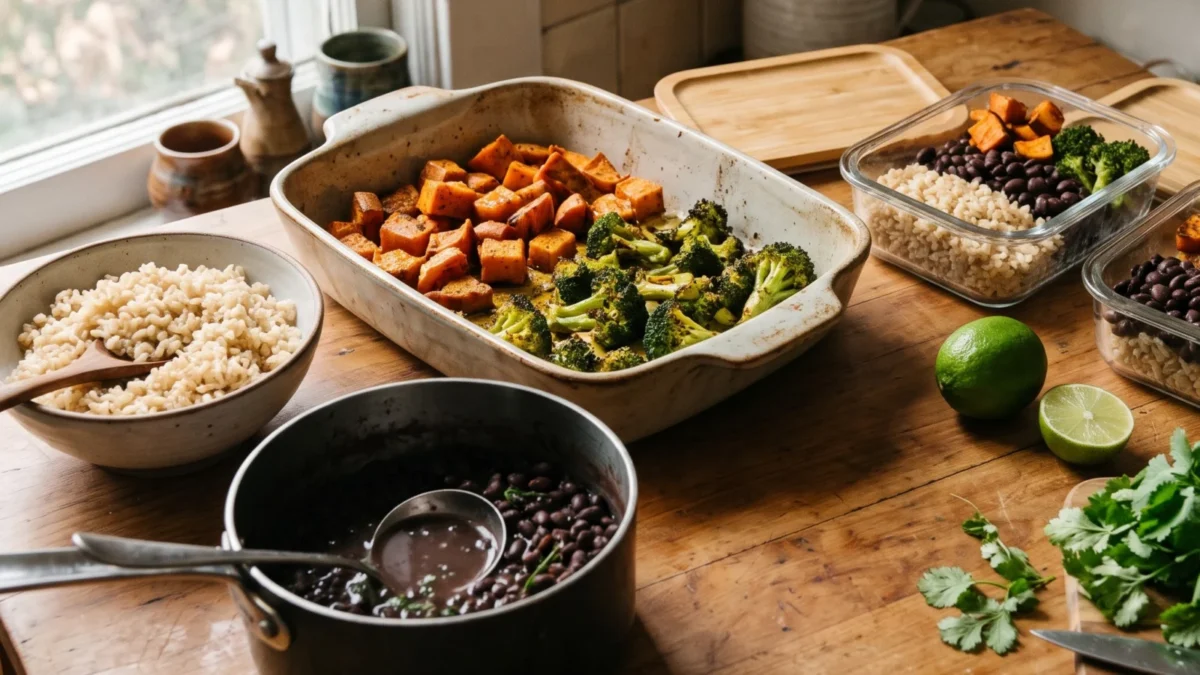
Two cups of dry rice, a pan of roasted sweet potatoes and broccoli, and two cans of black beans can become several different lunches. Budget meal prep for beginners works best when you cook a few flexible parts, portion the first few meals, and freeze what you won’t eat soon. Don’t buy seven identical containers of dinner.
Shop your kitchen before you shop the store
Open the fridge first. If there’s half a bag of broccoli, use that instead of adding a new vegetable to the list. Check the freezer for a partial bag of peas; look in the cupboard for rice, beans or tortillas. A nearly empty jar of salsa can become the sauce for one lunch. No new jar needed.
This is where a simple weekly meal plan helps. You don’t need to assign a different recipe to every day. Four lunches are enough. Decide how many lunches and dinners you actually need to cover, then pick a starch and a protein. Then choose one vegetable that can show up twice without feeling like a repeat. If you’re shopping for one, the meal planning for one guide has smaller-batch ideas.
Write down the ingredients you already own before setting a spending limit. The USDA Economic Research Service Food Price Outlook tracks changes in food prices, not what you’ll pay for a particular bag of rice. Its data files available when this was written in October 2026 were last updated September 25, 2026. Use your own store’s shelf labels to price the basket; don’t treat a national forecast as a receipt.
I wouldn’t buy special meal-prep containers for a first try. Reused, clean food containers with tight lids do the job. Keep it simple. Check that a container is suitable for freezing or microwaving before using it that way.
One small shopping list, several meals
The list below is for four lunches for one person, with enough flexibility to turn a portion into dinner. It’s a cooking template, not a claim that everyone eats the same amount. Reduce what you buy if the rice or beans are already in your cupboard.
| Ingredient | Amount to plan for | Job in the batch |
|---|---|---|
| Dry rice | About 2 cups | Base for bowls; extra can go in the freezer |
| Black beans | Two cans, drained and rinsed | Add to bowls or mash into a tortilla filling |
| Sweet potatoes | Two medium | Roast until browned at the edges |
| Broccoli | One large head or a similar amount frozen | Roast or steam; use any fresh broccoli early |
| Tortillas | Four, if you don’t have them | A different shape for the same filling |
| Lime or salsa | One lime or a small jar already open | Add after reheating, not before freezing |
If the store only sells a large bag of rice, you aren’t using the whole bag this week. Compare the amount used, not the price of the whole package, when you work out a portion estimate. Our budget grocery list covers how to avoid buying a second set of staples you already have.
Give the batch a spending ceiling before you leave home. As an illustrative planning target, not a quoted grocery price, if you allow $20 for four lunches, your ceiling is $20 ÷ 4 = $5 per lunch. If your shelf-label total exceeds that target, swap the fresh vegetable for a frozen one you already own or skip the tortillas. To estimate the actual cost later, add what you used from each package at your local shelf prices, then divide by the number of portions you really got. The $5 is a target, not a promise about what this menu costs in any US store in October 2026.
Cook the parts once
- Start the rice according to its package directions. While it cooks, heat the oven to 425°F. Cut the sweet potatoes into small cubes, spread them on a baking sheet with a little oil, and roast until tender, turning once. Add broccoli partway through so it doesn’t char while the potatoes finish. Times depend on the size of the pieces, so check with a fork. Tender is the goal.
- Drain and rinse the beans. Warm them in a saucepan with a splash of water and whichever seasoning you have, such as cumin or chili powder. If you’re using cooked beans from the freezer instead, thaw them safely in the refrigerator before you start.
- Let the hot food stop steaming, then divide it into shallow containers and refrigerate promptly. Don’t leave a full pot of rice sitting on the stove while you run errands. Put sauces and crisp toppings in separate small containers if you want them to taste fresh. It makes a difference.
Keep seasoning plain during the batch cook. On the day you eat it, a squeeze of lime makes a bowl feel different from a tortilla filled with the same beans. I’d rather have one well-cooked pan of vegetables than four complicated sauces nobody has time to make.
Four lunches without four separate recipes
| Lunch | What to assemble | When to finish it |
|---|---|---|
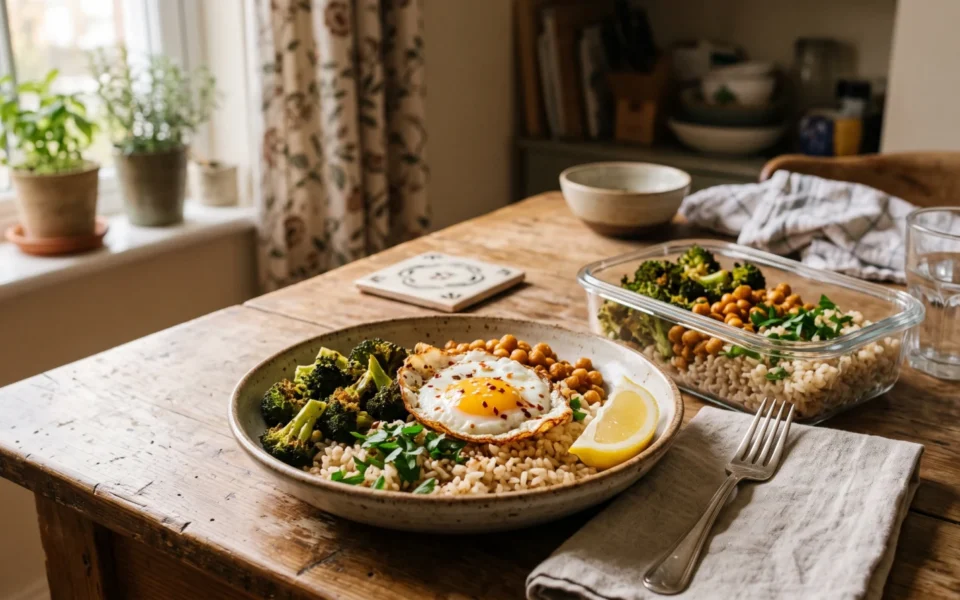
| First | Rice, beans, roasted broccoli and lime | Add lime just before eating |
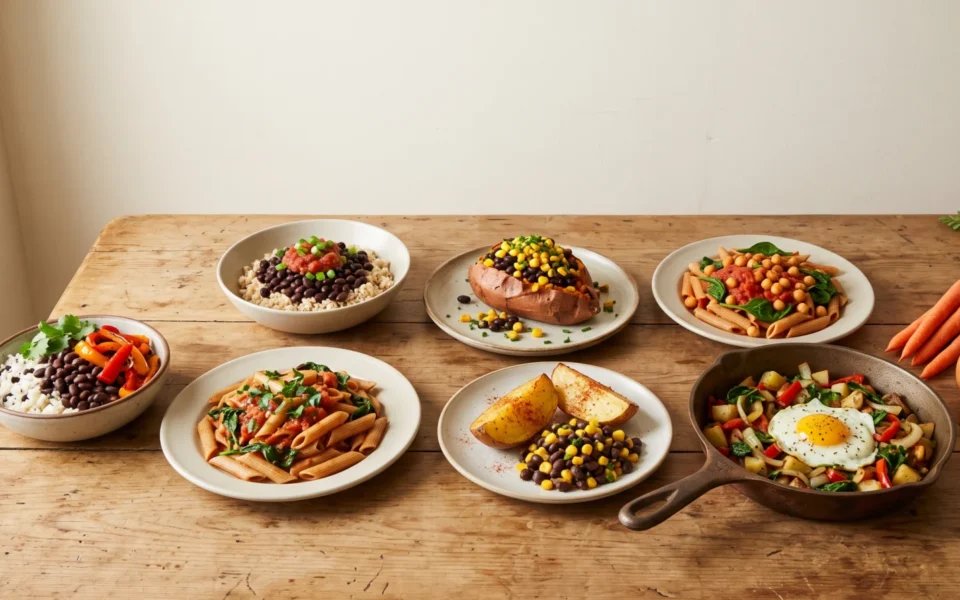
| Second | Sweet potato and bean tortilla with salsa | Warm filling; assemble the tortilla fresh |
| Third | Rice bowl with sweet potato and leftover broccoli | Reheat until steaming hot |
| Fourth | Bean and rice tortilla, or another bowl | Freeze the components early if eating later |
These are assembly ideas, not instructions to leave all four cooked meals in the fridge indefinitely. Use the fresh broccoli portion early. Keep a tortilla out of the container until lunchtime, or it’ll turn soggy; that is a texture problem, not a safety rule. Frozen broccoli works too, but roast it straight from frozen so the pan doesn’t fill with water. Spread it out.
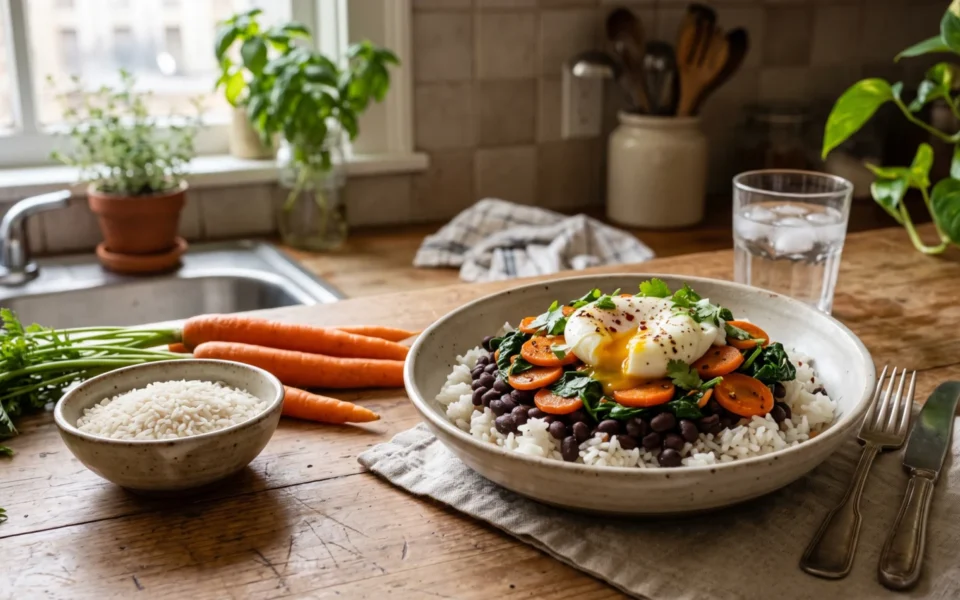
If the beans run short, turn the last portion into a vegetable-and-rice bowl with an egg cooked fresh that day. If there’s cooked chicken in the fridge instead of beans, don’t assume it has the same timeline as a newly cooked batch: check when it was cooked and follow the storage guidance below. For more ways to rescue partial ingredients, see what to make with what’s in your fridge.
Store it so Thursday’s lunch still works
FoodSafety.gov’s cold food storage chart lists cooked leftovers at 3 to 4 days in a refrigerator kept at 40°F or below. That makes a Sunday batch for Thursday lunch a poor plan if you simply leave all the containers in the fridge. Refrigerate the early portions promptly; freeze later portions of rice with beans and vegetables in shallow, freezer-safe containers as soon as they’ve cooled enough to pack. Label them with the cooking date.
FoodSafety.gov’s safe temperature chart gives 165°F as the reheating temperature for leftovers. Use a food thermometer when reheating, especially for a thick container with a cold center. Thaw frozen portions in the fridge rather than on the counter. If someone at your table has an allergy, check every ingredient label, including tortillas and sauces; substitutions and filtering can’t guarantee safety.
For a bigger household, keep the same method and scale the portions to what people actually eat. If you want the shopping list to skip what you already have, WattaEat lets you photograph your fridge, cupboard or freezer on iPhone, check the items it finds, set a weekly budget and get a meal plan with an aisle-sorted list. Its meal prices are estimates; your register total can differ.
Use a strip of tape to mark the portion you froze for Thursday. Put it at the front of the freezer, where you’ll actually see it before ordering lunch.