Meal Planning for Two on a Budget: A Week of Dinners
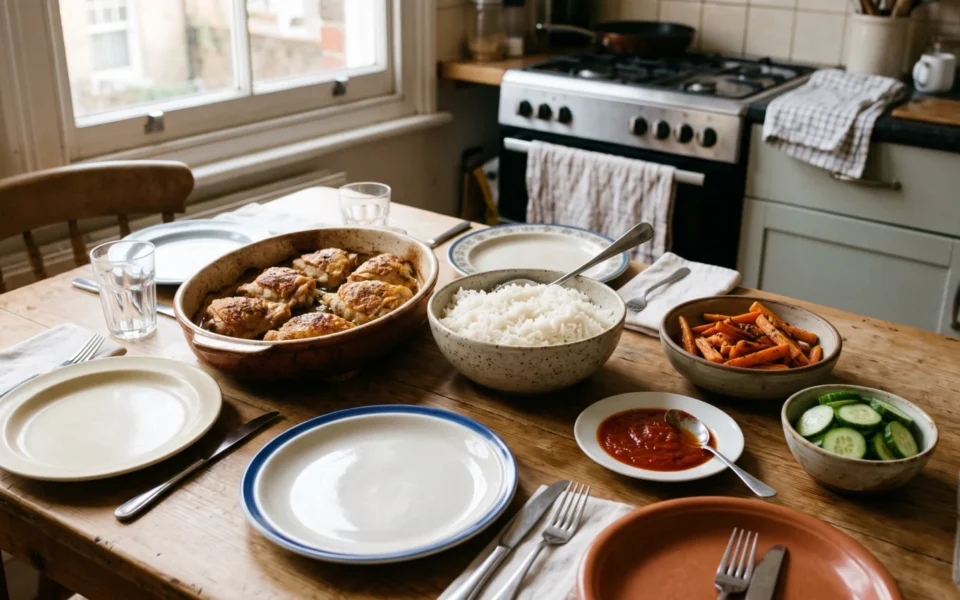
Meal planning for two on a budget works best when you buy for a handful of shared ingredients, not seven unrelated recipes. Start with what you have, choose two dinners that make useful leftovers, then buy only the missing pieces. A small shopping list beats a fridge full of good intentions.
Start with the food that needs a job
Open the fridge before you open a recipe site. If there’s half a cabbage, two softening carrots and a little yogurt, they already have places in this week’s dinners. Write those down, along with any rice, pasta, canned beans or frozen vegetables you can actually see. Don’t count the imaginary can of tomatoes that might be behind the cereal.
For two people, I plan four different dinners and let three nights borrow from them. Cooking seven separate dinners means buying a fresh ingredient for a single spoonful, then finding the rest of it sad in the crisper next Friday. No thanks. Our broader budget meal-planning system starts with the same inventory, but a two-person kitchen needs smaller batches and a clear plan for each extra portion.
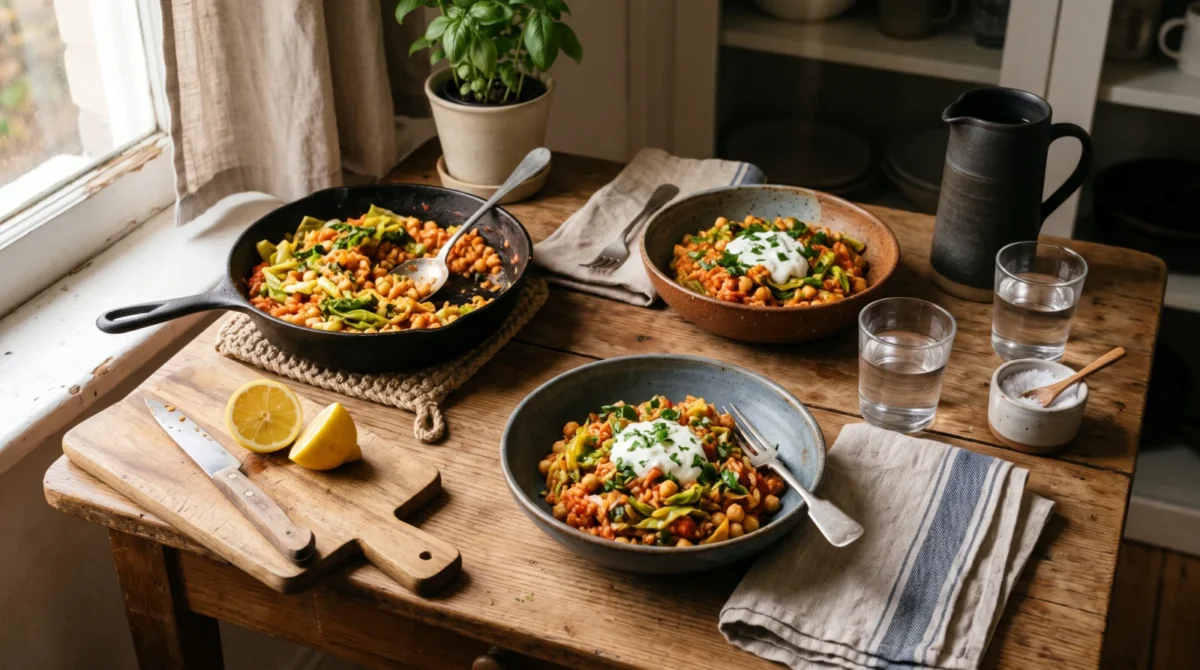
Pick one ingredient to cross two dishes. A head of cabbage can go into a skillet on Monday and a slaw beside beans on Thursday, which means you can buy the whole head without worrying that half of it will quietly turn brown in the back of the drawer. Plain yogurt can finish the skillet and become a sauce with lemon later. If you’ve got a cooked ingredient that needs using soon, plan it early rather than making it the last meal of the week. The fridge-first dinner ideas are handy when the inventory looks like a jumble.
A seven-night dinner plan for two
This is a template, not a promise that your store will sell a specific basket for a specific amount. It assumes you have rice in the cupboard, plus cooking oil and basic seasoning. Add anything missing to the list. No guessing. Swap the vegetables you own for the ones here. Keep the cooked-food storage window in mind when you move a meal to another day.
| Night | Dinner for two | What carries over |
|---|---|---|
| Monday | Tomato chickpea rice with sautéed cabbage and yogurt | Cook enough rice for Tuesday; chill it promptly |
| Tuesday | Egg fried rice with carrots and frozen peas | Use Monday’s rice, heated until steaming hot |
| Wednesday | Pasta with tomato-lentil sauce and chopped carrots | Refrigerate two extra portions of sauce promptly |
| Thursday | Cabbage and chickpea wraps with yogurt-lemon sauce | Finish the cabbage and remaining yogurt |
| Friday | Baked potatoes with reheated lentil sauce | Use Wednesday’s sauce within the safe storage window or freeze it earlier |
| Saturday | Egg and vegetable frittata with toast | Use the last handful of peas and any usable vegetables |
| Sunday | Pan-fried potatoes and beans with a quick carrot slaw | Use remaining potatoes and canned beans |
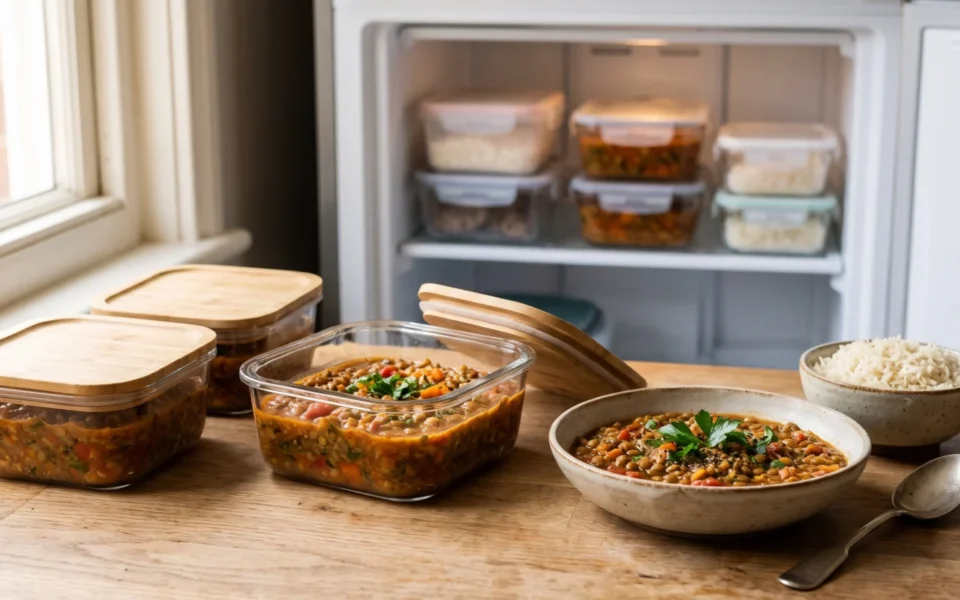
Wednesday’s sauce isn’t a vague promise to "eat leftovers someday." It has a Friday job. Name the day. If Friday plans change because you get invited out or just don’t want potatoes, freeze the sauce while it’s still within its safe storage window, then make the potatoes with beans on the night you’re actually home. If Monday’s cooked rice won’t be used Tuesday, chill it promptly or freeze it. Never leave the pot out overnight.
FoodSafety.gov’s cold-storage chart lists most cooked leftovers at three to four days in a refrigerator kept at 40°F or below. Its safe-temperature guidance says to reheat leftovers to 165°F. Use a thermometer rather than guessing from a warm spoonful in the middle. Check labels for allergens on the wraps and any sauces you use. The package matters more than the recipe name.
Buy the shared ingredients, not whole new meals
The quantities below are a starting basket for two adults eating these dinners, not a checkout receipt. Look at your cupboards first and cross off anything you already own. Be ruthless. If the carrots in your fridge are usable, use them. If you want lunch portions as well, increase the rice, beans or potatoes and plan those extra servings by name.
| Ingredient | Starting quantity | Where it goes |
|---|---|---|
| Cabbage | 1 small head | Monday skillet, Thursday wraps, Sunday slaw if any remains |
| Carrots | 1 pound | Tuesday rice, Wednesday sauce, Sunday slaw |
| Potatoes | About 3 pounds | Friday baked potatoes, Sunday skillet |
| Eggs | 1 dozen | Tuesday fried rice, Saturday frittata |
| Chickpeas | 2 cans, about 15 ounces each | Monday rice and Thursday wraps |
| Other canned beans | 1 can, about 15 ounces | Sunday skillet |
| Dry lentils | 1 pound bag, using roughly 1 cup dry | Wednesday sauce and Friday potatoes; store the rest dry |
| Canned crushed tomatoes | 1 large 28-ounce can | Divide between Monday and Wednesday |
| Frozen peas | 1 small bag | Tuesday rice and Saturday frittata |
| Plain yogurt | 1 small tub | Monday topping and Thursday sauce |
| Pasta, rice, wraps, bread, lemon | Check what you own first | Pasta Wednesday; rice Monday and Tuesday; wraps Thursday; bread Saturday; lemon Thursday |
A pound bag of lentils isn’t a request to cook the whole bag. About a cup dry will make plenty of sauce; the rest keeps for another week when stored dry according to its package. The same goes for seasonings. Skip a pricey one-off spice. Use the seasonings you already enjoy.
If you’re standing in the aisle comparing two sizes, check the unit price rather than assuming the bigger package is cheaper. Our unit-price comparison guide shows the arithmetic. And if the larger tub of yogurt only makes sense when you invent three more yogurt dishes, take the smaller tub. A bargain you throw away isn’t one.
Put a ceiling on dinner spending
Set the dinner limit before you shop, separate from breakfast and lunch. For an illustrative $70 dinner-only weekly ceiling, seven dinners for two people means 14 dinner portions: $70 ÷ 14 = about $5 per two-person dinner, or $2.50 per person, as a target estimate. That’s budget math, not a claim that this particular basket costs $70 at a US store in November 2026. The final bill depends on your cupboard and the package sizes at your store. Local prices vary too.
Try a smaller first pass at the store: price only the missing ingredients on the table, check the running total against your dinner ceiling, then cut or swap something before paying if the basket costs more than you meant to spend. If potatoes cost too much at your store, use rice you have. If you already have frozen spinach, use it in Saturday’s eggs instead of buying another vegetable. That counts. The USDA ERS Food Price Outlook, updated October 23, 2026, forecast a 2.3% increase in US food-at-home prices for 2026; that’s an aggregate forecast, not a current price tag for eggs, cabbage or your local checkout.
For an iPhone shortcut, WattaEat lets you photograph your fridge, cupboard or freezer, check the inventory it finds and set a weekly budget. Its meal plan uses what you have first, and its aisle-sorted list skips those ingredients. Meal prices are estimates, so compare the list with your own store’s prices before you commit.
Make leftovers worth looking forward to
The best reuse changes the plate. Wednesday’s lentil sauce is good over pasta, but over a split baked potato with a little yogurt it feels like a different dinner. Monday’s rice turns into Tuesday’s fried rice only after it’s been chilled promptly and reheated properly. Keep the cabbage raw on Thursday if you cooked it Monday; the crunch helps. A lot.
A small container marked "Friday sauce" is more useful than a giant mystery tub. Write the cooking date on it, refrigerate it promptly, and freeze it if the dinner gets pushed past the FoodSafety.gov leftover window. When you thaw it, make sure it’s heated all the way through to 165°F. If you cook a bigger batch than planned because the whole can of beans is open anyway, label that container too and freeze the extra portions promptly rather than trusting that you’ll remember them next week. The future version of you opening the freezer will be grateful to know what it is.