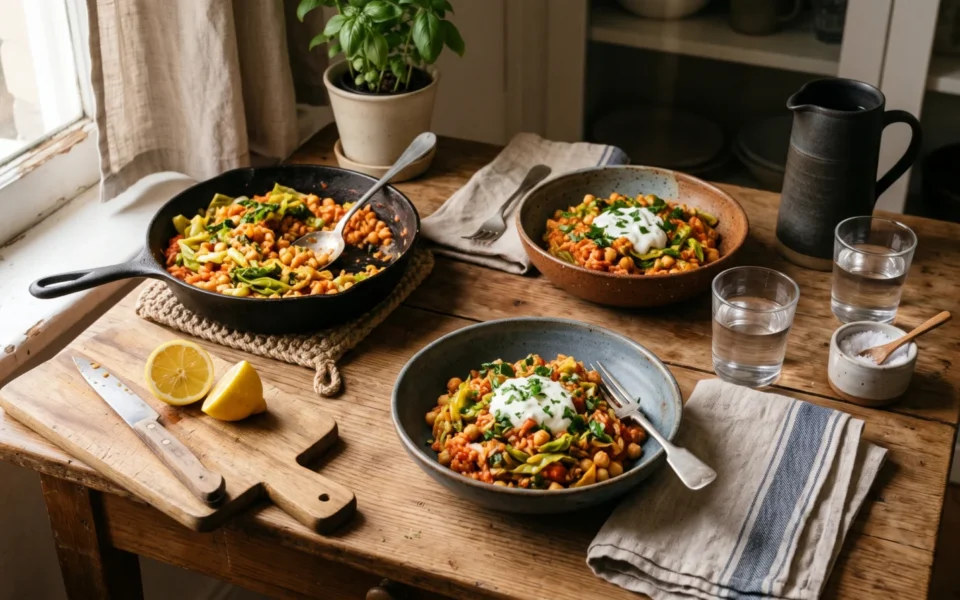
Weekly Meal Plan for Picky Eaters on a Budget
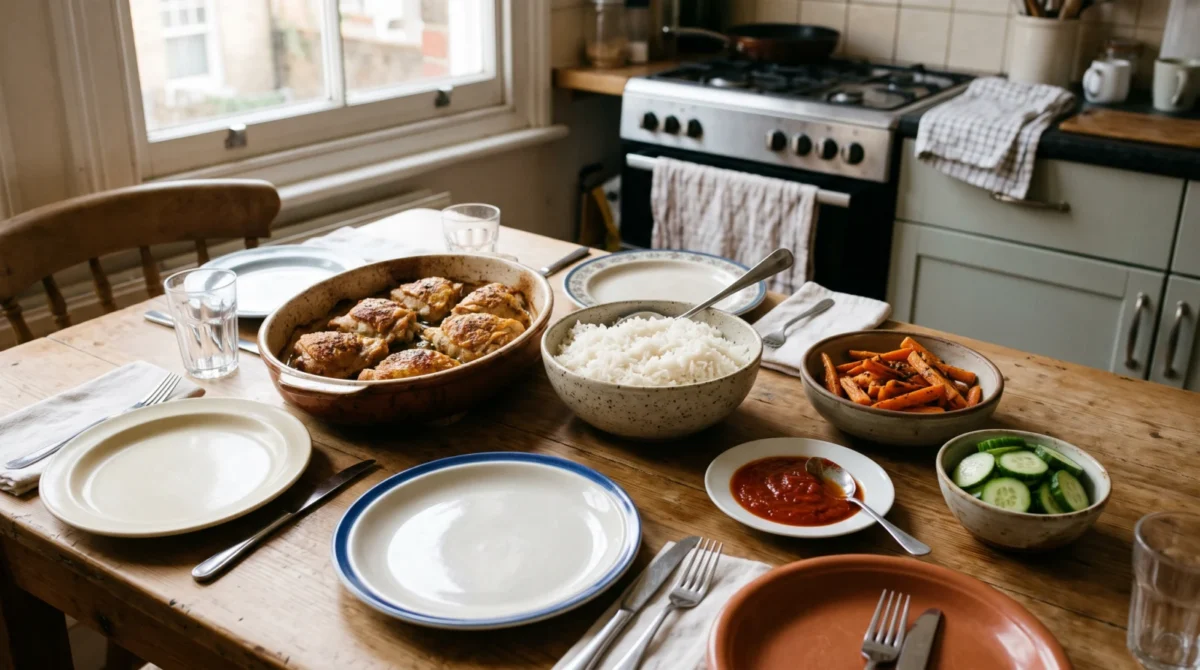
A weekly meal plan for picky eaters on a budget works best when dinner has familiar parts served separately, not seven new recipes everyone must agree on. Cook chicken for two dinners. Reuse rice and tortillas; put sauces on the table. Shop your fridge first, then buy only the gaps.
Build the week around foods people already eat
Start with three things your household will usually accept. They might be plain rice, a baked potato and a cheese tortilla. Those are the anchors, not the entire meal. Add a protein and a vegetable on the side; let people put their own plates together. No separate skillet. If a child only wants the plain pasta tonight, you haven’t made a second dinner by accident.
I wouldn’t hide a vegetable in every sauce. It takes work, and it can make the one dependable dish taste unfamiliar. Put roasted carrots beside the chicken instead. Save the cucumber for someone who likes it cold and crunchy. The ingredients can overlap even when the plates don’t look alike. That matters.
The basic budget meal-planning system starts with what you have, not a cart full of ingredients for new recipes. Check the freezer too. If the chicken is already there, move that line off the shopping list and keep the money for next week. If there are leftover roasted vegetables, use them in a meal someone actually wants rather than buying another bag on autopilot.
A useful rule for this particular plan: offer a plain version of the main dish and let anyone who wants sauce, peas or beans add them. It costs less effort than cooking two separate pans. And nobody has to pick tomatoes out of their rice.
Seven dinners from one short shopping list
This is a dinner plan for four, not a claim about what four people ought to eat. Adjust portions to your household and check labels if anyone has an allergy or a dietary restriction. Keep the sauce and optional toppings separate.
| Day | Dinner | The easy plain plate | What gets used again |
|---|---|---|---|
| Monday | Roast chicken thighs, rice and carrots | Chicken and rice with carrots on the side | Refrigerate cooked chicken for Tuesday; save some raw carrots |
| Tuesday | Chicken and cheese tortillas with cucumber | Warm tortilla, chicken and cheese | Uses Monday’s chicken and the tortilla pack |
| Wednesday | Pasta with tomato sauce and peas | Buttered or lightly oiled pasta; sauce and peas on the side | Reserve sauce for Saturday |
| Thursday | Egg fried rice with carrots and peas | Egg and freshly cooked rice; vegetables served separately | Uses rice, eggs and the open frozen vegetable bag |
| Friday | Baked potatoes with beans and cheese | Potato with cheese; beans on the side | Uses the cheese bought for Tuesday |
| Saturday | Tortilla pizzas with tomato sauce and cheese | Crisp cheese tortilla without sauce | Uses tortillas and Wednesday’s sauce, if stored safely |
| Sunday | Scrambled eggs, toast and roasted carrots | Eggs and toast | Uses the remaining eggs, bread and carrots |
On Monday, roast about 2 pounds of chicken thighs if that feeds your four people for both meals; add more or less based on appetite. Put Tuesday’s portion into a shallow container and refrigerate it promptly, rather than leaving the roasting pan on the stove. Thursday’s rice is cooked fresh, so you’re not relying on Monday’s rice late in the week.
Wednesday’s sauce needs a little thought. Open one can of tomato sauce, use part for pasta and refrigerate the rest for Saturday only if it remains within the FoodSafety.gov cold-storage guidance for prepared leftovers, which is 3 to 4 days. If you’re unsure when it was opened or how it was handled, use a new can on Saturday. Don’t gamble on a jar to avoid opening another one.
The list, with room for what is already home
These quantities are a starting point for four dinners-plus-leftovers portions across seven nights, not a precise nutrition plan. Mark off what’s in the cupboard before buying anything. A partly used rice bag counts. Check the back shelf.
| Aisle | Buy only if needed | Used on |
|---|---|---|
| Meat | About 2 pounds chicken thighs | Monday, Tuesday |
| Dairy and eggs | 1 dozen eggs; about 8 ounces shredded cheese | Tuesday, Thursday, Friday, Saturday, Sunday |
| Dry goods | About 1 pound rice; 1 pound pasta; 1 loaf bread | Monday, Wednesday, Thursday, Sunday |
| Bread aisle | 1 pack of 8 tortillas | Tuesday, Saturday |
| Canned goods | 2 cans beans; 2 cans plain tomato sauce | Wednesday, Friday, Saturday |
| Produce | About 2 pounds carrots; 1 cucumber; 4 large potatoes | Monday, Tuesday, Thursday, Friday, Sunday |
| Frozen | 1 bag peas | Wednesday, Thursday |
| Pantry check | Cooking oil, salt and any seasoning people already like | Throughout the week |
The point of a short list is repeat use, not making the same plate seven times. If you have a bag of frozen broccoli but no peas, use the broccoli. If beans are unpopular, put them beside Friday’s potatoes rather than mixing them into the whole tray. Keep it simple. The pantry staples list is useful for deciding which dry goods to replace when they actually run out.
You can also photograph the fridge or cupboard in WattaEat, check what it identified, and set your weekly grocery budget. It plans meals around what you already have and makes an aisle-sorted list that skips those items. Check its estimated meal prices against your own store before deciding what to buy.
Put a ceiling on dinner before you shop
Set a weekly dinner allowance from your own budget. For example, if you can set aside about $70 for seven dinners, the planning math is $70 ÷ 7 = about $10 per dinner, or about $10 ÷ 4 = about $2.50 per serving for four. Those are illustrative budget targets, not store prices or an estimated cost for this menu. Your location and package sizes change the bill. So does what you already own. Price the list at your store, then swap ingredients to fit. Skip the guesswork.
Don’t treat last month’s receipt as a fixed price sheet. In its November 2026 U.S. Food Price Outlook, USDA’s Economic Research Service reports that grocery-food prices rose 0.3% from September to October 2026, while price changes varied across food categories. That is a national trend, not the price of your chicken or the bill at your checkout. Compare the unit prices on the shelf for the package sizes you’ll really use; the unit-price walkthrough shows how.
If the chicken takes too much of your allowance, use eggs for Tuesday’s tortillas and move the chicken to one dinner. If the large cheese bag seems cheaper per ounce but will sit open for weeks, buy the smaller one that you’ll finish. The cheapest ounce isn’t a bargain when it ends up in the trash.
Cook once without stretching leftovers too far
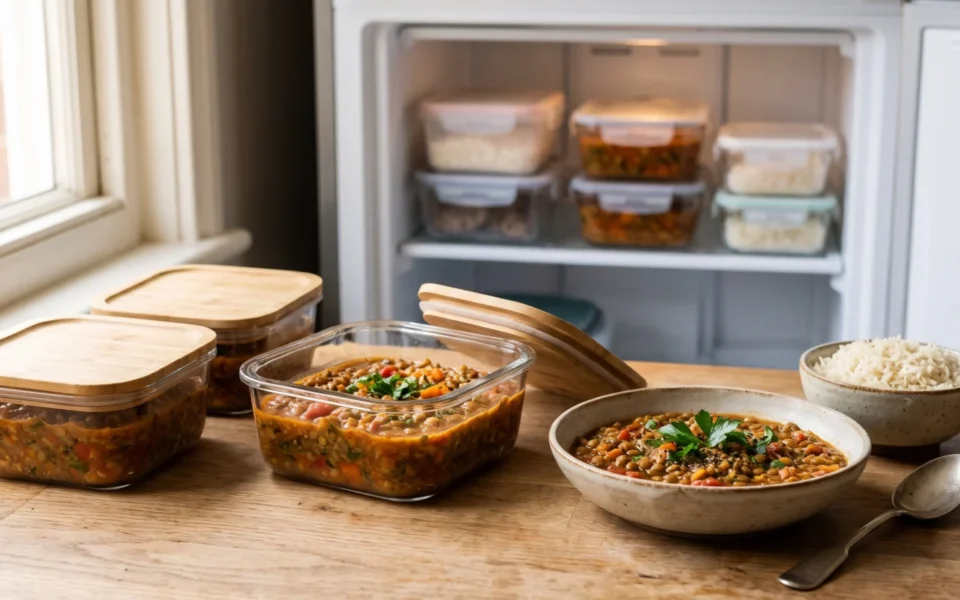
Cook Monday’s chicken thoroughly, then refrigerate Tuesday’s portion in a covered shallow container. FoodSafety.gov lists cooked meat and poultry leftovers at 3 to 4 days in the refrigerator at 40°F or below. That window isn’t permission to leave food out all evening: refrigerate perishable food within two hours of cooking, or within one hour when the air temperature is above 90°F. See its cold food storage chart and four-step food safety guide. If you won’t eat Tuesday’s chicken on Tuesday, freeze it promptly instead. Label the container.
On Saturday, set the oven to bake the tortilla pizzas until the cheese melts and the edges crisp. Keep the sauce in its own small dish if somebody wants a cheese-only version. Sunday is the night to roast whatever carrots remain while the eggs cook. No elaborate prep session, and no second dinner pan.