Budget Breakfast Meal Plan for a Week
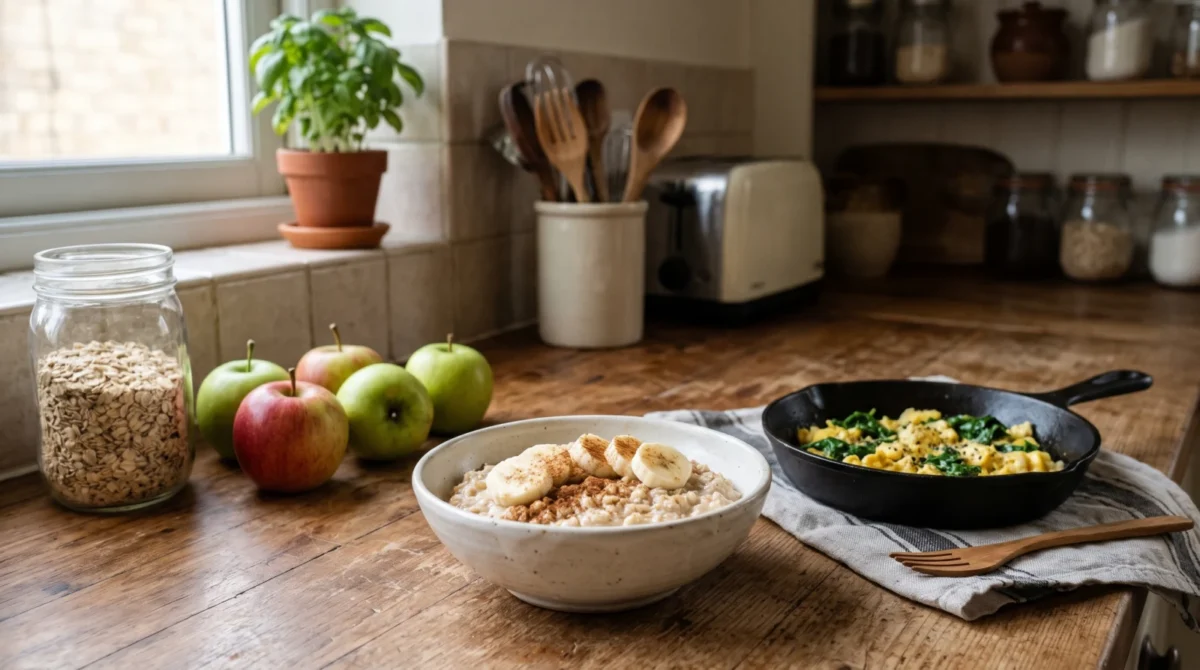
A budget breakfast meal plan for a week can be as simple as oats on four mornings, eggs on two and toast with fruit on one. Portion dry oats ahead; cook them when needed. This seven-day plan is for one person; double the amounts for two and adjust the shopping list to your pantry.
The seven-day breakfast plan
Tuesday can go sideways. The plan still needs to work. Oats take five minutes on the stove, or you can microwave them in a large bowl. Eggs take a few minutes at the stove. No time? Trade that day with an oat day.
| Day | Breakfast | Use from the shopping list |
|---|---|---|
| Monday | Banana-cinnamon oatmeal | 1/2 cup dry oats, 1 banana, milk or water |
| Tuesday | Egg and spinach toast | 2 eggs, handful of spinach, 2 slices of bread |
| Wednesday | Apple oatmeal | 1/2 cup dry oats, 1 apple, milk or water |
| Thursday | Peanut butter banana toast | 2 slices of bread, 1 tablespoon peanut butter, 1 banana |
| Friday | Egg and spinach toast | 2 eggs, handful of spinach, 2 slices of bread |
| Saturday | Warm banana oatmeal | 1/2 cup dry oats, 1 banana, milk or water |
| Sunday | Peanut butter oatmeal | 1/2 cup dry oats, 1 tablespoon peanut butter |
That’s four portions of dry oats, four eggs, three bananas, one apple, six slices of bread and two handfuls of spinach. Count the fruit. It’s easy to miss at the store. Already have an apple with a soft spot? Use it Wednesday instead of buying another.
I wouldn’t batch-cook all seven breakfasts on Sunday. Hot oatmeal gets pasty in the fridge, and cooked eggs don’t improve by Friday. Keep the dry ingredients ready. Cook the hot part when you eat.
One short shopping list, with room for what you own
Check your cupboard first. A new jar of peanut butter adds to the bill. This list names packages because that’s how groceries are sold, not because you’ll eat every bit this week. For a broader pantry check, use the pantry staples list.
| Buy only if needed | Amount for the week | What carries over |
|---|---|---|
| Rolled oats | 2 cups dry (about 6 ounces) | Rest of a canister goes into later breakfasts |
| Eggs | 4 | Remaining eggs can go into dinner |
| Bananas | 3 | Buy ripe enough for early days, firmer for Saturday |
| Apple | 1 | Use the whole apple Wednesday |
| Bread | 6 slices | Freeze spare slices if you won’t finish the loaf |
| Spinach | 2 handfuls | Put the rest in a dinner or freeze for cooking |
| Milk or water | Enough for 4 bowls | Water works if milk isn’t on the list |
| Peanut butter | 2 tablespoons | Skip the purchase if you have any at home |
| Cinnamon and cooking oil | Small amounts | Use what you already own |
Leave yogurt and berries off this particular list. Skip single-serve oatmeal packets too. They’re fine foods, but buying a new package of each for one week’s breakfasts makes this particular plan harder to keep cheap. If you have berries in the freezer, use a spoonful in the apple bowl and leave the apple for a snack.
Bread and spinach will spill into other meals. Plan for it. Plan that spill now: eggs and spinach can become a quick dinner, and frozen slices can become toast next week. The budget grocery list for the week shows how to share those purchases with lunch and dinner instead of charging the whole loaf to breakfast.
The budget math is a planning estimate
A price on a shelf is local and dated. The USDA Economic Research Service Food Price Outlook, updated October 23, 2026, reports changes in food prices and forecasts, not the price of a carton of eggs in your store. So the following dollar amounts are illustrative U.S. planning estimates, not current store prices or USDA item quotes. Check the shelf tags where you shop, and replace the numbers before relying on the total.
| Ingredient allocated to seven breakfasts | Example estimated cost |
|---|---|
| 2 cups dry oats from a larger container | About $0.80 |
| 4 eggs from a larger carton | About $1.60 |
| 3 bananas and 1 apple | About $2.20 |
| 6 bread slices from a loaf | About $0.90 |
| 2 handfuls spinach from a bag | About $0.80 |
| Milk, peanut butter, cinnamon and oil used | About $1.20 |
| Estimated food used | About $7.50 |
Here’s the arithmetic for that example: $0.80 + $1.60 + $2.20 + $0.90 + $0.80 + $1.20 = about $7.50 for seven breakfasts, or about $1.07 per breakfast. That isn’t your checkout total. A full carton costs more up front. So do a loaf and a bag of spinach; this estimate counts only the portions used. If your cupboard is empty, budget for the whole packages and carry the leftovers into next week.
The USDA says its price outlook uses recent Consumer Price Index and Producer Price Index data for forecasts. That’s one reason I won’t freeze an egg price in a meal plan and call it universal. Write down your own package prices. Divide by the portions you’ll use. The grocery price book method gives you a place to keep those local numbers.
Prep the right things, not every cooked meal
On shopping day, put two cups of oats into four small dry containers or reusable bags. Cinnamon can go in now. Don’t add milk until you cook the oats; each morning, add about a cup of water or milk to a half-cup portion and heat it until tender, stirring to keep it from boiling over. Use a larger bowl than you think you need.
Keep bananas on the counter. Slice one onto Monday’s oatmeal, another onto Thursday’s toast and the last onto Saturday’s bowl. Put the apple in the fridge if it won’t be eaten until midweek. Eat the whole apple on Wednesday. Sunday needs only peanut butter on the oats; a frozen banana you already have works too.
The FoodSafety.gov cold food storage chart lists cooked egg dishes at 3 to 4 days in the refrigerator at 40°F or below. That’s why these eggs are cooked on Tuesday and Friday, rather than stored as a week of ready-made sandwiches. Refrigerate perishable food promptly, and if you’re unsure how long a prepared portion has been sitting out, don’t build tomorrow’s breakfast around it. Check ingredient labels if you have food allergies; a recipe name can’t tell you what’s in your bread or peanut butter.
If you’d rather move the eggs to dinner, that’s fine. The point of a plan is that you can shift the ingredients without leaving half a bag of spinach behind. WattaEat can start with what you’ve got in your fridge, cupboard or freezer and build a week of meals around it under a budget, with estimated meal costs and an aisle-sorted shopping list. Check its estimates against your local tags.
Change the plan when the store changes it
A bag of apples may cost less per apple than singles but still make you spend more if you only need one. Buy the larger pack only when you have a use for the rest. If bananas are overripe, use frozen fruit you already own; if spinach is expensive, make plain eggs on toast and use the greens at home for another meal.
One person won’t finish a loaf by Sunday. No need to try. Freeze it in pairs of slices on shopping day and toast straight from frozen. If you’re feeding four, multiply the amounts in the table by four, but check package sizes before you multiply the estimated dollars: a carton or loaf won’t always scale neatly. For the rest of the week’s meals, the simple weekly budget meal-planning system keeps breakfast from becoming a separate, unplanned grocery trip.
Monday’s last useful job is tiny: put the measured oats where you’ll see them before coffee. Leave a spoon in the jar if you must. Not in the peanut butter jar, though.