Freezer Meal Planning for Beginners: A Simple Week
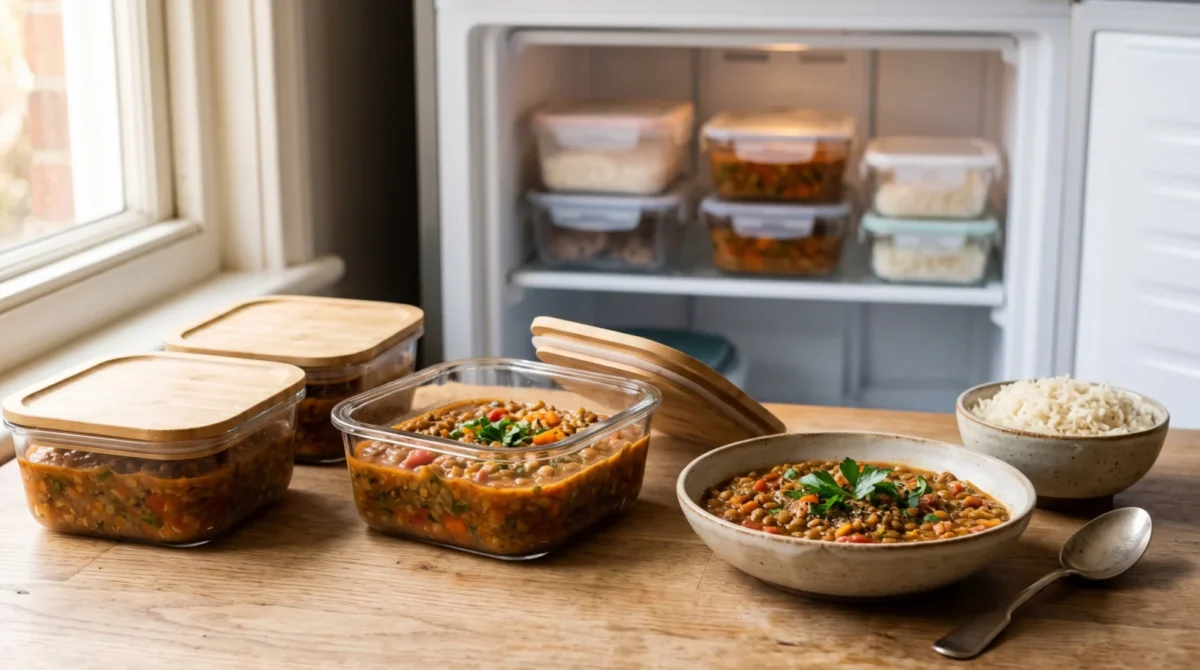
A freezer meal plan starts with what’s already frozen, not with a cart full of ingredients for ten casseroles. Count the portions you have, pick two dinners to cook in bigger batches this week, then freeze only the extra portions you’ll actually eat. Leave a little space for the nights when the plan changes.
Take stock before you shop
Pull the freezer drawer out far enough to see the back. Write down what can make a dinner, not every ice cube and half-used bag of peas. A container of lentil stew counts as two portions if two people can eat it; a container with three spoonfuls left counts as a topping. It matters. Be honest about the difference.
| What you have | Count it as | Plan for it |
|---|---|---|
| Two containers of cooked lentils, about 2 cups each | Two dinners for two, with rice or bread | Use one this week, keep one as backup |
| One bag of frozen spinach, about 10 ounces | Ingredient, not a whole meal | Stir into eggs or pasta sauce |
| Four frozen tortillas | Side or wrapper | Fill with beans on Thursday |
| One unlabeled box you can’t identify | Unknown | Don’t build a dinner around it |
If you’re starting with a mostly empty freezer, that’s fine. Start small. The goal is to create a buffer, not fill every inch. Make a short pantry staples list too: rice, dry pasta or canned tomatoes can turn a frozen portion into a full meal without another store trip.
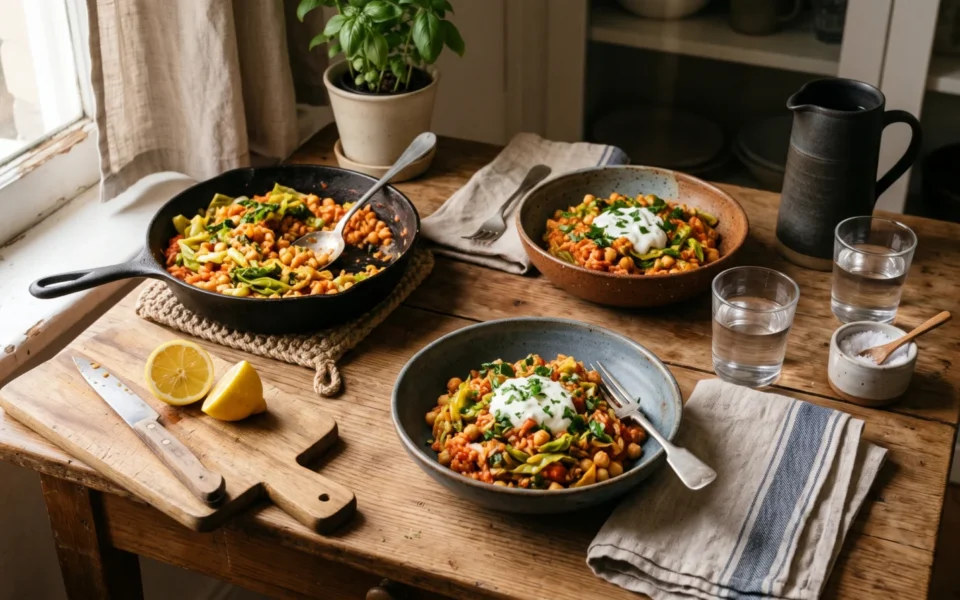
I’d rather freeze two servings of something I like than twelve servings of a meal I’m tired of by Tuesday. Pick foods you’ll want to see again. A pot of tomato-based lentils reheats well by the bowlful. So does meat sauce. A frozen casserole the size of a baking pan asks a lot more of a tired Tuesday.
Build the week around two batch dinners
Here’s a flexible seven-day dinner plan for two adults. It assumes four cups of cooked lentil-tomato stew are already frozen and you’ll cook a pot of bean chili on Tuesday. Change the sides to match your cupboard. Skip the special spice.
| Day | Dinner | Freezer move |
|---|---|---|
| Monday | Lentil stew over rice, using 2 cups from the freezer | Thaw the stew safely before reheating |
| Tuesday | Bean chili with baked potatoes | Cook 6 cups of chili; eat 2, cool and freeze 4 in two 2-cup portions |
| Wednesday | Pasta with sautéed frozen spinach and tomato sauce | Keep pasta dry until dinner |
| Thursday | Chili-filled tortillas with cabbage or whatever crisp veg is left | Use one 2-cup frozen portion |
| Friday | Egg and potato skillet | No freezer dinner needed |
| Saturday | Lentil stew with toasted bread | Use the remaining 2 cups |
| Sunday | Rice bowls with the second chili portion and leftover vegetables | Empty one container rather than opening a new package |
That is a plan, not a command to eat chili on a particular day. Swap days. Move Thursday’s chili to Friday if the potatoes need using first. If you’re cooking for four, double the stated serving portions before buying or batching; a 2-cup container won’t somehow become four dinners. For a broader way to place meals around work and errands, see how to meal plan on a budget.
Shop for the gaps, not another freezer stash
Check the rice bin and egg carton before you write the list. For the week above, write down potatoes and eggs first. Add two cans of beans, a can of tomatoes and a vegetable you can use twice. If the freezer already holds cooked beans, cross the canned ones off. You don’t need to buy everything on the sample list.
The USDA Economic Research Service Food Price Outlook, updated October 23, 2026, tracks changes in U.S. food prices and forecasts rather than promising a fixed price for your basket. That’s why I wouldn’t print a universal “$2 dinner” next to this plan. Your estimated dinner cost is the total you actually pay for ingredients used, divided by the portions you serve; keep pantry items in that calculation even if you bought them last week. For example, if a pot makes six equal servings, one serving uses one-sixth of the pot’s ingredient cost. No guessed shelf price required.
Keep the grocery list in two columns: “needed for a named dinner” and “nice if cheap.” Buy the first column. Stop there. The second can wait if the weekly limit is tight. The budget grocery list gives a fuller template if your cupboards are bare. If you prefer to start from a photo of what you have, WattaEat can build a week of meals around those ingredients and make an aisle-sorted shopping list that skips them; its meal prices are estimates, so check the shelf tags.
Freeze portions you can actually use
Put cooked food in shallow containers so it cools promptly, then write the food and date on each container. Add the number of portions too. Don’t leave a large pot on the counter all evening. Cool it promptly. The U.S. FoodSafety.gov cold storage chart says cooked leftovers keep for 3 to 4 days in the refrigerator; freeze portions you won’t use within that window. It also specifies a freezer temperature of 0°F (-18°C) or below. Those are safety guidelines, not a reason to keep an unmarked container indefinitely.
For the chili, split the four extra cups into two shallow 2-cup containers rather than one deep 4-cup block. It’s easier to thaw just what dinner needs. If you use glass, choose containers marked freezer-safe and leave room for expansion. Keep the most recent containers behind the older ones so the older food is the first thing you reach for.
Use the refrigerator for planned thawing, or use the microwave and cook or reheat the food right away afterward. Don’t thaw a container on the kitchen counter. Follow FoodSafety.gov’s chill and thaw instructions; reheat leftovers to 165°F (74°C), as its safe minimum temperatures chart specifies. Use a thermometer. The middle of a thick bowl of chili can still be cold.
Make the next plan easier
Keep a freezer note on the door or in your phone with three columns: food, portions, date. Cross off a container when you take it out, not when you finally remember it existed. Each week, use one older item and add one new batch. One in, one out. That small exchange is easier to keep up than a once-a-month marathon of chopping and washing pans.
When something changes, don’t force the whole schedule to stay intact. A late meeting can turn Monday’s stew into Tuesday’s lunch. If fresh spinach is wilting, cook it tonight and save the frozen bag for next week. There’s no prize for following a table while good food spoils.
On Sunday, move one labeled 2-cup container to the front of the freezer and write its name beside the busiest night on your calendar. That’s the dinner you won’t have to think up after work.